
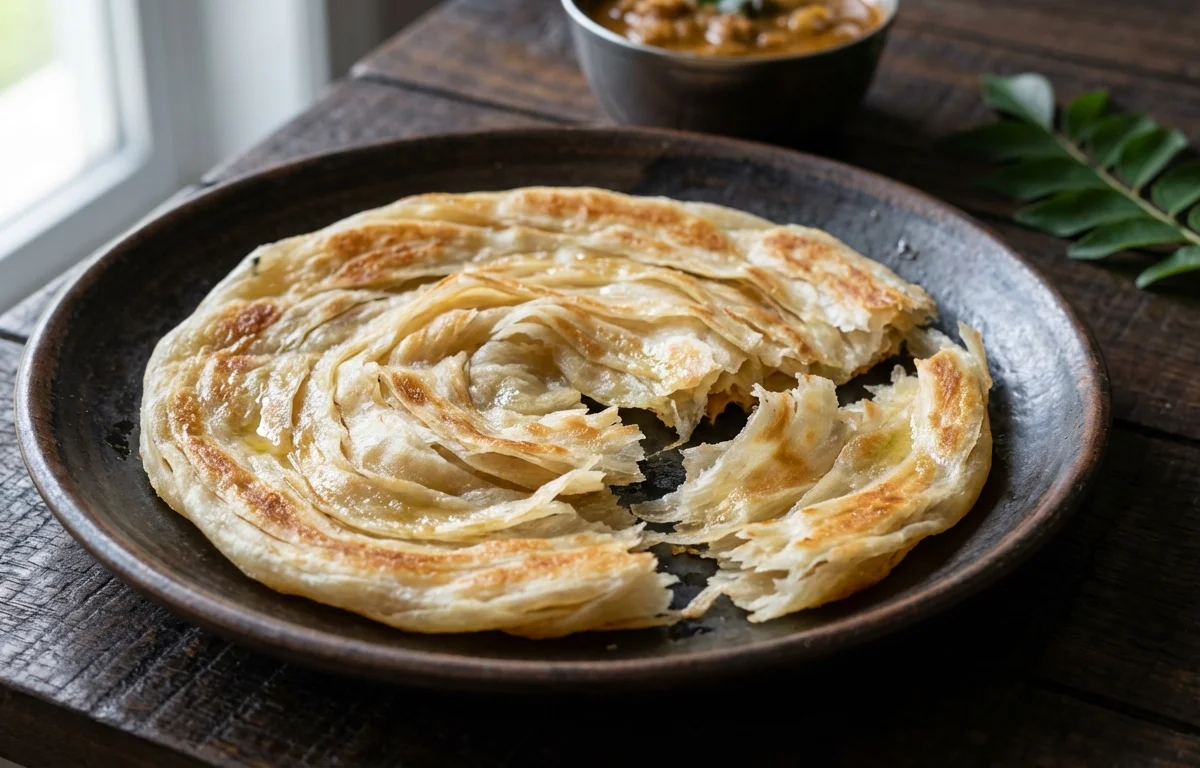
Kerala Parotta
Experience the magic of flaky, layered flatbread from the streets of Kerala. This Malabar Parotta is soft on the inside, crispy on the outside, and perfect for scooping up rich curries. A truly satisfying and iconic South Indian bread that requires patience but rewards with incredible texture.
For 4 servings
Prepare the Dough
- In a large mixing bowl, whisk together the maida, sugar, and salt.
- Make a well in the center. Add the egg, 2 tablespoons of oil, and half of the warm water.
- Begin to mix, gradually adding more warm water until a soft, sticky dough forms. You may not need all the water.
- Transfer the dough to a clean, lightly oiled surface and knead vigorously for 12-15 minutes. The dough should become very smooth, soft, and elastic. It will be slightly sticky.
First Rest (Crucial Step)
- Coat the entire surface of the dough ball with a generous layer of oil.
- Place it back in the bowl, cover with a damp cloth or a lid, and let it rest for a minimum of 2 hours at room temperature. For best results, rest for 4 hours.
Portion and Second Rest
- After the first rest, gently deflate the dough and divide it into 8 equal portions.
- Roll each portion into a smooth ball.
- Generously coat each ball with oil, place them on a tray, cover, and let them rest for another 30 minutes.
Stretch and Pleat
- Generously oil your work surface. Take one dough ball and flatten it with your fingers.
- Begin stretching the dough outwards from the center, using your fingertips. Stretch it into a very large, paper-thin, translucent sheet. Don't worry about perfect shape or small tears.
- Drizzle about 1 teaspoon of oil over the entire surface of the stretched dough.
- Starting from one edge, lift and fold the dough over itself to create thin pleats, like an accordion or a fan, forming a long, pleated rope.
Coil and Final Rest
- Gently stretch the pleated rope to make it longer.
- Holding one end stationary, coil the rope around it to form a spiral, like a pinwheel. Tuck the loose end underneath.
- Place the coiled dough on the oiled tray. Repeat for all dough balls.
- Cover the coils and let them rest for 15-20 minutes.
Roll and Cook
- Heat a tawa or cast-iron skillet over medium heat.
- Take one rested coil and gently flatten it with your palm or a rolling pin into a circle about 5-6 inches in diameter. Do not press too hard to ensure the layers remain distinct.
- Place the parotta on the hot tawa. Cook for about 1 minute until small bubbles appear.
- Flip the parotta and drizzle about 1-2 teaspoons of oil around the edges and on top.
- Cook for 3-4 minutes, flipping every 30-40 seconds and pressing gently with a spatula, until both sides are golden brown and crispy.
- Repeat for all the parottas.
Fluff the Layers
- Remove the cooked parotta from the tawa. While it's still hot, place it on a clean surface.
- Using both hands, gently clap or crush the parotta from the sides towards the center. This action is key to separating the layers and making it flaky.
- Serve immediately with your favorite curry.
What to keep in mind.
6 tips from the recipe — small details that make a real difference to the final dish.
- 1The dough must be very soft and well-rested. This is the most important step for stretching it thin without tearing.
- 2Be generous with oil at every stage. It prevents the dough from drying out and helps create distinct, flaky layers.
- 3Don't worry about getting a perfect circle when stretching. The goal is to make it as thin as possible.
- 4The final 'crushing' step is essential for revealing the layers. Do it while the parotta is still hot for the best results.
- 5Using warm water helps to relax the gluten, making the dough softer and easier to work with.
- 6A heavy-bottomed cast iron tawa provides even heat and gives the best crispy texture.
Adapt it for your goals.
Wheat Parotta
Replace half of the maida with whole wheat flour (atta) for a slightly healthier, denser version. You may need to adjust the water quantity.
Stuffed ParottaStuffed Parotta
Add a thin layer of minced meat (keema) or spiced mashed potatoes before pleating the dough for a delicious stuffed version.
Garlic ParottaGarlic Parotta
Sprinkle finely chopped garlic and cilantro over the stretched dough before pleating to infuse it with flavor.
Why this is on our healthy list.
Provides Quick Energy
The refined carbohydrates in maida are quickly broken down by the body, providing a rapid source of energy.
Promotes Satiety
The combination of carbohydrates and fats makes the parotta quite filling, helping to keep you feeling satisfied after a meal.
Frequently asked questions
The most common reasons are insufficient kneading or inadequate resting time. The dough needs at least 12-15 minutes of vigorous kneading to develop strong gluten, and a minimum of 2 hours of rest to allow that gluten to relax. Without this, the dough will be tough and tear easily.