
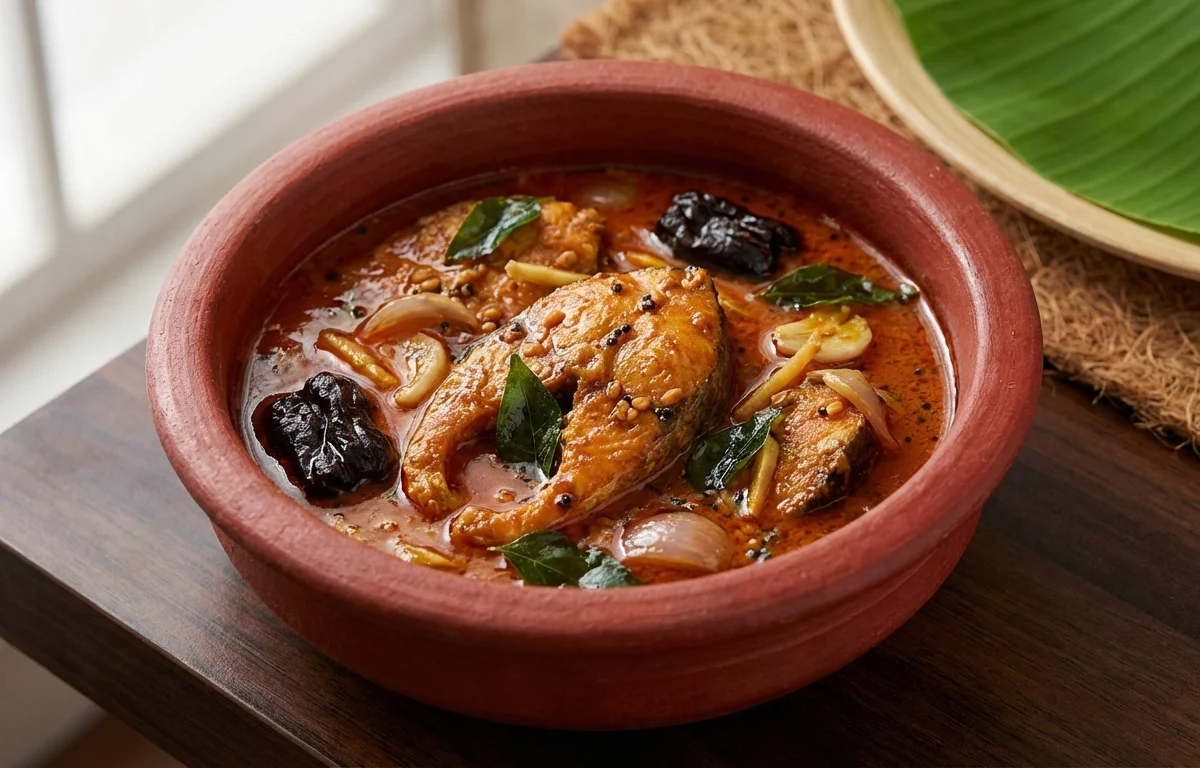
Kerala Meen Vevichathu
A fiery and tangy red fish curry from the heart of Kerala, slow-cooked in a traditional earthen pot. The distinct sourness from kudampuli (cocum) perfectly balances the heat from red chilies, creating a truly authentic flavor.
For 4 servings
Prepare Kudampuli and Fish
- Rinse the kudampuli pieces thoroughly. Soak them in 1/2 cup of warm water for at least 20 minutes to soften and release their sour flavor.
- Clean the fish steaks, rinse well, and pat them completely dry with a paper towel. Set aside.
Sauté Aromatics
- Place a traditional earthen pot (manchatti) or a heavy-bottomed pan over medium heat. Add 3 tablespoons of coconut oil.
- Once the oil is hot, add the mustard seeds and wait for them to splutter completely.
- Add the sliced shallots, chopped ginger, garlic, slit green chilies, and half of the curry leaves (about 7-8 leaves).
- Sauté for 6-8 minutes, stirring occasionally, until the shallots become soft, translucent, and start to turn a light golden brown.
Bloom the Spices
- Reduce the heat to the lowest setting to prevent the spices from burning.
- Add the Kashmiri chili powder, red chili powder, and turmeric powder to the pan.
- Stir continuously for 1-2 minutes until the spices are fragrant and their raw smell disappears. Be careful not to burn them.
Create the Gravy
- Pour in the remaining 1.5 cups of warm water, the soaked kudampuli along with its soaking water, and salt.
- Stir well to combine all the ingredients into a uniform gravy.
- Increase the heat to medium-high and bring the gravy to a rolling boil.
Cook the Fish
- Gently slide the fish pieces one by one into the boiling gravy, ensuring they are submerged.
- Avoid using a spoon to stir from this point on. Instead, hold the handles of the pot and gently swirl it to coat the fish with the gravy.
- Reduce the heat to low, cover the pot, and let it simmer for 10-12 minutes. The curry is done when the fish is opaque and flakes easily, and you see a layer of oil floating on top.
Finish and Rest
- Turn off the heat. Sprinkle the roasted fenugreek powder and the remaining curry leaves over the curry.
- Drizzle the final 1 teaspoon of fresh coconut oil over the top. This adds a wonderful aroma and flavor.
- Cover the pot and let the curry rest for a minimum of 30 minutes, or ideally a few hours, before serving. This crucial step allows the flavors to deepen and meld together.
What to keep in mind.
7 tips from the recipe — small details that make a real difference to the final dish.
- 1For the most authentic taste, use a traditional clay pot (manchatti). It distributes heat evenly and enhances the flavor.
- 2This curry tastes even better the next day as the flavors have more time to mature and deepen.
- 3Avoid overcooking the fish, as it will become tough and break apart. 10-12 minutes is usually sufficient for 1.5-inch steaks.
- 4Gently swirl the pan to mix the curry after adding fish. Using a ladle can break the delicate pieces.
- 5The sourness of kudampuli can vary. Adjust the quantity based on your preference and the age of the kudampuli.
- 6Using fresh, high-quality coconut oil is key to achieving the authentic Kerala flavor.
- 7Always bloom the spice powders on low heat to prevent them from burning, which can make the curry bitter.
Adapt it for your goals.
Fish Type
This curry works wonderfully with other firm-fleshed fish like mackerel (ayala), sardines (mathi), or pomfret (avoli). Adjust cooking time based on the thickness of the fish.
Souring AgentSouring Agent
If kudampuli is unavailable, you can substitute it with a small, lime-sized ball of tamarind pulp soaked in warm water. The flavor profile will be slightly different but still delicious.
Milder VersionMilder Version
For a less fiery curry, reduce the amount of red chili powder or use only Kashmiri chili powder, which is milder and primarily used for color.
Why this is on our healthy list.
Rich in Omega-3 Fatty Acids
Kingfish is an excellent source of omega-3 fatty acids, which are crucial for brain health, reducing inflammation, and lowering the risk of heart disease.
Anti-Inflammatory Properties
The curry is rich in spices like turmeric (containing curcumin), ginger, and garlic, all of which are known for their potent anti-inflammatory and antioxidant effects.
Boosts Metabolism
The capsaicin in red chilies can help boost metabolism and aid in weight management. The spices in the curry also contribute to better overall metabolic health.
Aids Digestion
Ginger is well-known for its digestive benefits, helping to soothe the stomach. Kudampuli is also traditionally believed to aid in digestion and gut health.
Frequently asked questions
A single serving (approximately 1 cup or 285g) of Kerala Meen Vevichathu contains around 350-400 calories, primarily from the fish and coconut oil. The exact count can vary based on the type of fish and amount of oil used.