
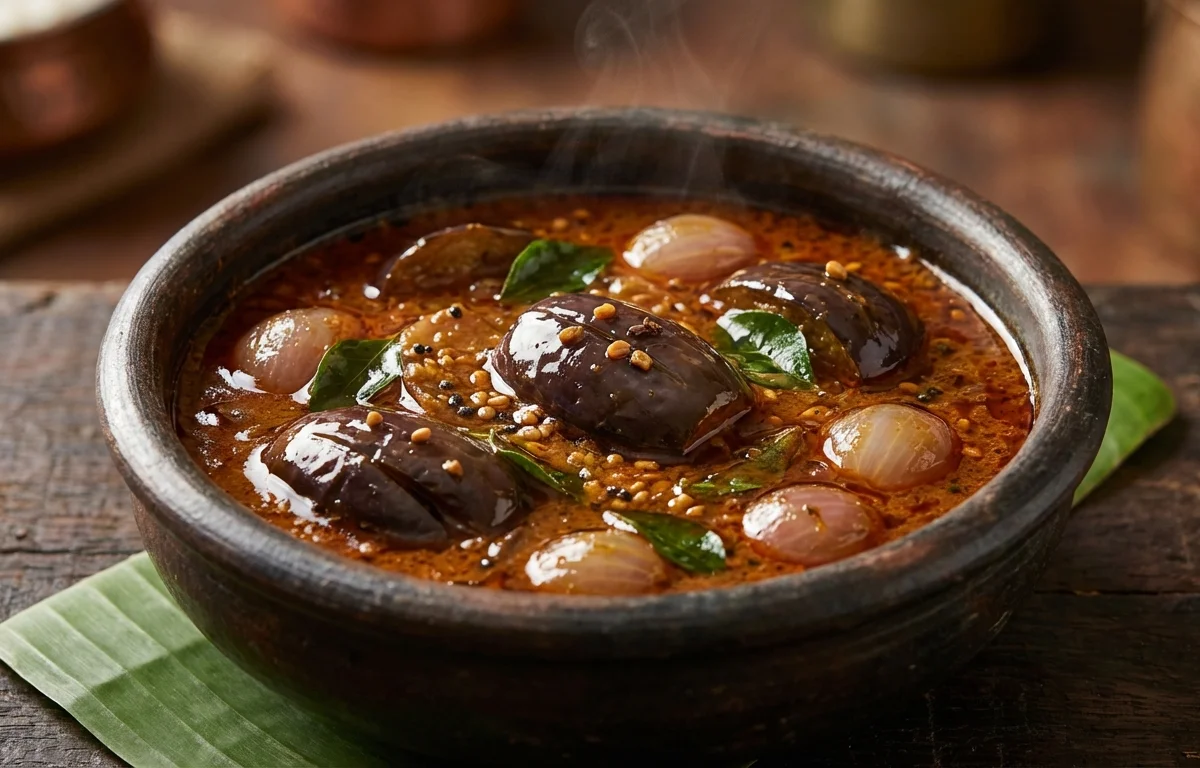
Kathirikai Kara Kuzhambu
A classic Tamil Nadu curry featuring tender baby eggplants simmered in a spicy and tangy tamarind gravy. This flavorful dish, balanced with a hint of jaggery, is a perfect companion for steamed rice.
For 4 servings
Prepare Tamarind and Eggplant
- Soak the tamarind in 1 cup of warm water for 15 minutes. Squeeze well to extract the pulp, strain it, and set the tamarind water aside.
- Wash the baby eggplants, remove the crowns, and make a cross-shaped slit from the bottom up to three-quarters of the way, keeping the stem intact.
- Immediately place the slit eggplants in a bowl of salted water to prevent them from browning.
Temper the Spices (Tadka)
- Heat gingelly oil in a heavy-bottomed pan or clay pot (man chatti) over medium heat.
- Once the oil is hot, add the mustard seeds and let them splutter completely.
- Add the fenugreek seeds and urad dal. Sauté for about 30 seconds until the dal turns a light golden brown.
- Add the curry leaves and asafoetida, and sauté for another 10 seconds until fragrant.
Sauté Aromatics and Eggplant
- Add the peeled sambar onions and crushed garlic to the pan. Sauté for 3-4 minutes until the onions become soft and translucent.
- Drain the eggplants from the salted water and add them to the pan. Sauté gently for 5-7 minutes, until their skin starts to wrinkle and they are lightly browned on all sides.
Build the Gravy Base
- Add the chopped tomato and cook for 2-3 minutes until it turns soft and mushy.
- Reduce the heat to low, then add the turmeric powder, red chilli powder, and sambar powder. Stir continuously for 1 minute to cook the spices without burning them.
Simmer the Kuzhambu
- Pour in the prepared tamarind extract and the remaining 1 cup of water.
- Add salt and the powdered jaggery. Stir everything together well.
- Bring the gravy to a rolling boil, then reduce the heat to a low simmer.
- Cover the pan and let it cook for 12-15 minutes. The gravy will thicken, the eggplants will be tender, and you will see a layer of oil separating and floating on top, which indicates it's perfectly cooked.
Garnish and Serve
- Turn off the heat and garnish with freshly chopped coriander leaves.
- Let the kuzhambu rest for at least 15-20 minutes before serving to allow the flavors to meld beautifully.
- Serve hot with steamed rice, idli, or dosa.
What to keep in mind.
6 tips from the recipe — small details that make a real difference to the final dish.
- 1Using gingelly (sesame) oil is highly recommended for the authentic, nutty flavor of this kuzhambu.
- 2Do not skip the jaggery; it is essential for balancing the tangy, spicy, and savory notes.
- 3Sautéing the eggplants well before adding liquids helps them hold their shape and absorb the gravy's flavor.
- 4This kuzhambu tastes even better the next day as the flavors deepen and mature.
- 5If you don't have sambar onions, one medium-sized red onion, finely chopped, can be used as a substitute.
- 6For a creamier texture, add 2-3 tablespoons of thick coconut milk in the last 5 minutes of simmering.
Adapt it for your goals.
Vegetable Addition
Incorporate other vegetables like drumsticks (cut into 2-inch pieces), yellow pumpkin (cubed), or sundakkai (turkey berry) along with the eggplants for added texture and flavor.
With Coconut PasteWith Coconut Paste
For a richer, thicker gravy, grind 2-3 tablespoons of fresh grated coconut with 1/2 teaspoon of fennel seeds into a fine paste. Add this paste to the kuzhambu during the last 5-7 minutes of simmering.
Garlic VariationGarlic Variation
For a pronounced garlic flavor (Poondu Kuzhambu style), increase the amount of garlic to a whole head (about 10-12 cloves) and add them whole along with the sambar onions.
Why this is on our healthy list.
Rich in Antioxidants
This dish is loaded with antioxidants from tamarind, tomatoes, turmeric, and eggplant (especially the skin), which help combat oxidative stress and reduce inflammation in the body.
Aids Digestion
Tamarind acts as a natural digestive aid, while spices like fenugreek seeds and asafoetida are known to improve gut health and prevent bloating. The fiber from the vegetables also supports a healthy digestive system.
Good for Heart Health
The use of gingelly (sesame) oil provides healthy monounsaturated and polyunsaturated fats. Garlic is known to help manage blood pressure, and the overall low saturated fat content makes this a heart-friendly dish.
Frequently asked questions
A typical serving of Kathirikai Kara Kuzhambu contains approximately 150-170 calories. This is an estimate and can vary based on the amount of oil used and the specific ingredients.