
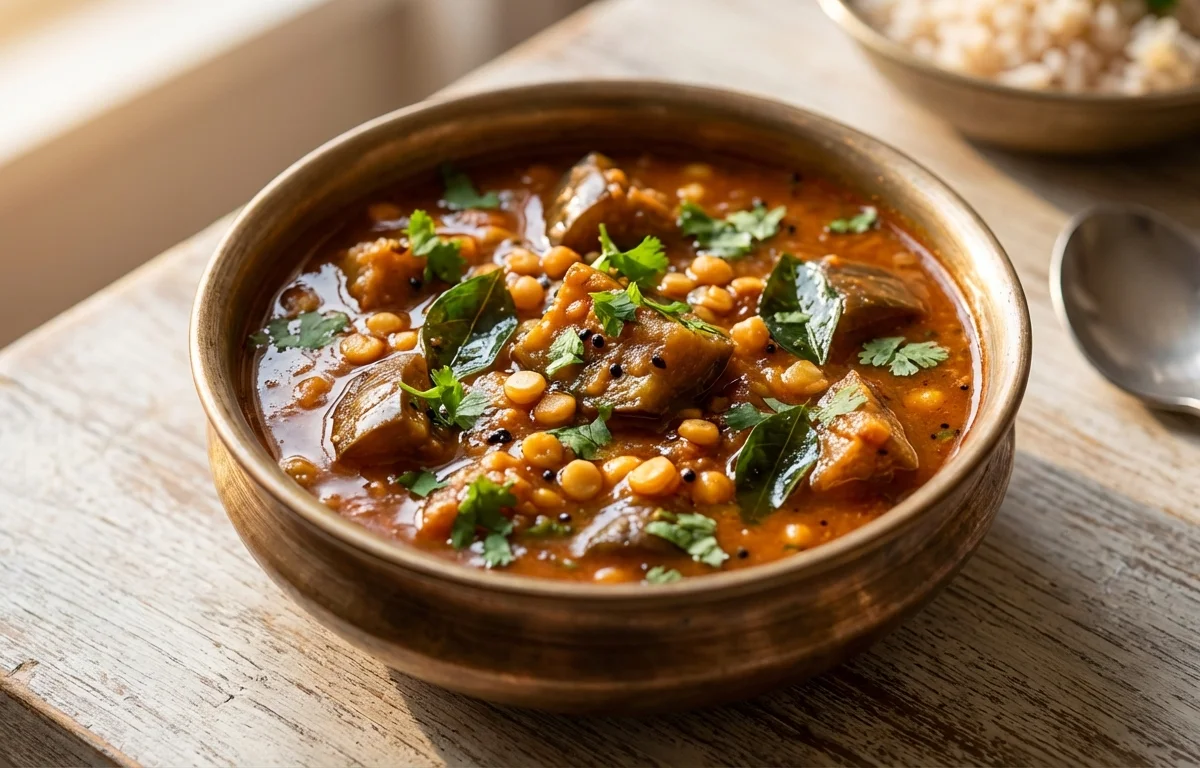
Kathirikai Gothsu
A tangy and spicy South Indian brinjal mash, slow-cooked with tamarind and freshly ground spices. This traditional Tamil dish is the perfect side for ven pongal, idli, or dosa, offering a burst of flavor in every spoonful.
For 4 servings
5 steps. 30 minutes total.
- 1
Step 1
- a.Prepare Brinjal and Tamarind
- b.Wash brinjals, remove stems, and chop into large cubes. Pressure cook with 1/2 cup of water for 2-3 whistles until very soft.
- c.While the brinjal cooks, soak the tamarind in 1 cup of warm water for 15 minutes. Squeeze the pulp to extract the juice, then strain and discard the solids.
- d.Once the pressure cooker has cooled, drain any excess water from the brinjals and mash them coarsely with a masher or fork. Set aside.
- 2
Step 2
- a.Temper the Spices
- b.Heat gingelly oil in a heavy-bottomed pan (kadai) over medium heat.
- c.Add mustard seeds and allow them to splutter completely.
- d.Add urad dal and chana dal. Sauté for about 1 minute until they turn a light golden brown.
- e.Add the broken dry red chilies, curry leaves, and a pinch of hing. Sauté for 30 seconds until fragrant.
- 3
Step 3
- a.Sauté Aromatics and Powders
- b.Add the finely chopped onion and slit green chilies. Sauté for 3-4 minutes until the onions become soft and translucent.
- c.Add the chopped tomatoes and cook for 4-5 minutes until they turn soft and mushy.
- d.Stir in the turmeric powder and sambar powder. Cook for 1 minute, stirring continuously, until the raw aroma of the spices disappears.
- 4
Step 4
- a.Combine and Simmer
- b.Add the mashed brinjal to the pan and mix thoroughly with the onion-tomato masala.
- c.Pour in the prepared tamarind extract. Add salt and powdered jaggery, and stir well to combine.
- d.Bring the mixture to a boil, then reduce the heat to low. Cover the pan and let it simmer for 8-10 minutes, allowing the flavors to meld and the gravy to thicken.
- 5
Step 5
- a.Garnish and Serve
- b.Turn off the heat and stir in the finely chopped coriander leaves.
- c.Let it rest for 5 minutes before serving.
- d.Serve hot as a side dish for ven pongal, idli, dosa, or upma.
What to keep in mind.
6 tips from the recipe — small details that make a real difference to the final dish.
- 1For a smoky flavor, roast the brinjals directly over a flame until the skin is charred, then peel and mash the flesh.
- 2Do not over-mash the brinjal; a slightly chunky, rustic texture is characteristic of this dish.
- 3The balance of tangy (tamarind), spicy (chili/sambar powder), and sweet (jaggery) is key. Adjust these to your personal preference.
- 4Using gingelly (Indian sesame) oil provides the most authentic and traditional flavor.
- 5Always use fresh, good-quality sambar powder for the best aroma and taste.
- 6Select small, tender brinjals with glossy skin as they have fewer seeds and a better flavor.
Adapt it for your goals.
With Lentils
For a thicker, more protein-rich version, add 2-3 tablespoons of cooked toor dal (pigeon peas) along with the mashed brinjal.
No Onion VersionNo Onion Version
For a sattvic or no-onion version, simply omit the onions. The dish will still be flavorful due to the other spices and tamarind.
Smoky FlavorSmoky Flavor
Instead of pressure cooking, char the brinjals over an open flame, peel the skin, and mash the pulp. This imparts a delicious smoky aroma similar to baingan bharta.
With Other VegetablesWith Other Vegetables
You can add other vegetables like drumsticks or yellow pumpkin along with the brinjal for added texture and nutrition.
Why this is on our healthy list.
Aids Digestion
Brinjal is an excellent source of dietary fiber, which is crucial for maintaining a healthy digestive system. The inclusion of spices like hing (asafoetida) also helps in preventing bloating and indigestion.
Rich in Antioxidants
The purple skin of the brinjal contains an antioxidant called nasunin, which protects brain cells from damage. Additionally, spices like turmeric provide curcumin, a powerful anti-inflammatory antioxidant.
Supports Heart Health
The fiber in brinjal helps in reducing LDL (bad) cholesterol. This dish is low in saturated fat and, when prepared with minimal oil, can be a heart-friendly addition to your diet.
Frequently asked questions
Yes, it is a healthy dish. Brinjal is low in calories and a good source of dietary fiber, vitamins, and minerals. The spices used, like turmeric and hing, have anti-inflammatory and digestive benefits. To make it even healthier, you can moderate the amount of oil and salt used.