
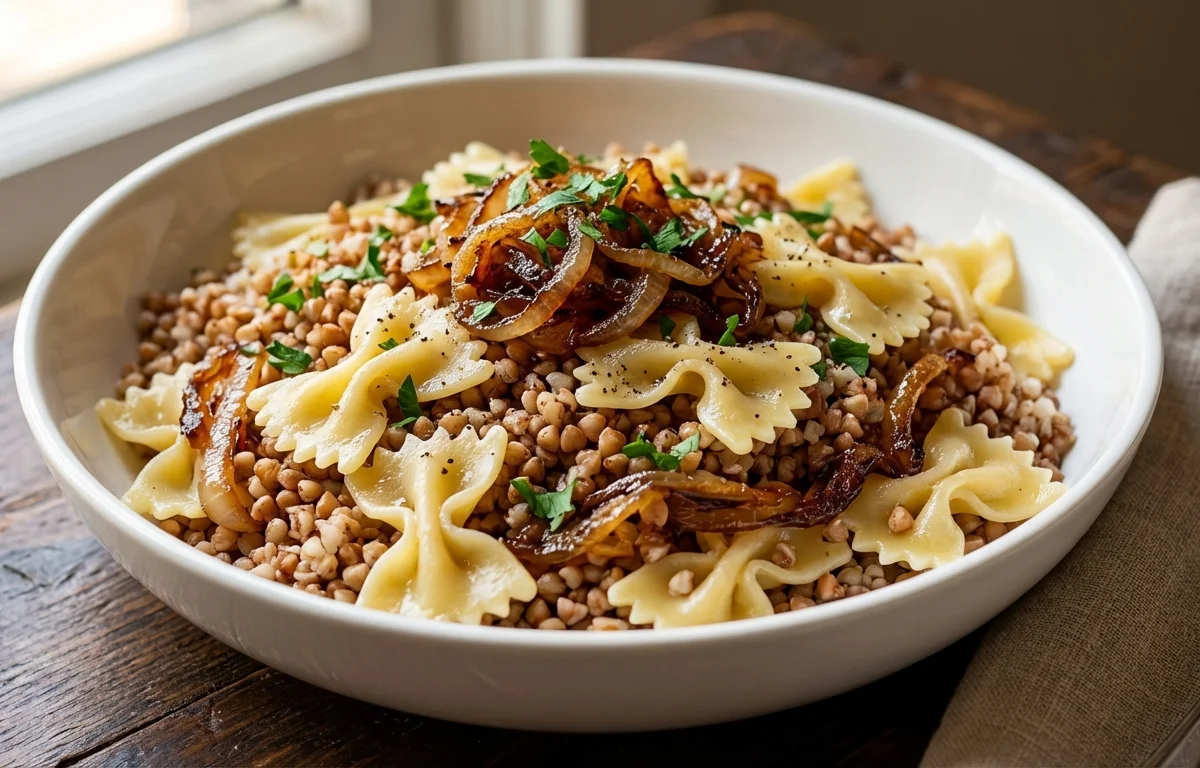
Kasha Varnishkes with Onions
A comforting Ashkenazi Jewish classic featuring toasted buckwheat groats (kasha) and bow-tie pasta, tossed with sweet, caramelized onions. This savory, earthy dish is perfect as a hearty side or a light main course.
For 4 servings
5 steps. 30 minutes total.
- 1
Step 1
- a.Cook the pasta in a large pot of generously salted boiling water according to package directions until al dente. Before draining, reserve about 1/2 cup of the pasta water. Drain the pasta well and set aside.
- 2
Step 2
- a.While the pasta cooks, heat the oil in a large, heavy-bottomed skillet or Dutch oven over medium-low heat. Add the sliced onions and a pinch of salt. Cook slowly, stirring occasionally, for 20-25 minutes, until the onions are soft, sweet, and a deep golden-brown color. Once caramelized, remove the onions from the skillet and set aside.
- 3
In a small bowl, whisk the egg
- a.Add the dry kasha and stir until every grain is thoroughly coated. Place the same skillet used for the onions over medium heat. Add the egg-coated kasha and cook, stirring and breaking up clumps constantly, for 3-4 minutes until the grains are dry, separate, and emit a nutty, toasted aroma.
- 4
Carefully pour the hot broth over the toasted kasha—it will sizzle and steam
- a.Stir in the remaining salt and black pepper. Bring the mixture to a boil, then immediately reduce the heat to the lowest setting, cover the skillet tightly, and let it simmer for 10-12 minutes, or until all the liquid has been absorbed. Do not lift the lid during this time.
- 5
Step 5
- a.Remove the skillet from the heat and let it stand, still covered, for 5-10 minutes. Uncover and gently fluff the kasha with a fork. Add the cooked bow-tie pasta and the caramelized onions to the skillet. Gently toss everything together until well combined. If the dish seems dry, add a splash of the reserved pasta water. Taste and adjust seasoning if necessary. Garnish with fresh parsley and serve warm.
What to keep in mind.
5 tips from the recipe — small details that make a real difference to the final dish.
- 1Don't skip coating the kasha in egg. This classic technique creates a barrier around each grain, preventing them from becoming mushy and ensuring a fluffy texture.
- 2Patience is key for caramelizing onions. Low and slow heat develops a deep, sweet flavor that is essential to the dish.
- 3Using hot broth helps the kasha cook more evenly and absorb the liquid properly.
- 4For a more traditional and richer flavor, use schmaltz (rendered chicken fat) instead of vegetable oil.
- 5Leftovers are delicious! Store in an airtight container in the refrigerator for up to 4 days. Reheat in a skillet with a splash of broth or water to revive it.
Adapt it for your goals.
Protein Boost
Stir in shredded brisket or leftover roasted chicken for a heartier main course.
Vegetable AdditionVegetable Addition
Add 8 oz of sliced and sautéed mushrooms with the onions for an extra layer of earthy flavor.
Herbaceous TwistHerbaceous Twist
Mix in a tablespoon of fresh dill along with the parsley for a brighter, more complex flavor profile.
Why this is on our healthy list.
Rich in Fiber
Buckwheat is an excellent source of dietary fiber, which aids in digestion, promotes a feeling of fullness, and helps maintain stable blood sugar levels.
Complete Plant-Based Protein
Buckwheat contains all nine essential amino acids, making it a complete protein source. This is beneficial for muscle repair, growth, and overall body function.
Heart-Healthy Minerals
This dish provides magnesium and manganese from buckwheat, which are known to support cardiovascular health by helping to regulate blood pressure and supporting bone health.
Frequently asked questions
A typical serving of about 1.5 cups contains approximately 380-450 calories, primarily depending on the amount and type of fat (oil, butter, or schmaltz) used.