
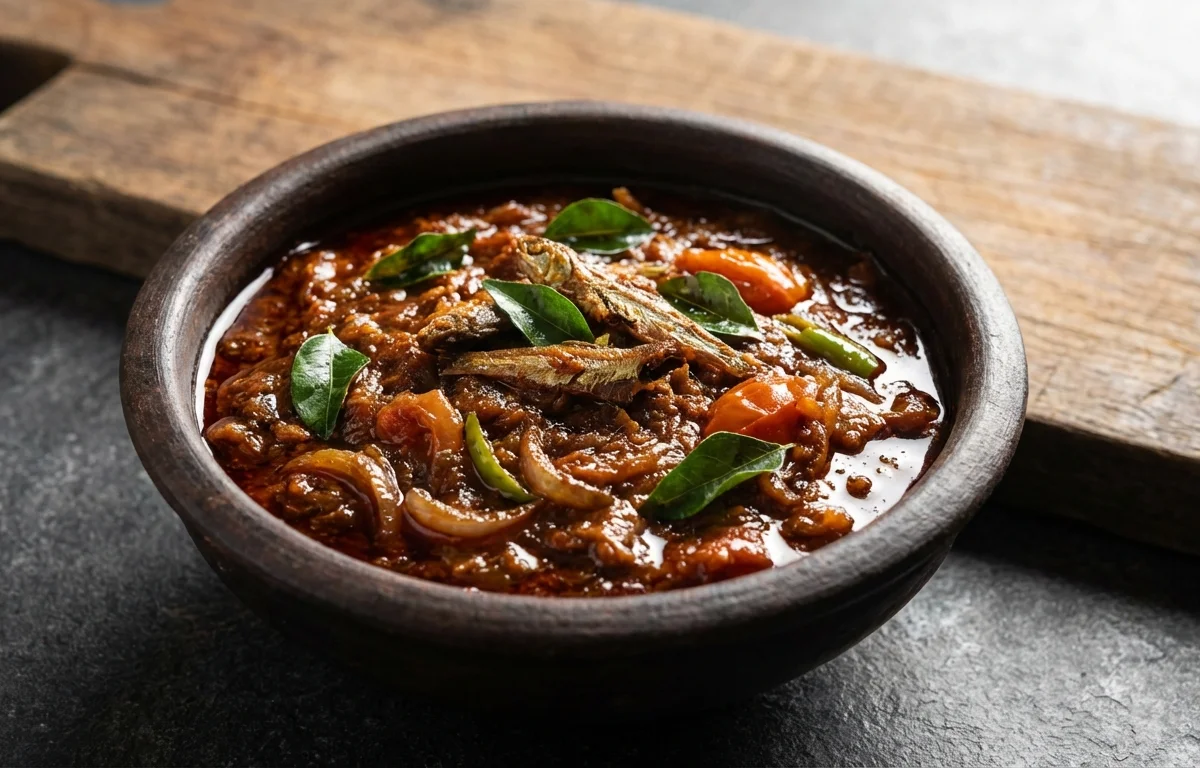
Karuvadu Thokku
A classic South Indian delicacy, this thick and spicy relish features dried fish simmered in a tangy onion-tomato base. It's the perfect umami-rich side for rice and sambar.
For 4 servings
Prepare the Dried Fish and Tamarind
- If the dried fish has heads, remove and discard them. Place the fish in a bowl and pour hot water over them. Let it soak for 10-15 minutes. This step is crucial to remove sand and reduce excess saltiness.
- After soaking, gently wash the fish 2-3 times in fresh water until the water runs clear. Drain completely and set aside. Be careful not to break the pieces.
- In a separate small bowl, soak the tamarind in 1/2 cup of warm water for 15 minutes. Squeeze the pulp thoroughly to extract its essence, then strain the liquid, discarding the solids. Set the tamarind extract aside.
Sauté the Aromatics
- Heat gingelly (sesame) oil in a heavy-bottomed pan or kadai over medium heat. Once hot, add the mustard seeds and let them splutter.
- Add the fenugreek seeds and curry leaves. Sauté for about 30 seconds until fragrant.
- Add the finely chopped onions and sauté for 8-10 minutes, stirring occasionally, until they turn soft and golden brown.
- Add the ginger-garlic paste and slit green chillies. Sauté for another 2 minutes until the raw aroma disappears.
Build the Masala Base
- Add the finely chopped tomatoes to the pan. Cook for 6-8 minutes, mashing them with the back of a spoon, until they break down completely and become mushy.
- Reduce the heat and add the turmeric powder, red chilli powder, and coriander powder. Stir well and cook for 2-3 minutes until the spices are aromatic and oil begins to separate from the masala.
- Pour in the prepared tamarind extract and add the salt. Remember to be very cautious with salt. Mix everything well and bring the mixture to a gentle boil.
Simmer and Finish the Thokku
- Gently add the cleaned dried fish to the pan. Stir very carefully to coat the fish pieces with the masala without breaking them.
- Reduce the heat to low, cover the pan, and let it simmer for 10-12 minutes. The thokku will thicken, and you'll see oil floating on top.
- Once the desired consistency is reached, turn off the heat. Let the thokku rest in the pan for at least 20 minutes before serving to allow the flavors to meld and deepen.
What to keep in mind.
5 tips from the recipe — small details that make a real difference to the final dish.
- 1The most crucial step is cleaning the dried fish properly. Do not skip the soaking in hot water, as it removes impurities and excess salt.
- 2Use gingelly (Indian sesame) oil for the most authentic and traditional flavor.
- 3Dried fish is very salty. Add a minimal amount of salt initially and taste at the end. You can always add more if needed.
- 4Simmering on low heat is key. It allows the fish to absorb the masala flavors without breaking apart and helps develop a rich, deep taste.
- 5This thokku tastes even better the next day. Store it in an airtight container in the refrigerator for up to a week.
Adapt it for your goals.
Different Fish
You can make this thokku with other varieties of dried fish like dried prawns (karuvadu eral) or dried sardines (mathi karuvadu). Adjust soaking and cooking times accordingly.
With Garlic PodsWith Garlic Pods
For an extra pungent flavor, add 10-12 whole peeled garlic pods along with the onions and sauté until they are soft.
With CoconutWith Coconut
For a slightly different texture and flavor, you can add 2 tablespoons of grated fresh coconut in the last 5 minutes of simmering.
Why this is on our healthy list.
Rich in Protein
Dried fish is a concentrated source of high-quality protein, which is essential for building and repairing tissues, muscle growth, and overall body function.
Excellent Source of Calcium
When small, whole dried fish are consumed, their edible bones provide a significant amount of calcium, which is vital for strong bones and teeth.
Contains Omega-3 Fatty Acids
Dried fish retains beneficial omega-3 fatty acids, known to support brain health, reduce inflammation, and contribute to a healthy cardiovascular system.
Frequently asked questions
A single serving of Karuvadu Thokku (about 1/2 cup or 175g) contains approximately 250-300 calories. The exact count depends on the type of fish and the amount of oil used.