
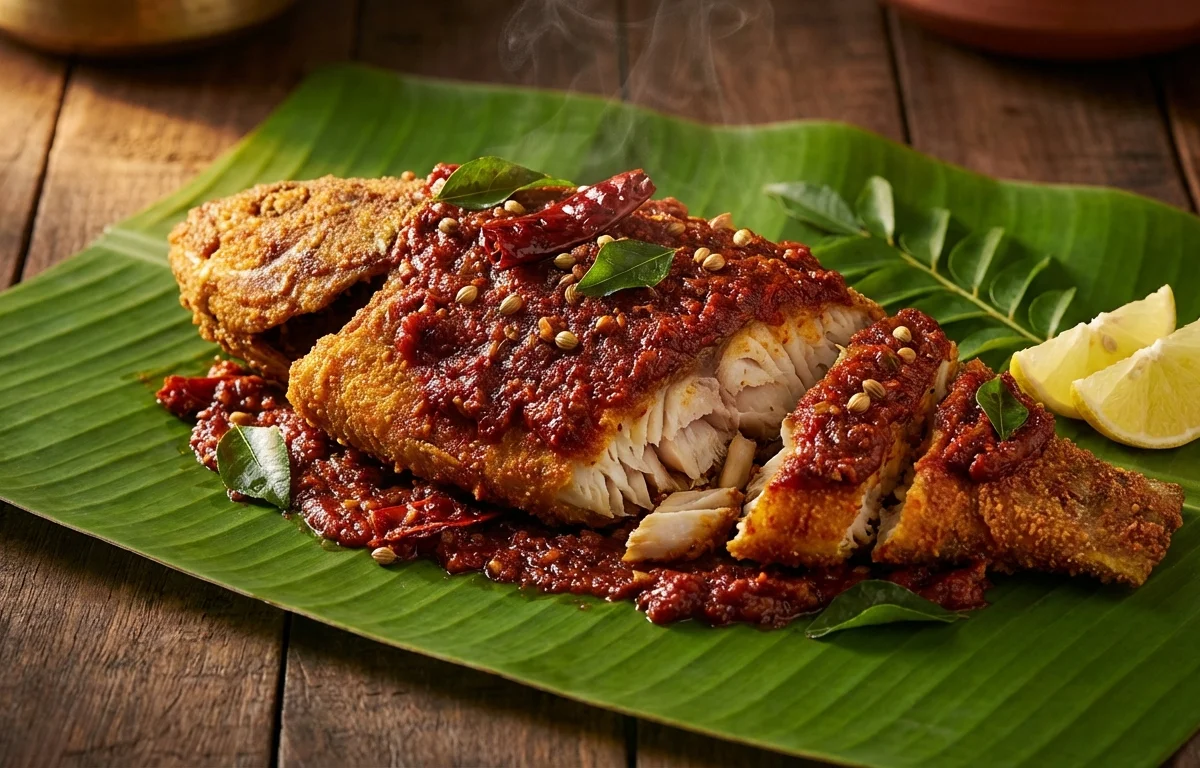
Kane Masala Fry
Crispy, pan-fried ladyfish coated in a fiery, tangy Mangalorean masala. This coastal Karnataka specialty features a vibrant red spice paste made from Byadgi chilies and a crunchy semolina crust, perfect as a starter or with rice and dal.
For 4 servings
Prepare the Masala Paste
- In a small pan, dry roast the Byadgi and Guntur red chilies, coriander seeds, cumin seeds, and black peppercorns on low heat for 2-3 minutes until they become fragrant. Be careful not to burn them.
- Allow the roasted spices to cool down completely.
- Transfer the cooled spices to a grinder jar. Add the ginger, garlic cloves, turmeric powder, tamarind paste, and 1 tsp of salt.
- Add 2-3 tablespoons of water and grind to a smooth, thick paste. The paste should be thick enough to coat the fish; add more water only 1 teaspoon at a time if necessary.
Marinate the Fish
- Rinse the cleaned fish and pat them completely dry with paper towels. This is crucial for the masala to adhere properly.
- Generously coat each piece of fish with the prepared masala paste, ensuring you rub it into the slits and cavities.
- Let the fish marinate for a minimum of 30 minutes at room temperature, or for up to 2 hours in the refrigerator for deeper flavor.
Coat the Fish
- In a shallow plate or tray, combine the fine rava, rice flour, and 1/4 tsp of salt. Mix well.
- Take each marinated fish piece and dredge it in the rava mixture, pressing gently to ensure it's evenly coated on all sides. Shake off any excess.
Shallow Fry the Fish
- Heat the coconut oil in a wide, heavy-bottomed pan or tawa over medium heat. The oil should be hot but not smoking.
- Gently place the coated fish pieces in the pan in a single layer. Do not overcrowd the pan; fry in batches if necessary.
- Fry for 4-5 minutes on the first side, until the coating is golden brown and crisp.
- Carefully flip the fish using a spatula and fry for another 4-5 minutes on the other side until it is cooked through and crispy. The fish is cooked when it flakes easily with a fork.
Serve Hot
- Remove the fried fish from the pan and place it on a wire rack to drain any excess oil and maintain crispiness.
- Serve immediately with fresh onion rings and lemon wedges on the side.
What to keep in mind.
5 tips from the recipe — small details that make a real difference to the final dish.
- 1Ensure the fish is completely dry before applying the masala for the best adhesion.
- 2The masala paste must be thick. A watery paste will not stick to the fish and will result in a soggy coating.
- 3For an authentic coastal flavor, use coconut oil for frying. It imparts a unique aroma and taste.
- 4Maintain a consistent medium heat while frying. If the heat is too high, the coating will burn before the fish is cooked through.
- 5Kane (Ladyfish) is delicate. Handle it gently, especially when flipping, to prevent it from breaking apart.
Adapt it for your goals.
Fish
This masala works wonderfully with other fish like pomfret (paplet), kingfish (surmai), or mackerel (bangda). Adjust frying time based on the thickness of the fish.
Healthier VersionHealthier Version
For a lower-calorie option, bake the coated fish in a preheated oven at 200°C (400°F) for 15-20 minutes, flipping halfway through. You can also use an air fryer.
CoatingCoating
If you don't have rava, you can use coarse rice flour or a mix of rice flour and chickpea flour (besan) for the coating.
Why this is on our healthy list.
Rich in Omega-3 Fatty Acids
Ladyfish is a good source of omega-3 fatty acids, which are crucial for brain health, reducing inflammation, and supporting cardiovascular function.
Excellent Source of Lean Protein
This dish provides high-quality protein essential for building and repairing tissues, muscle growth, and maintaining overall body function.
Anti-inflammatory Spices
The masala paste is rich in spices like turmeric, ginger, garlic, and black pepper, which are known for their potent anti-inflammatory and antioxidant properties, helping to combat oxidative stress.
Frequently asked questions
Kane, or Ladyfish, is a popular coastal fish in Karnataka known for its delicate, slightly sweet flesh and slender body. It has a central bone structure that is relatively easy to navigate, making it a favorite for frying.