
Kallappam
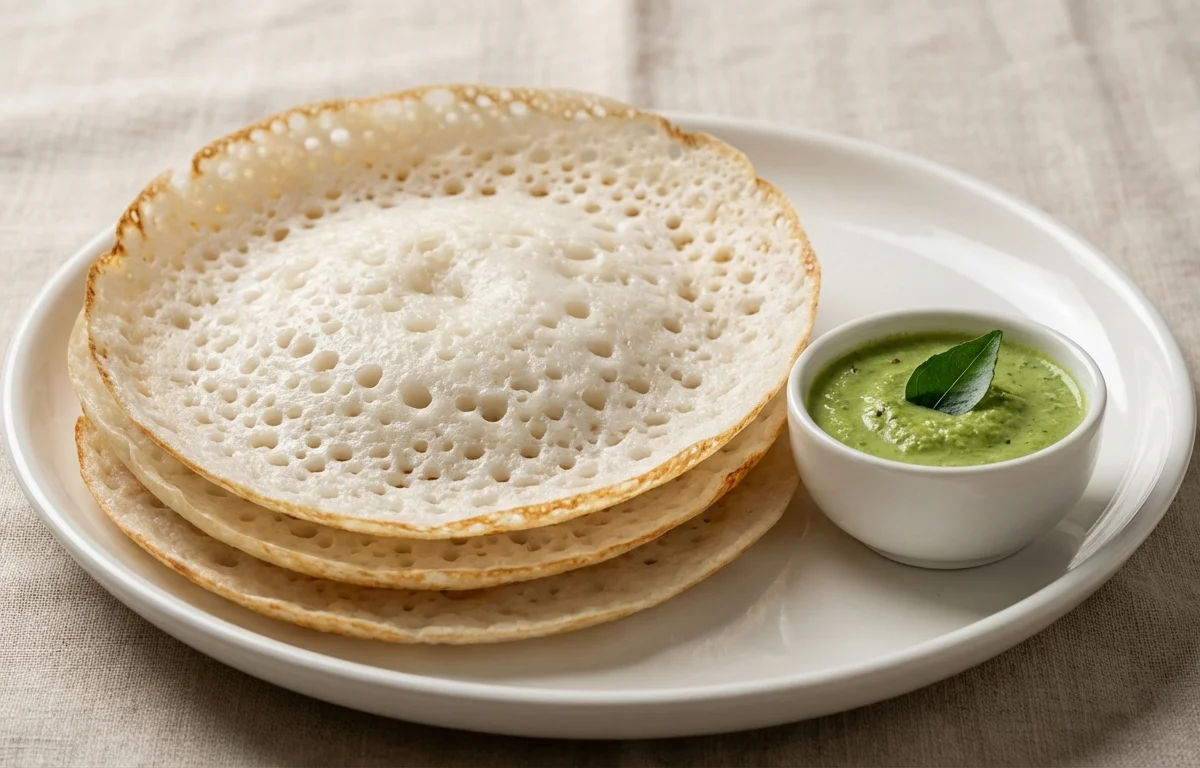
Soft, fluffy rice pancakes from Kerala with a delicate sweetness from coconut and a unique flavor from cumin and shallots. This fermented delicacy is a classic breakfast, perfect with vegetable stew or egg curry.
For 4 servings
4 steps. 20 minutes total.
- 1
Step 1
- a.Soak the Rice
- b.Wash the raw rice thoroughly in several changes of water until the water runs clear.
- c.Soak the rice in plenty of fresh water for 4 to 6 hours. Soaking softens the grains for a smoother batter.
- d.After soaking, drain the water completely using a colander and set the rice aside.
- 2
Step 2
- a.Prepare and Grind the Batter
- b.In a small bowl, activate the yeast by mixing it with 2 tablespoons of lukewarm water and 1 teaspoon of sugar (from the measured amount). Let it sit for 5-10 minutes until it becomes frothy.
- c.In a high-speed blender jar, add the drained raw rice, cooked rice, grated coconut, shallots, cumin seeds, the remaining sugar, and the activated yeast mixture.
- d.Add about 1 cup of water and grind everything to a smooth, fine batter. The batter should be thick yet pourable, similar to a pancake batter. Add a little more water, tablespoon by tablespoon, only if necessary.
- e.Transfer the batter to a large bowl or pot, ensuring it's only filled halfway to allow room for fermentation.
- 3
Step 3
- a.Ferment the Batter
- b.Add salt to the batter and mix well with a clean hand or a whisk for about a minute. This incorporates air and aids fermentation.
- c.Cover the bowl with a lid (not airtight) and place it in a warm, draft-free place to ferment for 8 to 12 hours, or overnight.
- d.The batter will rise, almost doubling in volume, and will be bubbly with a pleasant, slightly sour aroma. Fermentation time will vary depending on the ambient temperature.
- 4
Step 4
- a.Cook the Kallappams
- b.Once fermented, do not stir the batter vigorously. Gently give it one or two light stirs to even it out, preserving the air bubbles.
- c.Heat a heavy-bottomed pan or an appam pan (appachatty) over medium-low heat. Grease it lightly with a few drops of coconut oil.
- d.Pour one ladleful (about 1/3 cup) of batter into the center of the pan. Do not spread it; allow it to form a thick, round pancake naturally.
- e.Cover the pan with a lid and cook for 2-3 minutes on low heat.
- f.The Kallappam is cooked when the top is set and covered with small holes, and the edges are cooked through. The bottom should be a light golden brown. Kallappam is traditionally not flipped.
- g.Carefully remove the appam from the pan using a spatula. Repeat with the remaining batter, greasing the pan lightly between each appam.
- h.Serve hot with your favorite curry or stew.
What to keep in mind.
6 tips from the recipe — small details that make a real difference to the final dish.
- 1The batter consistency is key. It should be thick enough to hold its shape but pourable. If it's too thin, the appams will be flat; if too thick, they'll be dense.
- 2For best fermentation in colder climates, place the batter inside a turned-off oven with the light on.
- 3If you live in a very cold region, add salt after fermentation, as it can inhibit the yeast's activity.
- 4Using fresh, grated coconut provides the best flavor and moisture. Avoid using dry, desiccated coconut.
- 5Do not over-mix the batter after fermentation, as this will deflate the air pockets and result in dense appams.
- 6Store leftover batter in an airtight container in the refrigerator for up to 2 days. Bring it to room temperature before making appams.
Adapt it for your goals.
Traditional Toddy Version
For the most authentic flavor, replace the yeast and some of the water with 1/4 cup of fresh toddy ('kallu'). This is the traditional leavening agent that gives the dish its name.
Jaggery SweetenedJaggery Sweetened
Replace the white sugar with an equal amount of powdered jaggery for a more complex, earthy sweetness. You can also add 1/4 teaspoon of cardamom powder for extra aroma.
Savory VersionSavory Version
Reduce the sugar to 1 teaspoon. Add 1 finely chopped green chili and 1 teaspoon of chopped cilantro to the batter just before cooking for a savory twist.
Why this is on our healthy list.
Promotes Gut Health
The fermentation process involved in making the batter encourages the growth of beneficial probiotics, which aid in digestion and promote a healthy gut microbiome.
Sustained Energy Release
Made from rice, Kallappam is a rich source of complex carbohydrates, providing a steady supply of energy to keep you active throughout the morning.
Naturally Gluten-Free
This recipe is made entirely from rice and coconut, making it a safe and delicious option for individuals with gluten intolerance or celiac disease.
Frequently asked questions
Kallappam is thicker, softer, and spongier, made without swirling the batter, and often contains shallots and cumin. Palappam (or Appam) is thinner and crispier at the edges with a soft center, made by swirling the batter in a special pan, and typically does not contain shallots or cumin.