
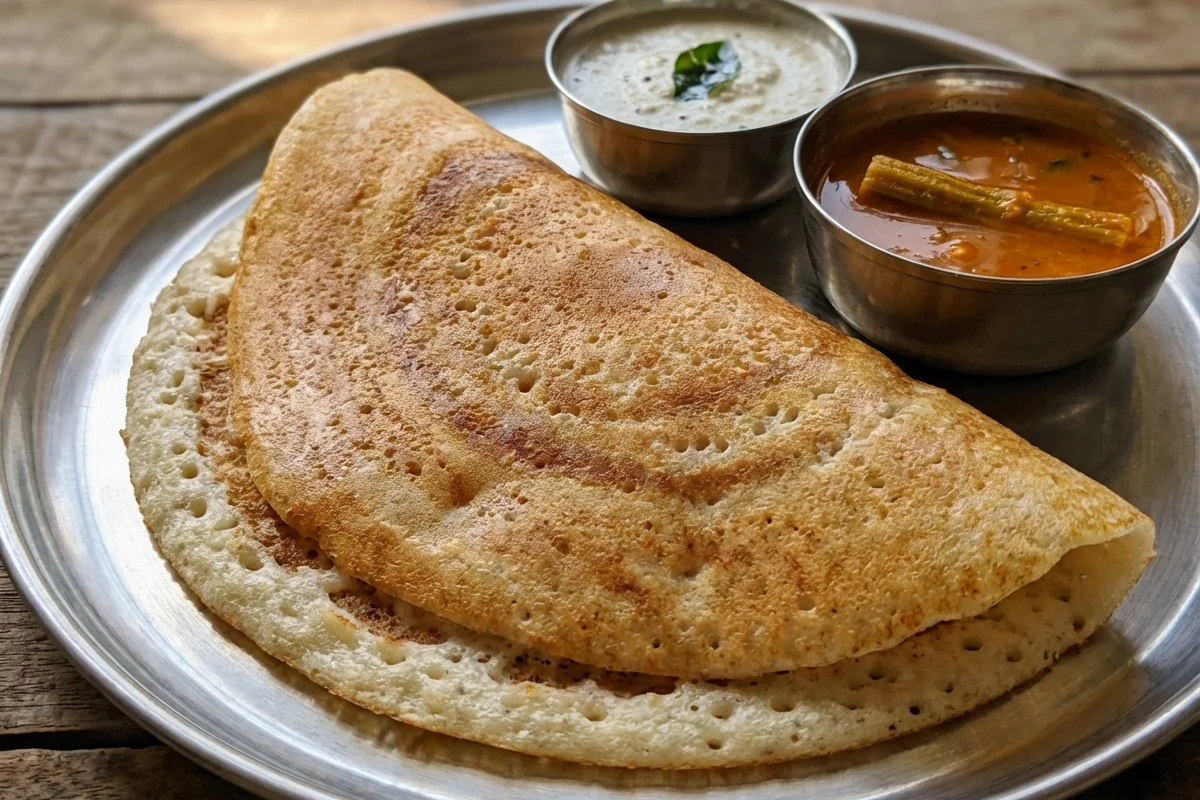
Kal Dosa
Discover the magic of Kal Dosa, a soft and spongy South Indian pancake. Unlike its crispy cousin, this dosa is delightfully thick and porous, perfect for soaking up flavorful sambar and chutney. A truly comforting breakfast classic that requires overnight fermentation.
For 4 servings
Soak the Rice and Lentils (5-6 hours)
- In a large bowl, rinse the idli rice 4-5 times until the water runs clear. Add fresh water to cover the rice by at least 2 inches and set aside to soak.
- In a separate medium bowl, rinse the urad dal and fenugreek seeds together. Add fresh water to cover and set aside to soak.
- Allow both bowls to soak for at least 5 to 6 hours.
Grind the Batter (25-30 minutes)
- About 15 minutes before grinding, rinse and soak the poha in a small amount of water until it softens.
- Drain the water from the urad dal and fenugreek seeds. Transfer them to a wet grinder or high-speed blender. Add about 3/4 cup of cold water and grind for 15-20 minutes until the batter is extremely smooth, light, and fluffy. Transfer this batter to a large, deep container (at least double the volume of the batter).
- Next, drain the water from the rice and the soaked poha. Add them to the same grinder. Add about 1 cup of water and grind to a smooth, yet slightly grainy texture (like fine semolina).
- Pour the rice batter into the container with the urad dal batter. Add the rock salt.
- Using your clean hands, mix both batters together thoroughly for 2-3 minutes. This traditional method introduces beneficial microbes and helps kickstart fermentation.
Ferment the Batter (8-12 hours)
- Cover the container with a lid, but do not seal it tightly; leave a small gap for gases to escape.
- Place the container in a warm, draft-free place (like inside a turned-off oven with the light on) to ferment for 8 to 12 hours.
- The batter is perfectly fermented when it has doubled in volume, is bubbly and frothy, and has a pleasant, slightly sour aroma.
Cook the Kal Dosas (15-20 minutes)
- Once fermented, gently stir the batter just once or twice. Do not overmix, as this will deflate the air pockets that make the dosa soft.
- Heat a cast-iron or non-stick tawa over medium heat. To check if it's ready, sprinkle a few drops of water; they should sizzle and evaporate immediately. Lightly grease the tawa with oil.
- Pour one ladleful of batter (about 1/3 cup) onto the center of the tawa. Do not spread it thin. Gently swirl the ladle to form a thick pancake, about 5-6 inches in diameter.
- Drizzle about 1/2 teaspoon of gingelly oil around the edges and on top of the dosa.
- Cover the tawa with a lid and cook for 1-2 minutes on medium heat. The top surface will become porous and appear cooked.
- Uncover and flip the dosa. Cook the other side for just 30-40 seconds. The Kal Dosa should remain soft and pale, not brown and crispy.
- Fold the dosa in half and remove it from the tawa.
Serve Hot
- Repeat the process with the remaining batter, greasing the tawa lightly between each dosa.
- Serve the soft and spongy Kal Dosas immediately with your choice of coconut chutney, kara chutney, or sambar.
What to keep in mind.
6 tips from the recipe — small details that make a real difference to the final dish.
- 1The batter consistency is key. It should be pourable, like thick pancake batter, not too thick or too watery.
- 2Using your hands to mix the batter before fermentation introduces beneficial bacteria that aid the process.
- 3If you live in a cold climate, place the batter container inside a turned-off oven with the light on to provide warmth for fermentation.
- 4Use non-iodized salt (like rock salt or sea salt) for better and more consistent fermentation.
- 5Do not overheat the tawa. A medium-hot tawa is perfect for getting soft, porous dosas without making them crispy.
- 6Store leftover batter in an airtight container in the refrigerator for up to 3 days. Bring it to room temperature before making dosas.
Adapt it for your goals.
Onion Kal Dosa
After pouring the batter on the tawa, sprinkle finely chopped onions and a pinch of chopped cilantro on top before covering to cook.
Podi Kal DosaPodi Kal Dosa
After drizzling oil on the dosa, generously sprinkle a spoonful of Idli Podi (gunpowder) over the surface before flipping.
Millet Kal DosaMillet Kal Dosa
For a healthier version, replace half of the idli rice with a millet like foxtail millet (thinai) or kodo millet (varagu). The soaking and grinding process remains the same.
Why this is on our healthy list.
Promotes Gut Health
The fermentation process enriches the batter with probiotics (good bacteria), which help maintain a healthy gut microbiome, improve digestion, and boost immunity.
Easily Digestible
Fermentation breaks down the complex carbohydrates, proteins, and phytic acid in the grains and lentils, making the nutrients more bioavailable and the dosa very easy to digest.
Balanced Nutrition
Kal Dosa offers a good balance of macronutrients, with complex carbohydrates from rice for sustained energy and plant-based protein from urad dal for muscle repair and growth.
Naturally Gluten-Free
Made entirely from rice and lentils, this dish is a safe and delicious option for individuals with gluten intolerance or celiac disease.
Frequently asked questions
Kal Dosa is thick, soft, and spongy, cooked on medium heat and often covered to steam. A regular paper or masala dosa is spread very thin, cooked on high heat until golden brown, and is known for its crispiness.