
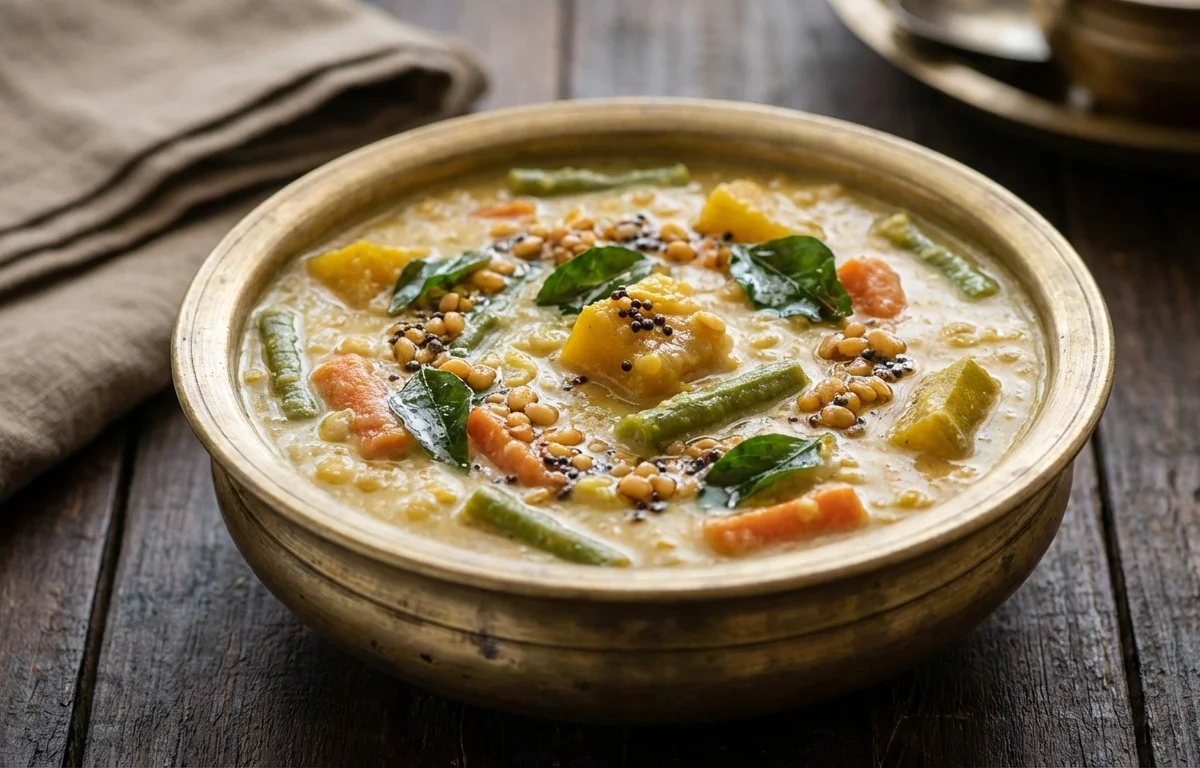
Kaikari Kootu
A wholesome South Indian stew made with mixed vegetables and lentils, simmered in a fragrant coconut-spice paste. This comforting Tamil Nadu classic is the perfect accompaniment to rice and appalam.
For 4 servings
Pressure Cook Lentils and Vegetables
- In a 3-liter pressure cooker, combine the rinsed toor dal, moong dal, chopped mixed vegetables, and turmeric powder.
- Pour in 3 cups of water and give it a quick stir.
- Secure the lid and pressure cook on medium heat for 4-5 whistles, or approximately 12-15 minutes, until the dal is completely soft and mushy.
- Allow the pressure to release naturally. This ensures the dal is cooked perfectly.
Prepare the Coconut Paste
- While the dal is cooking, add the grated coconut, cumin seeds, black peppercorns, and dry red chillies to a small blender or grinder jar.
- Add a few tablespoons of water (from the 1/4 cup) and grind to a smooth, thick paste. Add more water only if necessary to help the blades move.
Combine and Simmer
- Once the pressure has settled, open the cooker. The dal and vegetables should be well-cooked.
- Using the back of a ladle, gently mash the mixture to create a cohesive, thick consistency. Don't over-mash; some vegetable texture should remain.
- Add the ground coconut paste and salt to the cooker. Stir everything together until well combined.
- Turn the heat to low and let the kootu simmer for 5-7 minutes. This cooks the raw spices in the paste and allows the flavors to meld. The kootu will thicken further.
Prepare the Tempering (Tadka)
- In a small pan (tadka pan), heat the coconut oil over medium heat.
- Once the oil is hot, add the mustard seeds and wait for them to splutter completely, which takes about 30 seconds.
- Add the urad dal and sauté, stirring continuously, until it turns a light golden brown (about 1 minute).
- Carefully add the curry leaves (they will splutter) and the hing. Sauté for another 10-15 seconds until the curry leaves are crisp and fragrant.
Finish and Serve
- Immediately pour the hot tempering over the simmering kootu.
- Stir well to incorporate the tempering throughout the dish.
- Turn off the heat. Let it rest for 5 minutes before serving.
- Serve Kaikari Kootu hot with steamed rice, a dollop of ghee (optional), and crispy appalam (papad) on the side.
What to keep in mind.
5 tips from the recipe — small details that make a real difference to the final dish.
- 1For the most authentic flavor, use coconut oil for the tempering.
- 2Cut vegetables into uniform 1-inch cubes to ensure they cook evenly along with the dal.
- 3The consistency should be thick, like a stew. If it's too watery, simmer for a few extra minutes. If too thick, add a splash of hot water.
- 4For a deeper aroma, you can dry roast the cumin seeds and peppercorns for a minute before grinding them into the paste.
- 5Freshly grated coconut provides the best taste and texture. Frozen grated coconut is a good substitute; avoid using dry desiccated coconut.
Adapt it for your goals.
Vegetable Variations
This recipe is versatile. Use traditional South Indian vegetables like ash gourd (vellai poosanikai), snake gourd (pudalangai), or chayote squash (chow chow) for an authentic taste.
Lentil VariationsLentil Variations
You can make this kootu with only toor dal or only moong dal, or even with chana dal for a different texture. Adjust cooking time accordingly.
Add GarlicAdd Garlic
For a different flavor profile, add 1-2 cloves of garlic along with the coconut while grinding the paste.
Spicier VersionSpicier Version
Increase the number of dry red chillies or add one green chilli to the coconut paste for extra heat.
Why this is on our healthy list.
Rich in Plant-Based Protein
The combination of toor dal and moong dal provides a complete protein profile, essential for muscle repair, growth, and overall body function.
High in Dietary Fiber
Loaded with vegetables and lentils, this dish is an excellent source of dietary fiber, which aids digestion, promotes gut health, and helps maintain stable blood sugar levels.
Source of Healthy Fats
Coconut provides medium-chain triglycerides (MCTs), a type of healthy fat that is easily digested and can provide a quick source of energy.
Packed with Vitamins and Minerals
The variety of vegetables contributes essential vitamins like A and C, and minerals such as potassium and magnesium, supporting overall immunity and well-being.
Frequently asked questions
Yes, Kaikari Kootu is very healthy. It's a balanced dish packed with plant-based protein from lentils, fiber from vegetables, and healthy fats from coconut. It's naturally gluten-free and aids in digestion.