
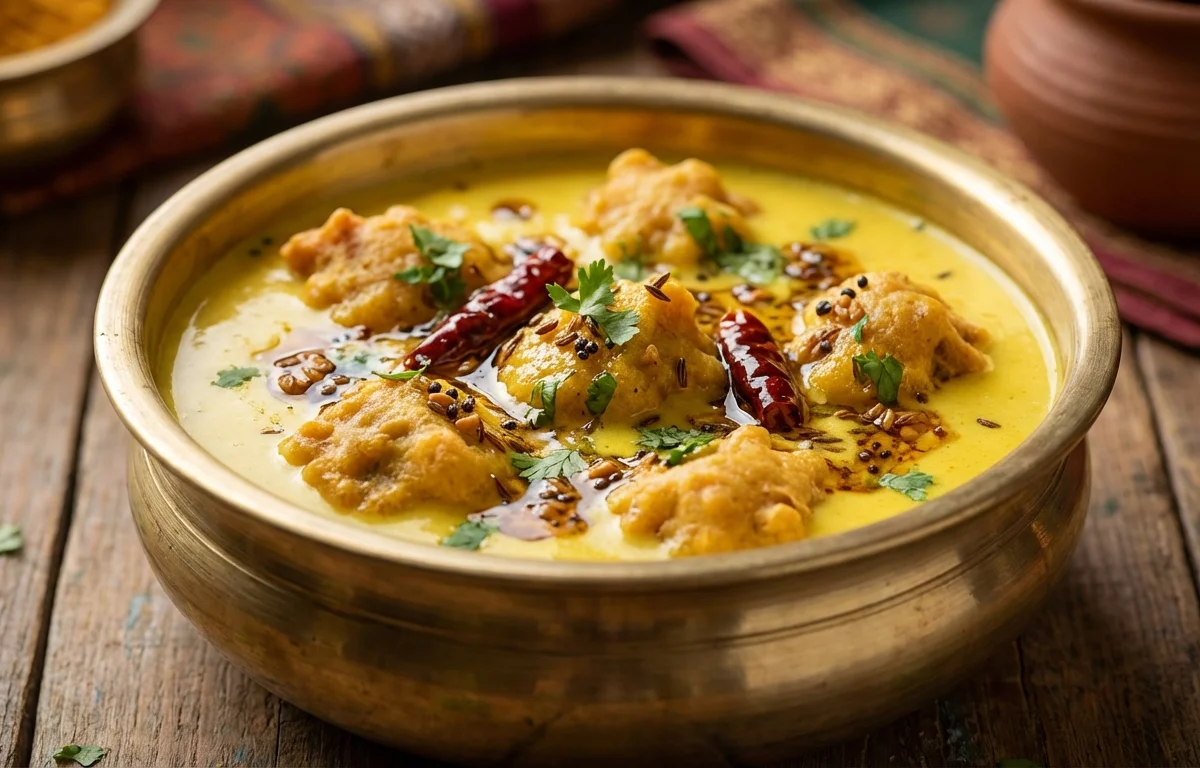
Kadhi Pakora
A lighter take on the classic Punjabi comfort food. This recipe features soft, baked besan fritters simmered in a tangy, spiced yogurt curry, finished with a fragrant tempering.
For 4 servings
Prepare the pakora batter
- Preheat your oven to 200°C (400°F) and line a baking sheet with parchment paper.
- In a mixing bowl, combine 1/2 cup of besan, sliced onion, green chili, 1 tbsp coriander leaves, a pinch of asafoetida, 1/4 tsp red chili powder, and 1/2 tsp salt.
- Gradually add about 1/3 cup of water, mixing to form a thick, dropping consistency batter. Do not overmix.
TIPThe batter should be thick enough to hold its shape. If it's too runny, the pakoras will spread out while baking.Bake the pakoras
- Drop spoonfuls of the batter onto the prepared baking sheet, leaving some space between each.
- Lightly brush the tops of the pakoras with 1 tsp of vegetable oil.
- Bake for 10 minutes, then flip them over, brush with the remaining 1 tsp of oil, and bake for another 8-10 minutes until golden and crisp.
TIPBaking instead of frying makes the pakoras much lighter and healthier, without compromising on texture.Prepare the kadhi base
While the pakoras are baking, whisk the yogurt in a large, heavy-bottomed pot until smooth. Add the remaining 1/4 cup besan, turmeric powder, remaining red chili powder, and 1/2 tsp salt. Whisk again to form a lump-free paste.
TIPEnsuring the besan is fully incorporated into the yogurt before adding water is key to a smooth, non-lumpy kadhi.Simmer the kadhi
- Slowly pour in the 4 cups of water while continuously whisking to maintain a smooth mixture.
- Bring the mixture to a boil over medium heat, stirring constantly to prevent the yogurt from curdling.
- Once it boils, reduce the heat to low and let it simmer for 15-20 minutes, stirring occasionally, until it thickens slightly and the raw smell of besan is gone.
TIPDo not stop stirring until the kadhi comes to a full boil. This is the most important step to prevent curdling.Add pakoras to the kadhi
Gently add the baked pakoras to the simmering kadhi. Let them cook in the kadhi for 5 minutes to soften and absorb the flavors.
Make the final tempering
- Heat 1 tsp of ghee in a small pan or tadka pan over medium heat.
- Add the mustard seeds and cumin seeds. Once they start to splutter, add the fenugreek seeds, broken dried red chilies, and curry leaves.
- Sauté for about 30 seconds until fragrant.
TIPPour the tempering over the kadhi immediately and cover the pot for a minute to infuse the aromas.Garnish and serve
Stir the tempering into the kadhi. Garnish with the remaining 2 tbsp of fresh coriander leaves. Serve hot with steamed rice or roti.
What to keep in mind.
5 tips from the recipe — small details that make a real difference to the final dish.
- 1Use sour yogurt for the best tangy flavor. If your yogurt is fresh, leave it on the counter for a couple of hours to sour slightly.
- 2To make your baked pakoras extra soft, you can add a pinch of baking soda to the batter.
- 3The consistency of the kadhi is a personal preference. If you like it thinner, add a little more hot water.
- 4Kadhi thickens as it cools. Reheat gently with a splash of water to get the right consistency.
- 5Don't skip the asafoetida in the pakora batter; it aids digestion and adds a unique flavor.
Adapt it for your goals.
Vegan
Replace the yogurt with a plant-based yogurt (like cashew or coconut) and use oil instead of ghee for the tempering.
jainJain
Omit the onion from the pakoras. You can add grated bottle gourd (lauki) or cabbage instead for texture.
gluten freeGluten free
This recipe is naturally gluten-free as it uses besan (chickpea flour). Just ensure your asafoetida is gluten-free, as some brands contain wheat flour.
healthyHealthy
To make it even healthier, add chopped spinach or fenugreek leaves (methi) to the pakora batter for extra nutrients and fiber.
Why this is on our healthy list.
Good Source of Protein
Both besan (chickpea flour) and yogurt are excellent sources of protein, which is essential for muscle repair and overall body function.
Rich in Probiotics
Yogurt is a natural probiotic that promotes a healthy gut microbiome, aiding in digestion and boosting immunity.
Lower in Fat
By baking the pakoras and using minimal ghee, this recipe is significantly lower in saturated fat and overall calories compared to the traditional fried version, making it a heart-friendlier option.
Gluten-Free
Besan is naturally gluten-free, making this dish a great option for those with gluten intolerance or celiac disease.
Frequently asked questions
This version of Kadhi Pakora is made healthier by baking the pakoras instead of deep-frying, which significantly reduces the oil content. It's a good source of protein from yogurt and besan. Using low-fat yogurt further reduces saturated fat.