
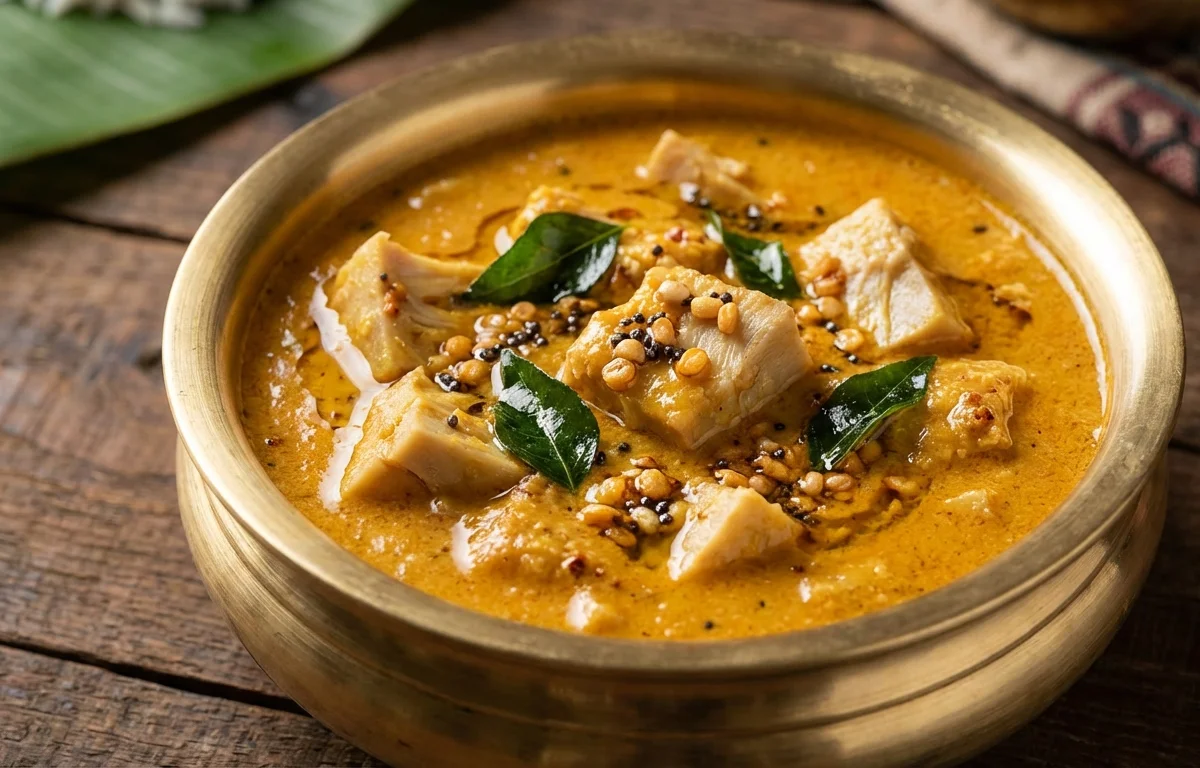
Kadgi Gashi
A classic Konkani curry featuring tender raw jackfruit simmered in a fragrant, tangy coconut masala. This traditional Mangalorean dish is a delightful blend of sweet, sour, and spicy flavors, best enjoyed with steamed rice.
For 4 servings
Prepare and Cook the Jackfruit
- Apply a little oil to your hands and knife to prevent the jackfruit sap from sticking.
- Peel the green skin, remove the hard central core, and cut the jackfruit into 1-inch cubes.
- In a pressure cooker, combine the jackfruit cubes, turmeric powder, 0.5 tsp of salt, and 1 cup of water.
- Pressure cook for 2-3 whistles (about 10-12 minutes) until the jackfruit is tender but still holds its shape. Allow the pressure to release naturally.
Roast Spices and Grind the Masala
- While the jackfruit cooks, heat a small pan over low-medium heat. Dry roast the dried red chilies, coriander seeds, and cumin seeds for 2-3 minutes until they become fragrant. Be careful not to burn them.
- Let the roasted spices cool completely.
- In a grinder jar, add the cooled spices, grated coconut, and the soaked tamarind (squeeze out the pulp and discard the fiber).
- Add about 0.5 cup of water and grind to a very smooth paste. Add a little more water if needed to facilitate grinding.
Simmer the Curry
- Transfer the cooked jackfruit along with its cooking water to a large pot or kadai.
- Pour in the ground coconut masala paste. Rinse the grinder with a little water (up to 0.5 cup) and add it to the pot.
- Add the grated jaggery and the remaining 1 tsp of salt. Stir everything together gently.
- Bring the curry to a boil over medium heat. Once boiling, reduce the heat to low, cover, and let it simmer for 8-10 minutes, allowing the flavors to meld.
Prepare the Tempering (Tadka)
- In a small pan (tadka pan), heat the coconut oil over medium heat.
- Once the oil is hot, add the mustard seeds and let them splutter completely.
- Add the curry leaves and fry for about 30 seconds until they become crisp and aromatic.
- Immediately pour this hot tempering over the simmering gashi.
Finalize and Serve
- Stir the tempering into the curry. Let it simmer for another minute.
- Turn off the heat. Let the Kadgi Gashi rest for at least 10 minutes before serving.
- Serve hot with steamed rice or red boiled rice (matta rice).
What to keep in mind.
7 tips from the recipe — small details that make a real difference to the final dish.
- 1Oiling your hands and knife is crucial when cutting raw jackfruit to prevent the sticky sap from making a mess.
- 2Do not overcook the jackfruit; it should be tender enough to bite into but not mushy.
- 3Roasting spices on low heat is key to releasing their essential oils and aroma without burning them.
- 4For a richer flavor, use freshly grated coconut instead of desiccated or frozen.
- 5The amount of jaggery and tamarind can be adjusted to achieve your preferred balance of sweet and tangy.
- 6This curry tastes even better the next day as the flavors deepen overnight.
- 7If fresh raw jackfruit is unavailable, you can use canned green jackfruit in brine. Drain and rinse it well before use.
Adapt it for your goals.
With Legumes
Add 1/2 cup of cooked black-eyed peas (alsande) or chickpeas along with the jackfruit for a protein boost and a different texture. This is a common variation in Konkani households.
Vegetable SwapVegetable Swap
If raw jackfruit is unavailable, you can make this gashi with raw bananas (plantains), potatoes, or suran (yam). Adjust the cooking time accordingly.
Creamier GravyCreamier Gravy
For a richer, creamier gravy, add 2-3 soaked cashews while grinding the coconut masala.
Why this is on our healthy list.
Rich in Dietary Fiber
Raw jackfruit is an excellent source of dietary fiber, which aids digestion, promotes gut health, prevents constipation, and helps in maintaining stable blood sugar levels.
Source of Healthy Fats
The use of fresh coconut and coconut oil provides medium-chain triglycerides (MCTs), which are easily digestible fats that can provide a quick source of energy and support heart health.
Anti-inflammatory Properties
Spices like turmeric and coriander seeds used in the masala are known for their potent anti-inflammatory and antioxidant properties, which help combat oxidative stress in the body.
Frequently asked questions
One serving of Kadgi Gashi (approximately 1 cup or 225g) contains around 200-250 calories. The exact count depends on the amount of coconut and oil used.