
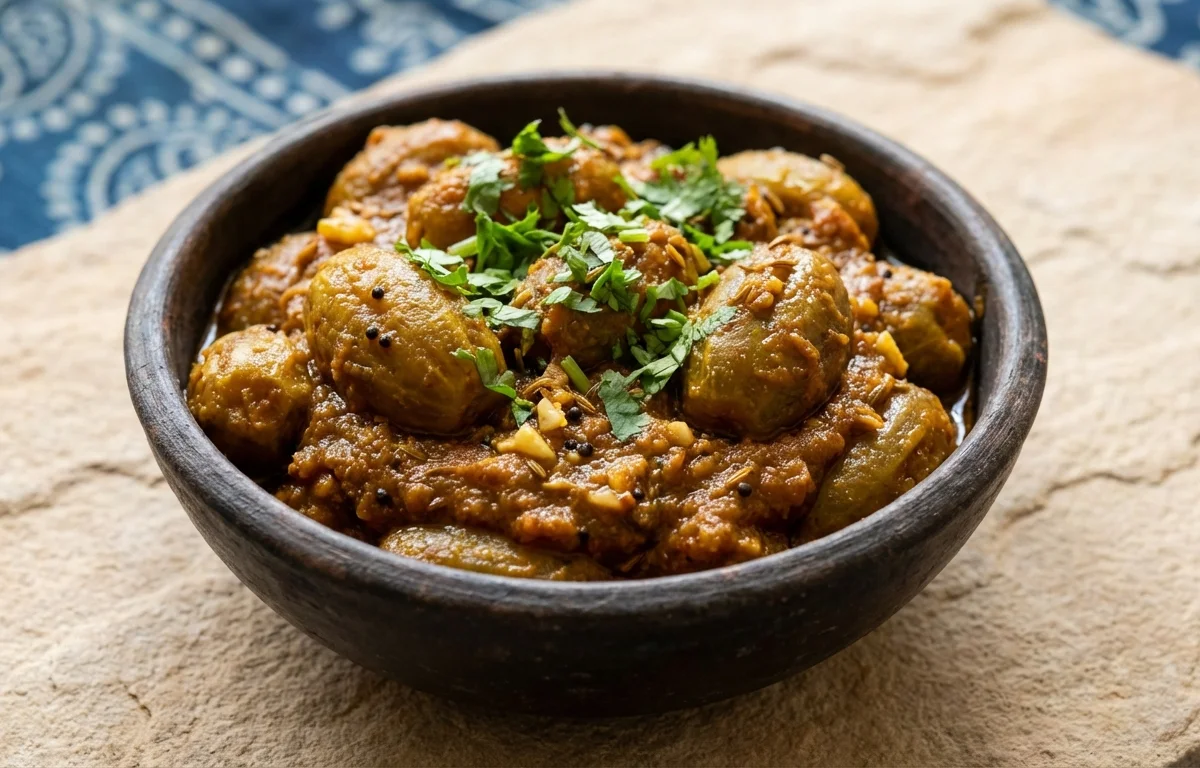
Kachri Sabzi
A tangy and spicy Rajasthani delicacy made from dried wild cucumbers. This simple yet flavorful stir-fry captures the essence of desert cuisine with its unique sour notes and minimal ingredients, perfect with bajra roti.
For 4 servings
Prepare the Kachri (30 minutes soaking + 5 minutes active)
- Rinse the dried kachri thoroughly under running water to remove any dust.
- Place them in a bowl and cover with 2 cups of warm water. Let them soak for at least 30 minutes, or until they become soft and pliable.
- Once softened, drain the water completely. Slice the kachri into thin rounds or halves and set aside.
Prepare the Tempering (2 minutes)
- Heat mustard oil in a kadai or heavy-bottomed pan over medium heat until it's fragrant and just begins to smoke.
- Reduce the heat to low. Add the mustard seeds and let them crackle for about 30 seconds.
- Add the cumin seeds and hing (asafoetida). Sauté for another 20-30 seconds until the cumin seeds sizzle and become aromatic.
Sauté Aromatics and Kachri (3 minutes)
- Add the finely chopped garlic and slit green chilies to the pan. Sauté for about a minute until the raw smell of garlic disappears.
- Add the soaked and sliced kachri. Stir well to coat them evenly with the tempered oil and spices.
Add Spices and Cook (10 minutes)
- Add the turmeric powder, red chili powder, coriander powder, and salt to the pan.
- Stir continuously for 1-2 minutes to cook the spices without burning them.
- Pour in 1/4 cup of water, mix well, and bring the mixture to a gentle simmer.
- Cover the pan with a lid, reduce the heat to low, and let the sabzi cook for 8-10 minutes, or until the kachri is tender and the oil begins to separate at the edges.
- If there's excess moisture, remove the lid and cook on medium heat for another minute until the sabzi is dry.
Garnish and Serve
- Turn off the heat. Garnish with freshly chopped coriander leaves.
- Serve the Kachri Sabzi hot with bajra roti, phulka, or as a side dish with dal and rice.
What to keep in mind.
6 tips from the recipe — small details that make a real difference to the final dish.
- 1Soaking the kachri is a crucial step to rehydrate it and make it tender; do not skip this.
- 2Using mustard oil provides the most authentic Rajasthani flavor, but you can substitute it with any neutral vegetable oil.
- 3Before soaking, you can taste a tiny piece of a dried kachri. If it's unusually bitter, it's best to discard that batch to avoid spoiling the dish.
- 4This is traditionally a dry sabzi. Add just enough water to cook the kachri until tender, allowing it to evaporate by the end.
- 5For an extra tang, you can add a pinch of amchur (dry mango powder) towards the end of cooking.
- 6Store leftovers in an airtight container in the refrigerator for up to 3 days.
Adapt it for your goals.
With Potatoes
Add one small boiled and cubed potato along with the kachri for a more filling and less tangy sabzi.
With OnionsWith Onions
Sauté one finely chopped onion after the tempering until golden brown before adding the garlic and green chilies for a sweeter base.
Creamier VersionCreamier Version
Stir in 1-2 tablespoons of whisked curd (yogurt) at the very end with the heat turned off. Ensure the curd is at room temperature to prevent it from splitting.
Why this is on our healthy list.
Rich in Fiber
Kachri is a good source of dietary fiber, which aids digestion, promotes gut health, and helps in maintaining regular bowel movements.
Aids in Digestion
The tangy properties of kachri, along with spices like hing and cumin, can stimulate digestive enzymes and help alleviate issues like indigestion and bloating.
Source of Antioxidants
This wild cucumber variety contains antioxidants that help combat free radicals in the body, potentially reducing cellular damage and supporting overall health.
Frequently asked questions
Kachri is a wild variety of cucumber that grows in the arid regions of Rajasthan. It is sun-dried and used as a souring agent. You can find dried kachri at Indian grocery stores or online, especially those specializing in regional ingredients.