
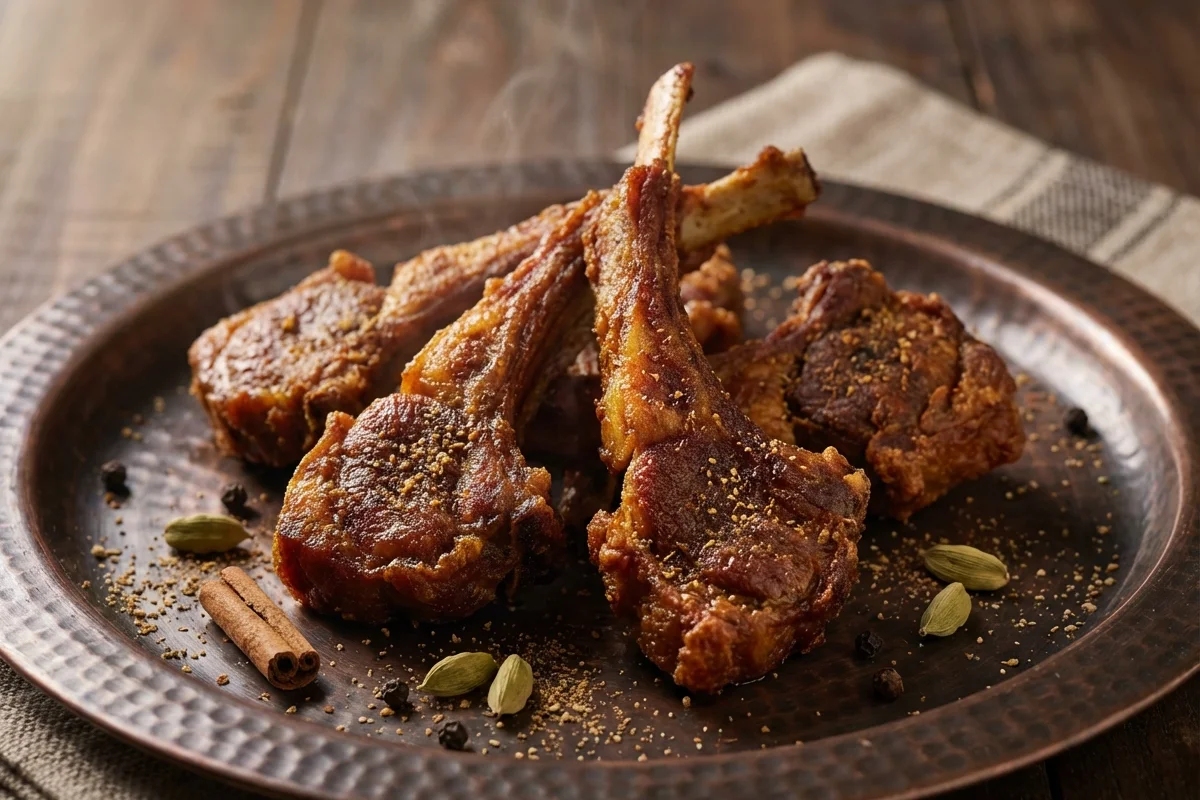
Kabargah
A celebrated Kashmiri delicacy, Kabargah features tender mutton ribs first simmered in milk and aromatic spices, then fried in ghee to a perfect golden crisp. A true taste of Wazwan cuisine.
For 4 servings
4 steps. 60 minutes total.
- 1
Step 1
- a.Prepare and Simmer the Mutton Ribs
- b.Wash the mutton ribs thoroughly and pat them dry. Place them in a large, heavy-bottomed pot or a pressure cooker.
- c.Add the full-fat milk, water, fennel powder, dry ginger powder, asafoetida, green and black cardamoms, cloves, cinnamon stick, black peppercorns, and salt.
- d.Stir gently to combine all the ingredients.
- e.Bring the mixture to a boil over medium-high heat. Once boiling, reduce the heat to a low simmer.
- f.Cover the pot and cook for 50-60 minutes, or until the ribs are tender but not falling off the bone. Most of the liquid should be absorbed.
- g.Alternatively, if using a pressure cooker, cook for 4-5 whistles (about 20-25 minutes) on medium heat.
- 2
Step 2
- a.Cool the Ribs Completely
- b.Once tender, carefully remove the cooked ribs from the pot using tongs, allowing excess liquid to drip off. Discard the whole spices.
- c.Arrange the ribs in a single layer on a wire rack or a large plate.
- d.Let the ribs cool down completely to room temperature. This step is crucial to ensure they hold their shape and don't break apart during frying. You can refrigerate them for 30 minutes to speed up the process.
- 3
Step 3
- a.Fry the Ribs to a Golden Crisp
- b.If using, lightly coat the cooled ribs with the whisked curd.
- c.Heat the ghee in a wide, shallow pan (kadhai) over medium-high heat. The ghee should be hot but not smoking.
- d.Carefully place the ribs in the hot ghee, ensuring not to overcrowd the pan. Fry in batches if necessary.
- e.Shallow-fry for 3-4 minutes on each side, until they turn a deep golden brown and become crispy.
- f.Once fried, remove the ribs with a slotted spoon and place them on a plate lined with paper towels to drain any excess ghee.
- 4
Step 4
- a.Serve Hot
- b.Arrange the hot and crispy Kabargah on a serving platter.
- c.Serve immediately as a standalone appetizer or as a side dish with naan, rice, and a chutney of your choice.
What to keep in mind.
6 tips from the recipe — small details that make a real difference to the final dish.
- 1Ensure the ribs are very tender after boiling, but not so much that they fall off the bone. This is the key to perfect Kabargah.
- 2Cooling the ribs completely before frying is essential to prevent them from breaking apart in the hot ghee.
- 3For the most authentic Kashmiri flavor, do not substitute the ghee with oil.
- 4Do not overcrowd the pan while frying; cook in batches to ensure each piece becomes perfectly crisp.
- 5The remaining cooking liquid (yakhni) is very flavorful. Strain it and use it as a stock for other dishes like pulao or soup.
- 6Pat the boiled ribs dry before frying to minimize splattering and achieve a better crust.
Adapt it for your goals.
Protein
Use lamb ribs instead of mutton for a slightly milder flavor. Adjust cooking time as lamb may cook faster.
Spice LevelSpice Level
For a spicier version, add 1-2 slit green chilies or a pinch of red chili powder to the milk mixture during the boiling stage.
Cooking MethodCooking Method
For a healthier, lower-fat version, brush the boiled and cooled ribs with a little melted ghee and air fry at 200°C (400°F) for 10-12 minutes, flipping halfway, until golden and crisp.
Why this is on our healthy list.
Rich in Protein
Mutton is an excellent source of high-quality protein, essential for building and repairing tissues, muscle growth, and overall body function.
Source of Heme Iron
The red meat provides heme iron, which is more easily absorbed by the body than non-heme iron from plant sources. Iron is crucial for preventing anemia and maintaining energy levels.
Provides B-Vitamins
Mutton is a good source of B-vitamins, particularly B12 and B3 (niacin), which are vital for energy metabolism, nervous system health, and red blood cell formation.
Frequently asked questions
Kabargah is a traditional Kashmiri dish from the Wazwan feast. It involves mutton ribs that are first slow-cooked in milk and spices until tender, and then fried in ghee to achieve a crispy exterior.