
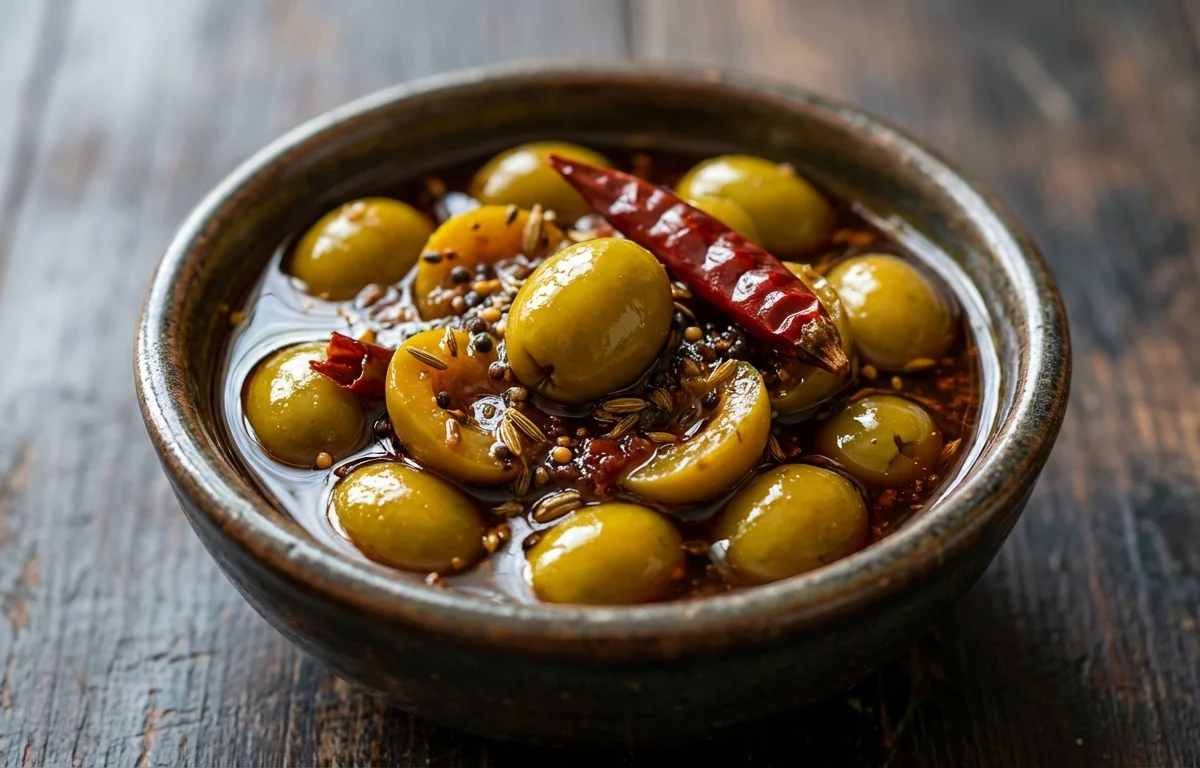
Jolphai Achar
A tangy and spicy Assamese pickle made from Indian olives (jolphai). This traditional condiment combines the unique tartness of the fruit with pungent mustard oil and an aromatic five-spice blend, perfect with rice and dal.
For 24 servings
Prepare the Olives
- Wash the Indian olives (jolphai) thoroughly under running water.
- In a large pot, bring 1 liter of water to a rolling boil.
- Carefully add the olives to the boiling water.
- Cook for 10-12 minutes, or until the olives are soft enough to be easily pierced with a fork but not mushy.
- Drain the water completely using a colander and let the olives cool down to room temperature.
Mash and De-seed the Olives
- Once the olives are cool to the touch, gently mash them using a potato masher or the back of a large spoon.
- As you mash, remove and discard the seeds.
- Aim for a coarse, chunky texture. Avoid making a smooth paste to maintain the traditional consistency of the achar.
Temper the Spices
- In a heavy-bottomed pan or kadai, heat the mustard oil on medium-high heat until it reaches its smoking point. This step is crucial to remove the oil's raw pungency.
- Turn off the heat and allow the oil to cool slightly for about 1-2 minutes. This prevents the spices from burning.
- Turn the heat back on to low. Add the panch phoron, broken dried red chilies, and asafoetida.
- Sauté for about 30-45 seconds until the spices become fragrant and sizzle, but do not let them turn dark.
Cook the Pickle
- Add the mashed olive mixture to the pan with the tempered spices.
- Stir in the turmeric powder, red chili powder, and salt. Mix thoroughly to ensure the olives are evenly coated.
- Cook on low heat for 5-7 minutes, stirring frequently, until the oil begins to separate from the mixture at the edges.
- If using jaggery, add it now. Continue to cook and stir for another 2-3 minutes until the jaggery has completely dissolved and integrated into the pickle.
Cool, Store, and Mature
- Turn off the heat and let the pickle cool down completely to room temperature. This can take a couple of hours.
- Transfer the cooled achar into a completely dry and sterilized glass jar.
- Secure the lid tightly. For best flavor development and preservation, place the jar in direct sunlight for 3-5 days. This traditional sunning process helps mature the pickle.
- The pickle is ready to eat but tastes best after maturing for at least one week.
What to keep in mind.
6 tips from the recipe — small details that make a real difference to the final dish.
- 1Ensure the jar is completely dry and sterilized to prevent mold and spoilage.
- 2Heating mustard oil until it smokes is essential for a milder, more pleasant flavor.
- 3Always use a clean, dry spoon to serve the pickle to avoid introducing moisture and bacteria.
- 4The amount of salt is crucial for preservation, so do not reduce it significantly unless you plan to refrigerate and consume the pickle quickly.
- 5If you don't have access to direct sunlight, you can mature the pickle by keeping it in a warm, dry place for 7-10 days.
- 6For a garlicky flavor, you can add 4-5 crushed garlic cloves along with the panch phoron.
Adapt it for your goals.
Add Garlic and Ginger
For extra flavor, add 1 tablespoon of coarsely crushed garlic and 1 teaspoon of grated ginger to the hot oil along with the other tempering spices.
Sweeter VersionSweeter Version
Increase the amount of jaggery to 3-4 tablespoons for a more pronounced sweet and sour (khatta meetha) taste.
Spicier KickSpicier Kick
Add a few slit green chilies along with the mashed olives for an extra layer of heat and fresh chili flavor.
Why this is on our healthy list.
Rich in Antioxidants
Indian olives, turmeric, and other spices are packed with antioxidants, which help protect the body against damage from free radicals.
Aids Digestion
Spices like asafoetida and fennel (a component of panch phoron) are traditionally known to aid digestion and prevent bloating. The fermentation process also promotes gut-friendly bacteria.
Anti-inflammatory Properties
Turmeric contains curcumin, a powerful anti-inflammatory compound. Mustard oil is also rich in omega-3 fatty acids, which can help reduce inflammation in the body.
Frequently asked questions
Jolphai is the Assamese name for the Indian olive (Elaeocarpus serratus). It is a sour, tangy fruit native to South and Southeast Asia, commonly used in pickles, chutneys, and dals in Northeast India.