
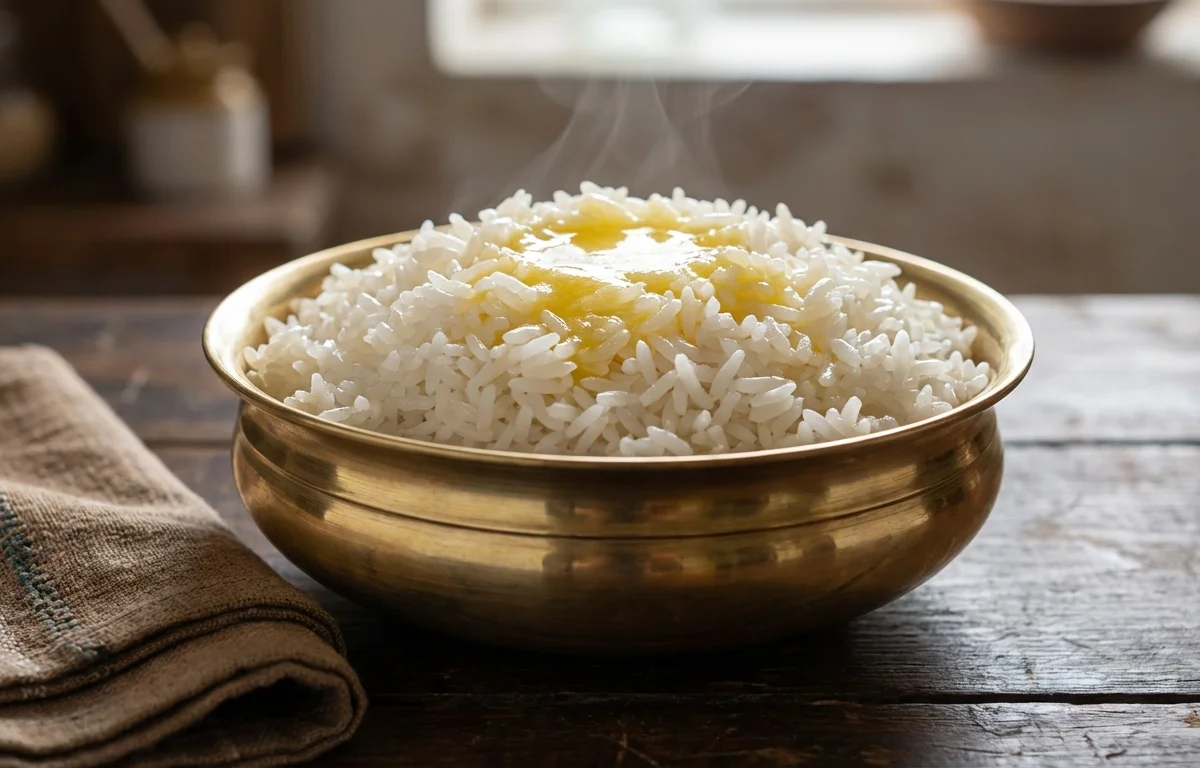
Joha Rice
Discover the simple art of cooking Joha rice, a small-grained aromatic jewel from Assam. This naturally fragrant rice cooks up soft and fluffy, making it a perfect, delicate base for rich curries and simple dals. Its unique sweet aroma fills the kitchen as it cooks, promising a delightful meal.
For 4 servings
3 steps. 15 minutes total.
- 1
Step 1
- a.Rinse and Soak the Rice (Optional but Recommended)
- b.Place the Joha rice in a fine-mesh sieve or a bowl. Rinse it under cold running water, gently swirling with your fingers, until the water runs mostly clear. This removes excess starch and prevents stickiness.
- c.Drain the rice thoroughly. If you have time, soak the rinsed rice in fresh water for 15-20 minutes. Soaking helps the grains cook more evenly and become fluffier.
- 2
Step 2
- a.Cook the Rice
- b.Drain the soaked rice completely and transfer it to a heavy-bottomed pot with a tight-fitting lid.
- c.Add 3 cups of fresh water, the optional salt, and ghee.
- d.Place the pot on the stove over high heat and bring the water to a rolling boil.
- e.Once boiling, immediately reduce the heat to the lowest possible setting. Cover the pot with the lid and let it simmer for 12-15 minutes.
- f.Do not lift the lid during this time to ensure the rice steams properly.
- 3
Step 3
- a.Rest and Fluff
- b.After 15 minutes, turn off the heat. Let the pot stand, still covered, for at least 10 minutes. This crucial resting period allows the grains to absorb the last of the steam, firm up, and finish cooking.
- c.Remove the lid and gently fluff the rice with a fork or a spatula to separate the grains.
- d.Serve hot as a perfect accompaniment to Assamese curries, dals, or any vegetable dish.
What to keep in mind.
5 tips from the recipe — small details that make a real difference to the final dish.
- 1The 1:2 rice-to-water ratio is key for the absorption method. Measure accurately for perfect results.
- 2Use a heavy-bottomed pot to distribute heat evenly and prevent the rice at the bottom from scorching.
- 3Resist the temptation to peek! Keeping the lid on traps the steam, which is essential for cooking the rice evenly.
- 4The natural, sweet aroma of Joha rice is its signature characteristic. Avoid adding strong spices that might overpower it.
- 5Store any leftover cooked rice in an airtight container in the refrigerator for up to 2 days.
Adapt it for your goals.
Aromatic Infusion
Add a bay leaf, 2-3 green cardamom pods, or a small cinnamon stick to the water while cooking for a subtly spiced aroma.
Ghee Rice (Ghee Bhaat)Ghee Rice (Ghee Bhaat)
After fluffing the rice, drizzle an extra teaspoon of melted ghee over the top for a richer, more traditional Assamese flavour.
Coconut RiceCoconut Rice
For a creamy texture, replace 1 cup of water with 1 cup of thin coconut milk during the cooking process.
Why this is on our healthy list.
Naturally Gluten-Free
Joha rice is an excellent grain choice for individuals with celiac disease or gluten sensitivity, offering a safe and delicious carbohydrate source.
Provides Quick Energy
As a carbohydrate-rich food, Joha rice is easily converted into energy by the body, making it a great staple to fuel daily activities.
Easy to Digest
The soft, fluffy texture of cooked Joha rice is gentle on the digestive system, making it a suitable food during recovery from illness or for those with sensitive stomachs.
Frequently asked questions
Joha rice is a unique variety of aromatic short-grain rice grown primarily in the state of Assam in Northeast India. It is prized for its delicate texture, beautiful aroma, and slightly sweet taste, which is often compared to basmati but is distinct in its own right.