
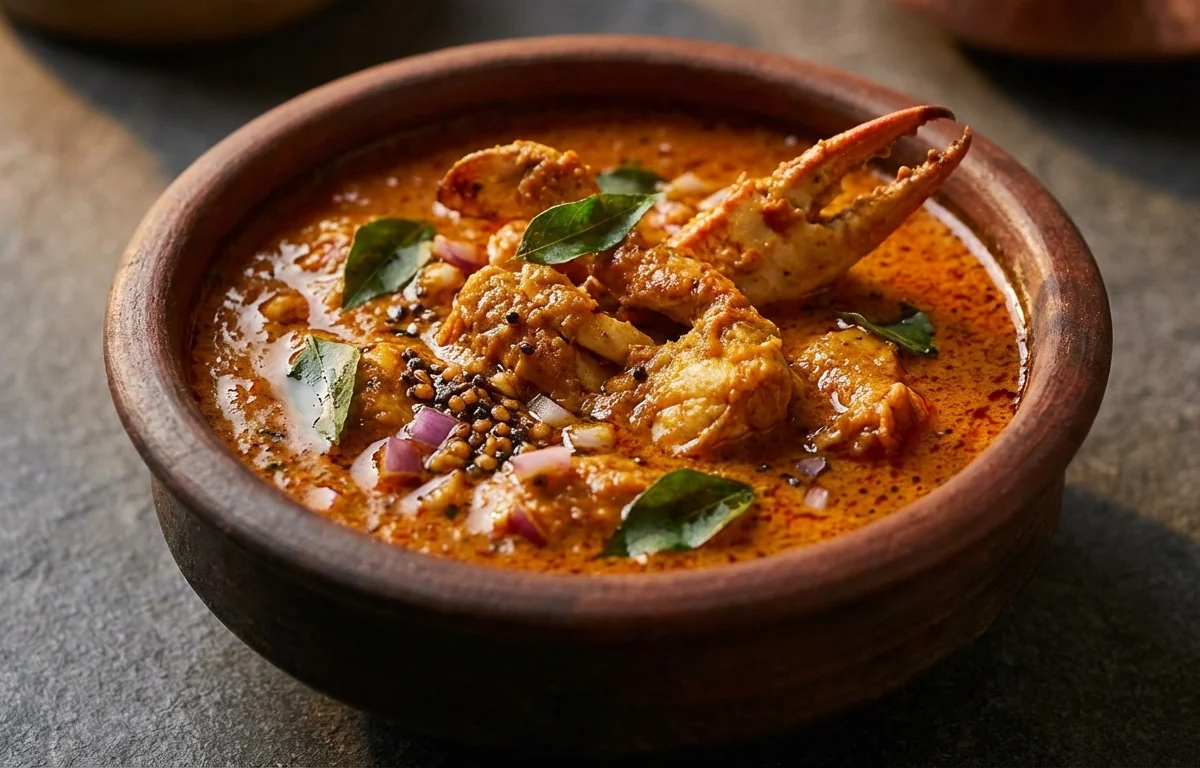
Jenji Gassi
A fiery and tangy crab curry from Mangalore, made with a fragrant paste of roasted spices and fresh coconut. This coastal delicacy is a seafood lover's dream, best enjoyed with steamed rice or neer dosa.
For 4 servings
Roast the Spices
- In a small, dry pan over low-medium heat, add the coriander seeds, cumin seeds, fenugreek seeds, black peppercorns, and dry red chillies.
- Dry roast for 2-3 minutes, stirring continuously, until they become fragrant and turn a shade darker. Be careful not to burn them.
- Remove the spices from the pan and let them cool completely.
Grind the Masala Paste
- In a high-speed blender, combine the cooled roasted spices, fresh grated coconut, roughly chopped onion, garlic cloves, tamarind paste, and turmeric powder.
- Add about 1/2 cup of water and grind to a very smooth, fine paste. Scrape down the sides as needed and add a splash more water if required to achieve a smooth consistency.
Prepare the Curry Base
- Heat the coconut oil in a large, heavy-bottomed pot or kadai over medium heat.
- Add the finely chopped onion and sauté for 5-7 minutes until it becomes soft, translucent, and lightly golden.
Cook the Masala
- Add the ground masala paste to the pot with the sautéed onions.
- Cook for 8-10 minutes, stirring frequently, until the raw aroma disappears, the paste darkens slightly, and you see oil beginning to separate from the sides of the masala.
Cook the Crab
- Gently add the cleaned crab pieces to the pot.
- Stir carefully to coat all the crab pieces evenly with the masala paste. Sauté for 2-3 minutes.
Simmer the Curry
- Pour in the remaining 1.5 cups of water, add salt and the optional jaggery. Stir well to combine everything.
- Bring the curry to a rolling boil, then reduce the heat to a simmer.
- Cover the pot and cook for 15-20 minutes, or until the crab is cooked through. The shells will turn a vibrant orange-red color when done.
Garnish and Serve
- Turn off the heat. Garnish with freshly chopped coriander leaves.
- Let the curry rest for at least 10 minutes before serving to allow the flavors to meld.
- Serve hot with neer dosa, sannas, or steamed rice.
What to keep in mind.
6 tips from the recipe — small details that make a real difference to the final dish.
- 1Use fresh, live crab for the best flavor and texture. If using frozen, ensure it is fully thawed before cooking.
- 2Grinding the masala paste to a very fine consistency is crucial for the authentic, smooth texture of the gassi.
- 3Don't overcook the crab, as the meat can become tough. 15-20 minutes of simmering is usually sufficient.
- 4Cracking the crab claws slightly before adding them to the curry helps the masala penetrate and makes them easier to eat.
- 5This curry tastes even better the next day as the flavors have more time to meld and deepen.
- 6For a richer gravy, you can use thin coconut milk instead of water for simmering.
Adapt it for your goals.
Seafood Variation
Replace crab with an equal amount of prawns, clams (tisryo), or a firm white fish like kingfish (surmai). Adjust cooking time accordingly, as fish and prawns cook much faster.
Vegetarian VariationVegetarian Variation
Substitute crab with mushrooms, potatoes, or cauliflower for a vegetarian gassi. Sauté the vegetables with the masala before adding water and simmering until tender.
Creamier VersionCreamier Version
For a richer, creamier curry, add 1/2 cup of thick coconut milk (first press) in the last 5 minutes of cooking. Stir it in gently and do not let the curry come to a boil after adding it.
Why this is on our healthy list.
Rich in Lean Protein
Crab meat is a high-quality source of lean protein, which is essential for building and repairing tissues, muscle maintenance, and promoting a feeling of fullness.
Boosts Brain Health
Crab is rich in omega-3 fatty acids, which are crucial for brain development and cognitive function. These healthy fats may also help reduce the risk of chronic diseases.
Anti-inflammatory Properties
The blend of spices used, particularly turmeric (with its active compound curcumin) and black pepper, possesses potent anti-inflammatory properties that can help combat inflammation in the body.
Source of Essential Minerals
This dish provides key minerals like zinc, selenium, and copper from the crab. These minerals are vital for a strong immune system, thyroid function, and protecting cells from damage.
Frequently asked questions
Jenji Gassi is a traditional crab curry from the Mangalorean region of coastal Karnataka, India. 'Jenji' means crab in the Tulu language, and 'Gassi' refers to a thick, coconut-based curry. It's known for its vibrant red color, tangy flavor from tamarind, and aromatic blend of roasted spices.