
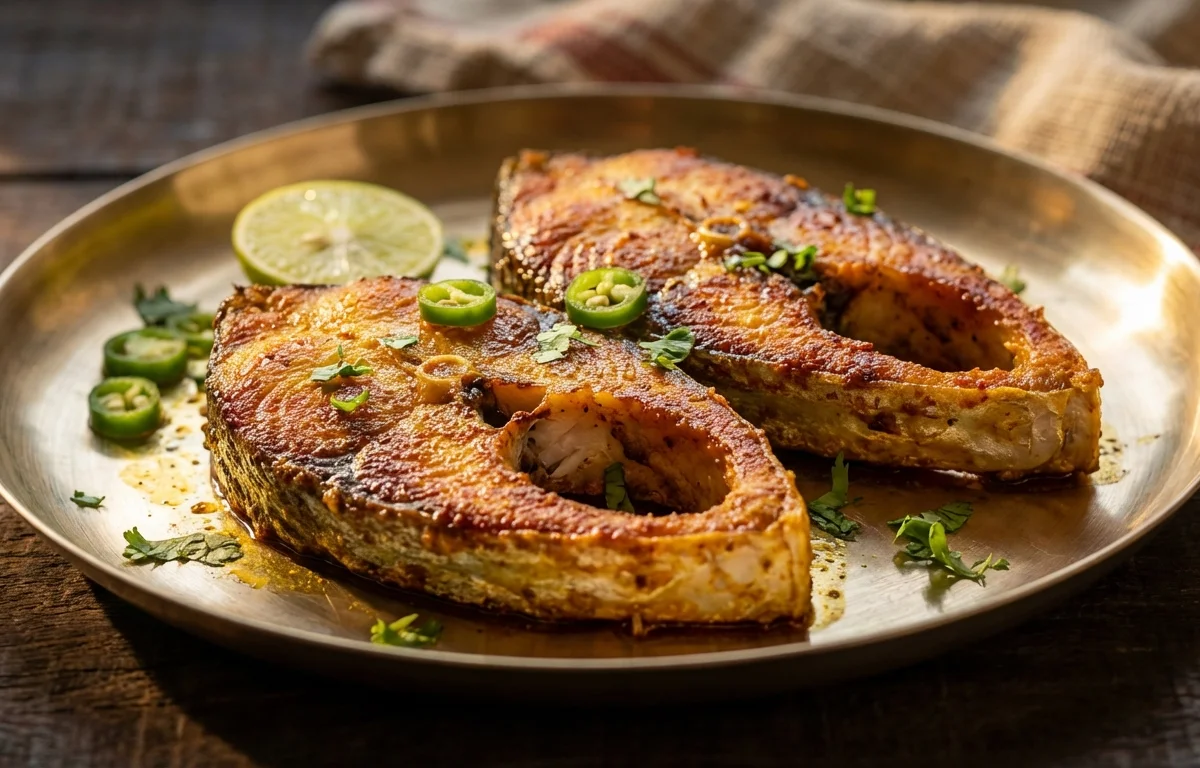
Ilish Maas Bhaji
A quintessential Bengali delicacy. Succulent Hilsa fish steaks, marinated in simple spices like turmeric and chili, then shallow-fried in pungent mustard oil until golden brown. A true taste of Bengal.
For 4 servings
Prepare and Marinate the Fish
- Gently rinse the Hilsa fish steaks under cold water and pat them completely dry with paper towels. This is key to a crispy fry.
- In a small bowl, mix together the turmeric powder, red chili powder, and salt.
- Rub this spice mixture evenly over all sides of each fish steak, ensuring they are well-coated.
- Let the fish marinate at room temperature for 15 minutes.
Heat the Mustard Oil
- Pour the mustard oil into a wide, heavy-bottomed frying pan or kadai.
- Heat the oil over medium-high heat. Wait until it becomes very hot, shimmering, and you see faint white fumes rising. This process, called 'tempering the oil', removes its raw pungency.
Fry the First Side
- Carefully slide the marinated fish steaks into the hot oil, laying them away from you to avoid splashes. Do not overcrowd the pan; fry in two batches if necessary.
- Fry for 3-4 minutes on the first side, undisturbed, until it turns a deep golden brown and becomes crisp.
Flip and Finish Frying
- Using a flat spatula, gently flip the fish steaks over. Hilsa is delicate, so be careful.
- Cook the second side for another 3-4 minutes until it is equally golden, crispy, and the fish is cooked through.
- If serving with fried green chilies, you can add them to the pan during the last minute of frying.
Serve Immediately
- Carefully remove the fried fish from the pan and place on a serving platter. You can drain them on a wire rack for extra crispiness.
- Serve hot with steamed rice. Traditionally, a slit green chili and a spoonful of the flavorful leftover oil from the pan ('bhaja tel') are served alongside the fish to be mixed with the rice.
What to keep in mind.
6 tips from the recipe — small details that make a real difference to the final dish.
- 1For the most authentic flavor, use fresh, high-quality Hilsa fish. The simplicity of the dish highlights the fish's natural taste.
- 2Heating the mustard oil until it's fuming is a critical step in Bengali cooking to mellow its pungent flavor.
- 3Ensure the fish is completely dry before marinating and frying. Any moisture will cause the oil to splatter and prevent a crispy skin.
- 4Do not overcrowd the pan. Frying in batches maintains the oil's temperature, ensuring the fish fries perfectly rather than steaming.
- 5Hilsa is a very delicate fish with fine bones. Handle it gently with a wide spatula to prevent it from breaking apart during flipping.
- 6The leftover spiced oil in the pan, known as 'bhaja tel', is considered a delicacy. Don't discard it; serve it with the rice for an extra burst of flavor.
Adapt it for your goals.
Extra Crispy
For an even crispier crust, lightly dust the marinated fish steaks with 1-2 tablespoons of rice flour or semolina (suji) just before frying.
Milder FlavorMilder Flavor
If you find pure mustard oil too pungent, you can use a mix of half mustard oil and half neutral vegetable oil like sunflower or canola oil.
Spice VariationSpice Variation
Add a pinch of black pepper or a small amount of ginger-garlic paste to the marinade for a slightly different flavor profile.
Why this is on our healthy list.
Heart-Healthy Omega-3 Powerhouse
Hilsa fish is exceptionally rich in Omega-3 fatty acids, which are known to reduce inflammation, lower blood pressure, and support overall cardiovascular health.
Excellent Source of Protein
This dish provides high-quality protein, which is essential for building and repairing tissues, supporting muscle mass, and maintaining overall body function.
Supports Bone Health
Hilsa is a good source of Vitamin D and phosphorus, two key nutrients that work together to help build and maintain strong, healthy bones and teeth.
Frequently asked questions
One serving of Ilish Maas Bhaji (one piece, approx. 150g) contains approximately 420-450 calories. The exact amount can vary based on the size of the fish steak and the amount of oil absorbed during frying.