
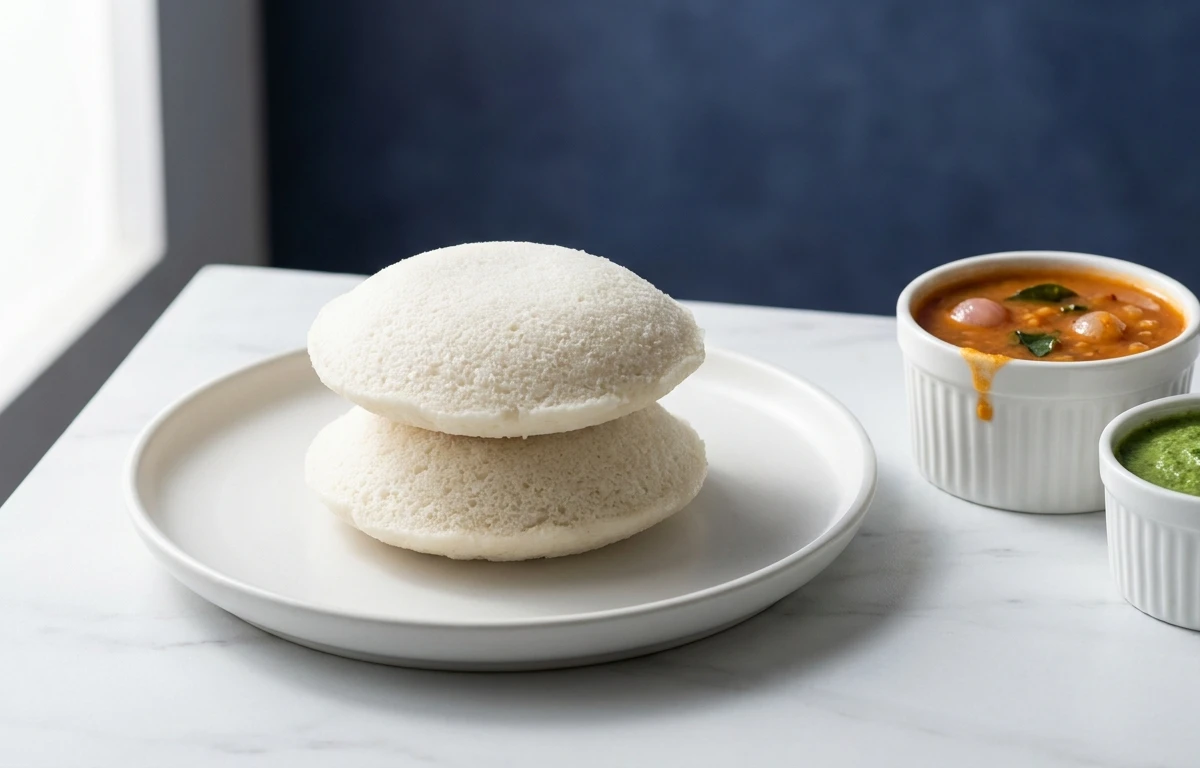
Idli
Soft, pillowy steamed rice cakes with a slightly tangy flavor from fermentation. This classic South Indian breakfast is naturally vegan, gluten-free, and pairs perfectly with sambar and coconut chutney. Note: Total time excludes the essential 14-20 hours of soaking and fermentation.
For 10 servings
5 steps. 20 minutes total.
- 1
Step 1
- a.Soak the Rice and Dal (6-8 hours)
- b.In a large bowl, rinse the idli rice and poha together 4-5 times until the water runs clear. Add enough fresh water to cover them by at least 2 inches and set aside.
- c.In a separate medium bowl, rinse the urad dal and fenugreek seeds together until the water is clear. Add enough fresh water to cover and set aside.
- d.Let both bowls soak for a minimum of 6 hours, or up to 8 hours. Do not over-soak as it can affect the batter texture.
- 2
Step 2
- a.Grind the Batter (30-40 minutes)
- b.Drain the water completely from the urad dal and fenugreek seeds. Transfer them to a wet grinder or a high-speed blender.
- c.Add about 3/4 to 1 cup of cold water in increments and grind until you have a very smooth, light, and fluffy batter. This takes about 15-20 minutes in a wet grinder. The batter should increase in volume. Transfer this dal batter to a large pot (at least 6-8 quarts) to allow room for fermentation.
- d.Next, drain the water from the rice and poha. Add them to the same grinder.
- e.Add about 1 to 1.25 cups of cold water in increments and grind to a fine, slightly coarse texture, similar to fine semolina (rava). The rice batter should not be perfectly smooth like the dal batter.
- f.Pour the ground rice batter into the same pot with the dal batter.
- 3
Step 3
- a.Mix and Ferment the Batter (8-12 hours)
- b.Add the rock salt to the combined batters. Using your clean hands, mix everything together in a circular motion for 2-3 minutes. This incorporates air and the warmth from your hands helps kickstart fermentation.
- c.The final batter should be thick but have a flowing, ribbon-like consistency. It should not be watery.
- d.Cover the pot with a lid, leaving a small gap for air to escape, or use a lid that is not airtight. Place it in a warm, draft-free place (like inside a turned-off oven with the light on) to ferment for 8 to 12 hours, or until doubled in volume.
- e.The batter is perfectly fermented when it has risen significantly, looks frothy with tiny bubbles, and has a pleasant sour aroma. To test, drop a small spoonful into a bowl of water; it should float.
- 4
Step 4
- a.Steam the Idlis (10-12 minutes per batch)
- b.Once fermented, do not overmix the batter. Gently stir it just once or twice from the sides to the center to even it out. Overmixing will deflate the air pockets.
- c.Prepare your idli steamer by adding 1-2 inches of water to the bottom pot and bringing it to a rolling boil.
- d.While the water heats, lightly grease your idli mold plates with oil.
- e.Carefully pour the batter into each mold, filling it about 3/4 full to allow space for them to rise.
- f.Place the idli stand inside the steamer, cover with the lid, and steam on medium-high heat for 10-12 minutes. Do not steam for too long, as it can make the idlis hard.
- 5
Step 5
- a.Rest and Demold (5-7 minutes)
- b.Turn off the heat and let the steamer stand, covered, for 5 minutes. This prevents the idlis from deflating due to a sudden temperature change.
- c.Carefully remove the idli stand from the steamer and let it cool for another 1-2 minutes. This makes demolding easier.
- d.Use a wet spoon or a small knife to gently scoop the idlis out of the molds.
- e.Serve the hot, fluffy idlis immediately with sambar, coconut chutney, or idli podi.
What to keep in mind.
6 tips from the recipe — small details that make a real difference to the final dish.
- 1For best results, use a wet grinder. It incorporates more air than a blender, resulting in a fluffier batter.
- 2Always use cold water while grinding to prevent the batter from overheating, which can kill the natural yeast and hinder fermentation.
- 3The quality of urad dal is crucial. Use fresh, unpolished dal for the best fermentation and volume.
- 4In colder climates, place the batter container inside a turned-off oven with the light on, or wrap it in a warm towel to maintain a consistent temperature for fermentation.
- 5Do not add salt before fermentation if you live in a very cold climate, as it can slow down the process. Add it just before steaming.
- 6The batter consistency is key. It should be like a thick pancake batter – not too runny, not too stiff. If it's too thick, add a tablespoon of water; if too thin, add a tablespoon of rice flour.
Adapt it for your goals.
Vegetable Idli
Add finely chopped or grated vegetables like carrots, peas, and beans to the batter just before steaming for a more nutritious and colorful idli.
Masala IdliMasala Idli
Add a tempering of mustard seeds, urad dal, chana dal, curry leaves, and chopped green chilies to the batter for a savory, spiced version.
Rava IdliRava Idli
For a quick, no-fermentation version, make Rava Idli using semolina (rava), yogurt, and a leavening agent like fruit salt (Eno).
Stuffed IdliStuffed Idli
Fill the idli molds halfway, add a spoonful of a savory filling like potato masala or spiced lentils, and then top with more batter before steaming.
Why this is on our healthy list.
Promotes Gut Health
The fermentation process enriches the batter with probiotics, which are beneficial bacteria that support a healthy digestive system and improve gut flora.
Easily Digestible
Fermentation breaks down the starches and proteins in the rice and lentils, making idlis very light on the stomach and easy for the body to digest and absorb nutrients.
Low in Calories and Fat
Since idlis are steamed and not fried, they are naturally low in fat and calories, making them an excellent choice for weight management and a heart-healthy diet.
Balanced Nutrition
Idli provides a good balance of carbohydrates from rice and protein from urad dal, offering sustained energy without causing sharp spikes in blood sugar levels.
Frequently asked questions
Yes, Idli is considered very healthy. It is a steamed dish, making it low in fat and calories. The fermentation process breaks down complex nutrients, making it easy to digest and increasing the bioavailability of minerals. It's a great source of carbohydrates and protein.