
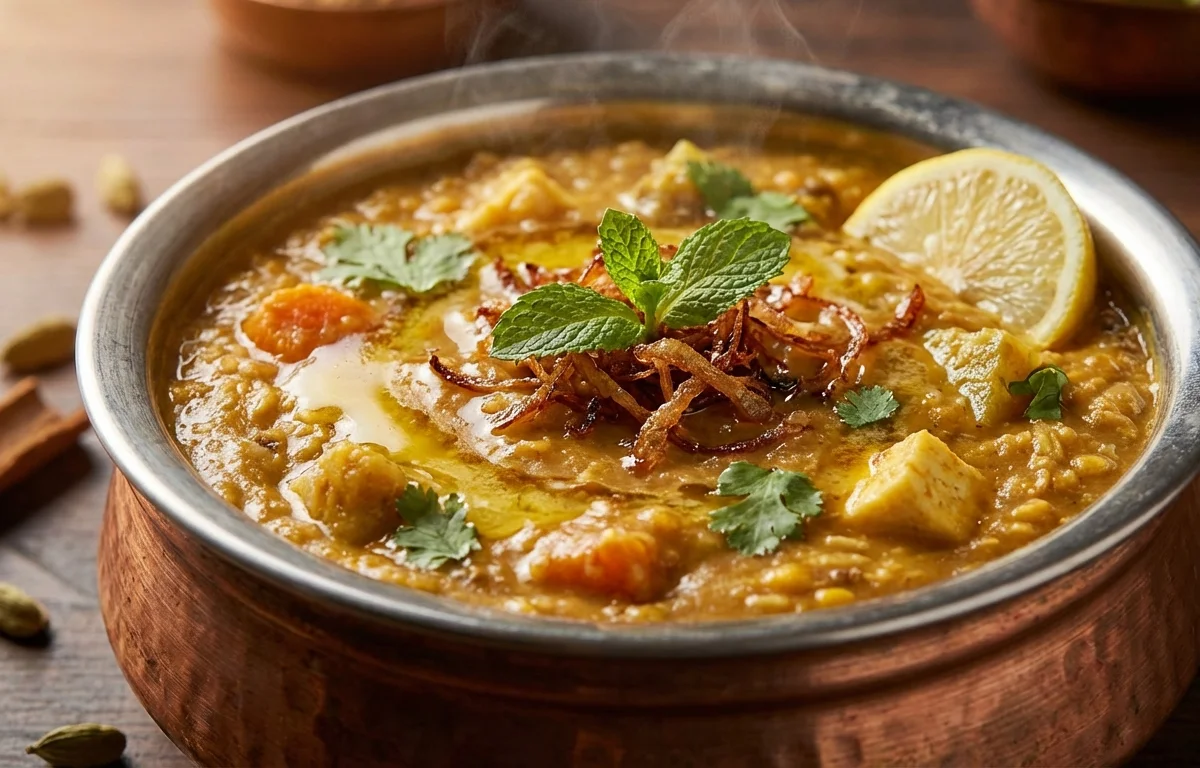
Hyderabadi Vegetable Haleem
A rich and hearty slow-cooked stew made with broken wheat, a medley of lentils, and mixed vegetables. This vegetarian take on a Hyderabadi classic is packed with flavor, perfect for a wholesome and satisfying meal.
For 4 servings
6 steps. 70 minutes total.
- 1
Step 1
- a.Soak Grains and Lentils
- b.In a large bowl, combine the broken wheat, chana dal, urad dal, moong dal, and masoor dal.
- c.Rinse them thoroughly under running water 3-4 times until the water runs clear.
- d.Soak the mixture in ample fresh water for at least 2 hours, or ideally up to 4 hours. Drain and set aside.
- 2
Step 2
- a.Prepare Birista (Fried Onions)
- b.Heat oil in a deep, heavy-bottomed pan (kadai) over medium-high heat.
- c.Add the 2 thinly sliced large onions and fry, stirring occasionally, for 15-20 minutes until they are evenly deep golden brown and crisp.
- d.Using a slotted spoon, remove the onions and spread them on a paper towel to drain excess oil. This is your birista. Set aside.
- 3
Step 3
- a.Pressure Cook the Haleem Base
- b.In a large pressure cooker, heat 2 tbsp of ghee over medium heat.
- c.Add the whole spices: cinnamon stick, green cardamom pods, cloves, and bay leaf. Sauté for 30 seconds until fragrant.
- d.Add the 1 finely chopped medium onion and sauté for 4-5 minutes until it turns soft and translucent.
- e.Add the ginger-garlic paste and slit green chilies. Cook for 1 minute until the raw aroma disappears.
- f.Add the cubed bottle gourd, carrot, and potato, and sauté for 2 minutes.
- g.Stir in the spice powders: turmeric, red chili, and coriander powder.
- h.Add the drained grain and lentil mixture along with the salt. Mix everything well for a minute.
- i.Pour in 4 cups of water, stir well, and secure the pressure cooker lid.
- j.Cook on high heat for 1 whistle, then reduce the heat to low and let it cook for 20 minutes.
- k.Turn off the heat and allow the pressure to release naturally.
- 4
Step 4
- a.Blend the Mixture
- b.Once the pressure has settled, open the cooker. Remove the bay leaf and cinnamon stick if easily visible.
- c.The mixture should be completely soft and mushy.
- d.Using an immersion blender, blend the mixture in short bursts directly in the cooker. Aim for a thick, coarse, porridge-like consistency. Avoid making it a perfectly smooth paste to retain some texture.
- 5
Step 5
- a.Simmer and Finish (Ghotna)
- b.Place the cooker back on low heat. Add the whisked curd, half of the prepared birista (crushed by hand), half of the chopped mint and coriander leaves, crumbled paneer, and garam masala.
- c.Stir continuously and vigorously with a strong spoon or masher for 15-20 minutes. This process, known as 'ghotna', is crucial for developing the authentic sticky and luscious texture of haleem.
- d.If the haleem becomes too thick, add a splash of hot water to adjust the consistency.
- e.Stir in the remaining 2 tbsp of ghee and adjust the salt if necessary. Cook for another 2 minutes.
- 6
Step 6
- a.Garnish and Serve
- b.Transfer the hot vegetable haleem to serving bowls.
- c.Garnish generously with the remaining crispy birista, fresh mint leaves, and coriander leaves.
- d.Serve immediately with lemon wedges on the side for squeezing over the haleem.
What to keep in mind.
5 tips from the recipe — small details that make a real difference to the final dish.
- 1Soaking the grains and lentils is a crucial step for a soft, melt-in-the-mouth texture. Do not skip it.
- 2Use a heavy-bottomed pan for the final simmering ('ghotna') stage to prevent the haleem from scorching at the bottom.
- 3You can make the birista (fried onions) a day in advance to save time. Store it in an airtight container at room temperature.
- 4For a richer flavor, you can add a paste of 10-12 soaked cashews along with the yogurt.
- 5The 'ghotna' or vigorous mixing process is key. The more you mix and mash, the better the texture will be.
Adapt it for your goals.
Vegan Version
Replace ghee with a neutral oil or vegan butter, use a plant-based yogurt (like cashew or coconut yogurt), and substitute paneer with crumbled firm tofu or skip it.
Richer VersionRicher Version
Add a paste of 10-12 soaked and ground almonds or cashews along with the yogurt for a creamier, richer texture.
Different GrainsDifferent Grains
Substitute broken wheat with an equal amount of barley for a more traditional haleem texture. You can also add a tablespoon of quinoa or oats.
Spicier VersionSpicier Version
Increase the number of green chilies and add 1/2 teaspoon of black pepper powder along with the garam masala for extra heat.
Why this is on our healthy list.
High in Protein and Fiber
The combination of multiple lentils, broken wheat, and vegetables makes this dish an excellent source of plant-based protein and dietary fiber, which aids in muscle repair, digestion, and promotes a feeling of fullness.
Sustained Energy Release
The complex carbohydrates from the broken wheat and lentils are digested slowly, providing a steady and sustained release of energy, making it a perfect meal for Iftar or a substantial lunch.
Rich in Micronutrients
With a variety of vegetables like carrots, bottle gourd, and potatoes, this haleem is packed with essential vitamins and minerals such as Vitamin A, Vitamin C, and potassium, which support overall health and immunity.
Promotes Gut Health
The high fiber content from the grains and lentils acts as a prebiotic, feeding beneficial gut bacteria and promoting a healthy digestive system.
Frequently asked questions
Yes, it is a very nutritious dish. It's packed with protein from lentils and paneer, complex carbohydrates and fiber from broken wheat, and vitamins from the vegetables. It's a balanced, one-pot meal.