
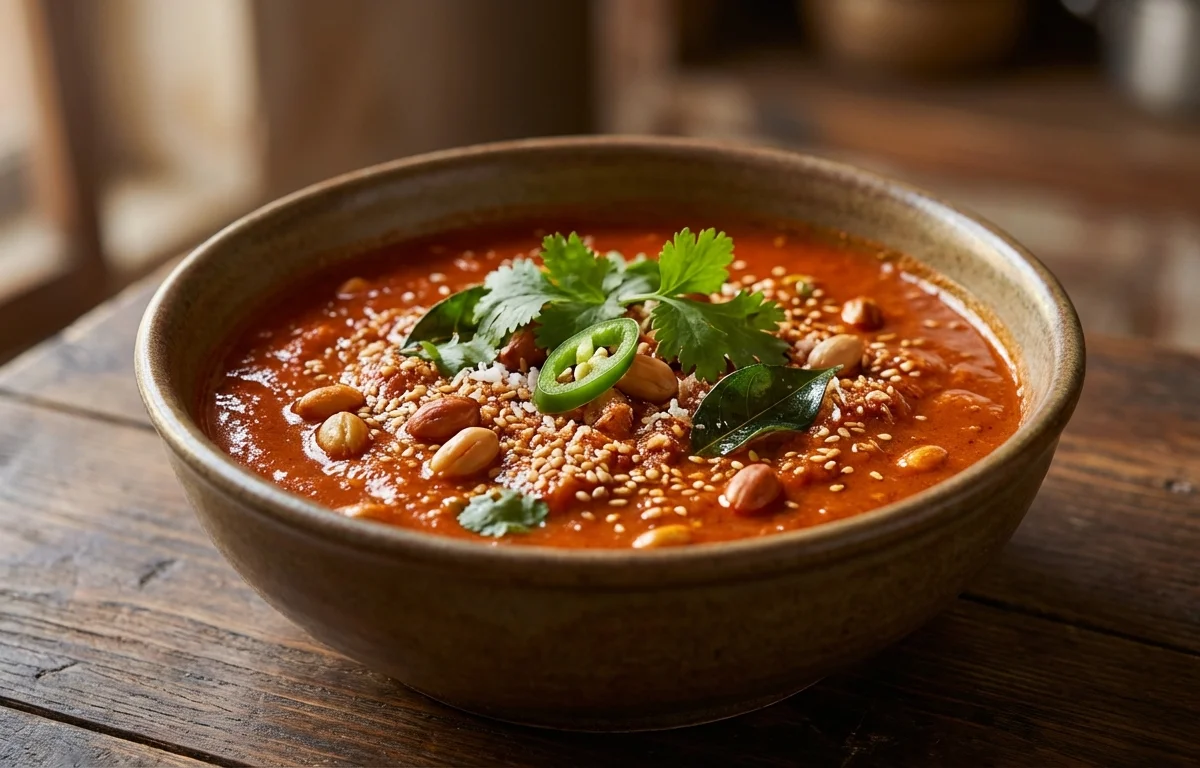
Hyderabadi Tomato Curry
A rich and tangy curry from Hyderabad, where ripe tomatoes are simmered in a creamy paste of roasted peanuts, sesame, and coconut. This dish, known locally as Tamatar ka Salan, is a perfect side for biryani or roti.
For 4 servings
Prepare the Masala Paste
- In a dry pan over medium heat, roast the peanuts for 2-3 minutes until fragrant and lightly browned. Transfer to a plate.
- In the same pan, roast the sesame seeds for about 1 minute until they pop and turn golden. Transfer to the plate.
- Finally, roast the desiccated coconut for 30-40 seconds until lightly toasted. Add to the plate.
- Allow the roasted ingredients to cool completely. Transfer them to a blender with 1/4 cup of water and grind into a very smooth paste. Set aside.
Prepare the Tomatoes
- Wash the tomatoes thoroughly. Make a small criss-cross slit on the top of each tomato, cutting only about a quarter of the way through. This helps them cook evenly and absorb the gravy without falling apart.
Start the Curry Base (Tadka)
- Heat oil in a heavy-bottomed pan or kadai over medium heat.
- Add the mustard seeds and let them splutter. Immediately add the cumin seeds, dried red chilies, and curry leaves. Sauté for 30 seconds until aromatic.
- Add the finely chopped onion and sauté for 6-8 minutes until it turns golden brown.
Cook the Masalas
- Add the ginger-garlic paste and cook for 1 minute until the raw aroma disappears.
- Reduce the heat to low. Add the turmeric powder, red chili powder, and coriander powder. Stir continuously for 30 seconds to prevent burning.
Build the Gravy
- Add the ground masala paste to the pan. Cook on medium-low heat, stirring frequently, for 6-8 minutes until the paste thickens and you see oil separating from the sides. This step is crucial for flavor development.
- Gently place the slit tomatoes into the pan. Carefully mix to coat them with the masala.
- Pour in 1.5 cups of warm water. Add the salt, tamarind paste, and jaggery. Stir gently to combine everything.
Simmer and Finish
- Bring the curry to a gentle boil, then reduce the heat to low. Cover the pan and let it simmer for 12-15 minutes, or until the tomatoes are soft but still hold their shape, and the gravy has thickened.
- Turn off the heat. Stir in the garam masala powder.
- Garnish with freshly chopped coriander leaves. Let the curry rest for 5-10 minutes before serving to allow the flavors to meld.
What to keep in mind.
5 tips from the recipe — small details that make a real difference to the final dish.
- 1For a creamier gravy, grind the peanut-sesame-coconut paste as smoothly as possible. Add a little more water if needed during grinding.
- 2The key to a flavorful salan is to patiently cook the ground paste until oil separates from it. Do not rush this step.
- 3Use ripe, red, but firm tomatoes. Overripe or soft tomatoes will turn mushy and disintegrate into the gravy.
- 4The balance of tangy (tamarind), sweet (jaggery), and spicy (chili) is essential. Adjust these ingredients to your personal preference.
- 5This curry tastes even better the next day as the flavors deepen and mature.
Adapt it for your goals.
Ingredient Swap
Replace peanuts with cashews or almonds for a different nutty flavor and creamier texture.
Add VegetablesAdd Vegetables
Add small eggplants (brinjal) or thick slices of bell pepper (capsicum) along with the tomatoes for a mixed vegetable salan.
Spice LevelSpice Level
For a milder version, use Kashmiri red chili powder which imparts color without much heat. For a spicier curry, add 1-2 slit green chilies along with the onions.
Creamier VersionCreamier Version
For an extra rich curry, you can add a tablespoon of poppy seeds (khus khus) to the roasting mix before grinding the paste.
Why this is on our healthy list.
Rich in Antioxidants
Tomatoes are an excellent source of lycopene, a powerful antioxidant that becomes more bioavailable when cooked. Lycopene helps protect cells from damage.
Heart-Healthy Fats
The use of peanuts and sesame seeds provides monounsaturated and polyunsaturated fats, which are beneficial for heart health by helping to lower bad cholesterol levels.
Good Source of Plant-Based Protein
Peanuts contribute a good amount of plant-based protein, making this dish a satisfying and nutritious option for vegetarians and vegans.
Anti-inflammatory Properties
Ingredients like turmeric (containing curcumin) and ginger have natural anti-inflammatory properties that can help reduce inflammation in the body.
Frequently asked questions
One serving (approximately 1 cup or 280g) of Hyderabadi Tomato Curry contains around 300-350 calories, primarily from the oil, peanuts, and coconut.