
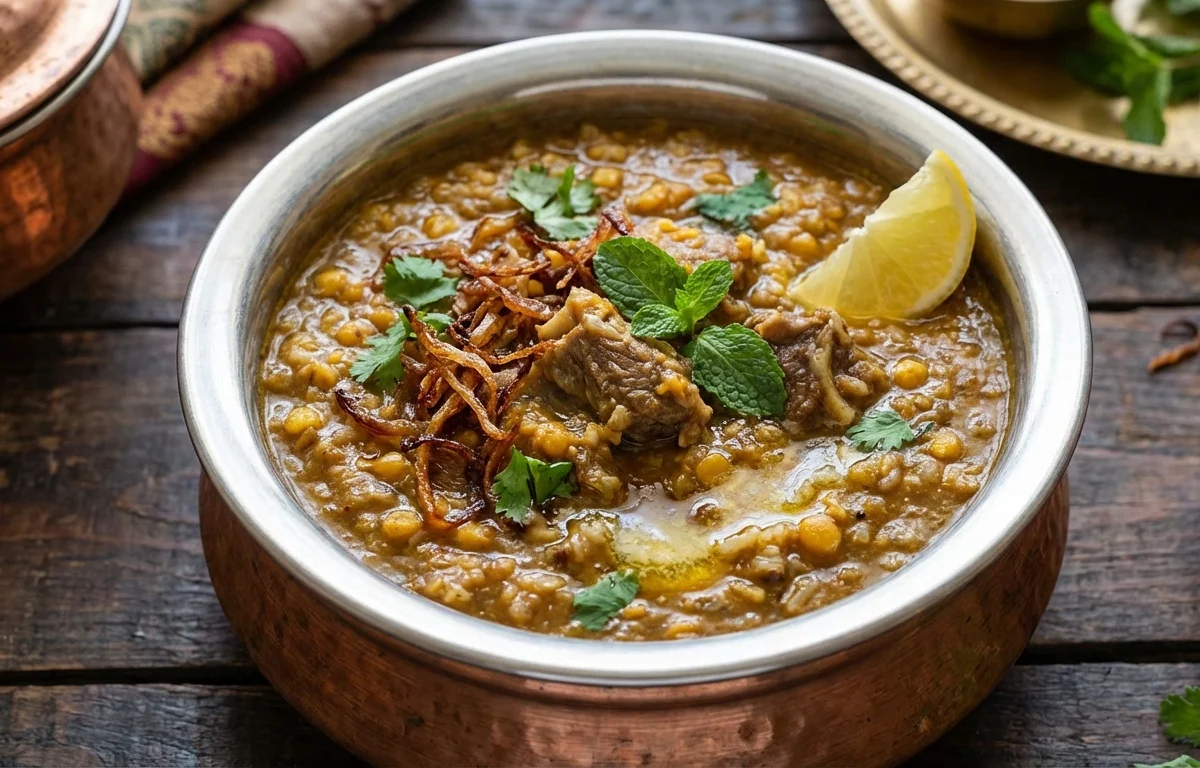
Hyderabadi Mutton Khichda
A hearty and wholesome slow-cooked porridge of mutton, lentils, and broken wheat. This Hyderabadi classic is rich, flavorful, and packed with protein, making it the ultimate comfort food.
For 6 servings
7 steps. 140 minutes total.
- 1
Step 1
- a.Prepare Grains & Lentils: In a large bowl, combine the broken wheat, chana dal, urad dal, masoor dal, moong dal, and basmati rice. Wash them thoroughly under running water 3-4 times. Soak the mixture in ample water for at least 4 hours, or preferably overnight.
- 2
Fry the Onions (Birista): Thinly slice 2 of the large onions
- a.Heat 1 cup of oil in a wide, heavy-bottomed pan over medium-high heat. Add the sliced onions and fry, stirring occasionally, for 15-20 minutes until they are uniformly deep golden brown and crisp. Remove with a slotted spoon and drain on paper towels. Set aside. Reserve the flavorful oil for later use.
- 3
Step 3
- a.Cook the Mutton: Heat 4 tbsp of ghee in a large pressure cooker over medium heat. Add the whole spices: cinnamon stick, cloves, green cardamom, and bay leaves. Sauté for 30 seconds until fragrant. Add the remaining 2 sliced onions and cook for 8-10 minutes until golden brown. Add the ginger-garlic paste and slit green chilies, and sauté for 2 minutes until the raw aroma disappears. Add the mutton pieces and sear on high heat for 5-7 minutes until browned on all sides. Lower the heat, add the turmeric, red chili, and coriander powders, along with 1.5 tsp of salt. Mix well and cook for 2 minutes. Pour in the whisked curd and cook, stirring continuously, until the oil separates from the masala. Add 4 cups of water, stir, and lock the pressure cooker lid. Cook on medium heat for 6-7 whistles, or for about 30-35 minutes, until the mutton is fall-off-the-bone tender.
- 4
Cook the Soaked Grains: Drain the soaked grain and lentil mixture
- a.In a separate large, heavy-bottomed pot, add the drained mixture, 8 cups of water, 1 tsp of salt, and a pinch of turmeric powder. Bring to a boil, then reduce the heat to low. Cover and cook for about 60-75 minutes, stirring every 10-15 minutes to prevent sticking, until the grains are completely soft and mushy. (Alternatively, pressure cook with 6 cups of water for 20-25 minutes).
- 5
Step 5
- a.Combine and Blend: Once the mutton is cooked, let the pressure release naturally. Open the cooker and carefully remove the mutton pieces, leaving the gravy (stock) behind. Let the mutton cool slightly, then shred the meat from the bones. Discard the bones and any large whole spices from the gravy if you prefer. Pour the mutton gravy and the shredded mutton into the pot with the cooked grains. Mix everything thoroughly. Using a hand blender or a wooden masher (ghotni), pulse the mixture a few times. The goal is to break down the grains and meat slightly, creating a coarse, porridge-like texture, not a smooth paste.
- 6
Final Simmering (Dum): Place the pot back on low heat
- a.Add the garam masala, half of the fried onions (crushed by hand), 2 tbsp of chopped mint, and 2 tbsp of chopped coriander. Stir well to combine. Cover the pot and let the khichda simmer on the lowest possible heat for 15-20 minutes, stirring occasionally to prevent it from catching at the bottom. This step allows the flavors to meld beautifully. The khichda will thicken further during this time. Taste and adjust salt if needed.
- 7
Garnish and Serve: Ladle the hot khichda into serving bowls
- a.Garnish generously with the remaining crispy fried onions, fresh coriander leaves, and mint leaves. Serve with lemon wedges on the side for squeezing over. A final drizzle of hot ghee on top is highly recommended for extra richness.
What to keep in mind.
7 tips from the recipe — small details that make a real difference to the final dish.
- 1Soaking the grains and lentils is a crucial step for a soft texture and faster cooking. Do not skip it.
- 2For the best flavor, use mutton with bones as they add richness to the stock.
- 3Be patient while frying the onions; they should be crispy and deep golden, not burnt, as they are a key part of the flavor and garnish.
- 4Do not over-blend the mixture. Khichda is meant to have a coarse, textured consistency, unlike a smooth Haleem.
- 5The khichda thickens as it cools. You can add a little hot water to adjust the consistency when reheating.
- 6Use a heavy-bottomed pot to prevent the khichda from scorching during the long simmering process.
- 7For a richer flavor, use the oil in which onions were fried (birista oil) to cook the mutton masala.
Adapt it for your goals.
Vegetarian
Replace mutton with a mix of hearty vegetables like carrots, potatoes, beans, and cauliflower. Add paneer or chickpeas for protein and use vegetable stock for cooking.
ChickenChicken
Substitute mutton with bone-in chicken pieces. Reduce the pressure cooking time for the chicken to about 15-20 minutes (3-4 whistles).
SpicierSpicier
Increase the amount of green chilies and red chili powder, or add a teaspoon of black pepper powder during the final simmering stage for extra heat.
Different GrainsDifferent Grains
Incorporate other grains like barley (jau) or rolled oats along with the broken wheat for a different texture and enhanced nutritional profile.
Why this is on our healthy list.
High in Protein
The combination of mutton and various lentils makes this dish an excellent source of high-quality protein, essential for muscle repair, growth, and overall body function.
Rich in Fiber
Broken wheat and lentils are packed with dietary fiber, which aids digestion, promotes gut health, helps maintain stable blood sugar levels, and contributes to a feeling of fullness.
Provides Sustained Energy
The complex carbohydrates from the whole grains release energy slowly, providing a steady supply of fuel to the body and preventing energy spikes and crashes.
Nutrient-Dense Meal
Khichda is a one-pot meal that provides a balanced mix of macronutrients (protein, carbs, fats) and essential micronutrients like iron, magnesium, and B vitamins from its diverse ingredients.
Frequently asked questions
While both are slow-cooked porridge-like dishes, the main difference is texture. Haleem is pounded and cooked until the meat and grains form a smooth, paste-like consistency. Hyderabadi Khichda has a coarser, more defined texture where you can still distinguish the grains and shredded meat.