
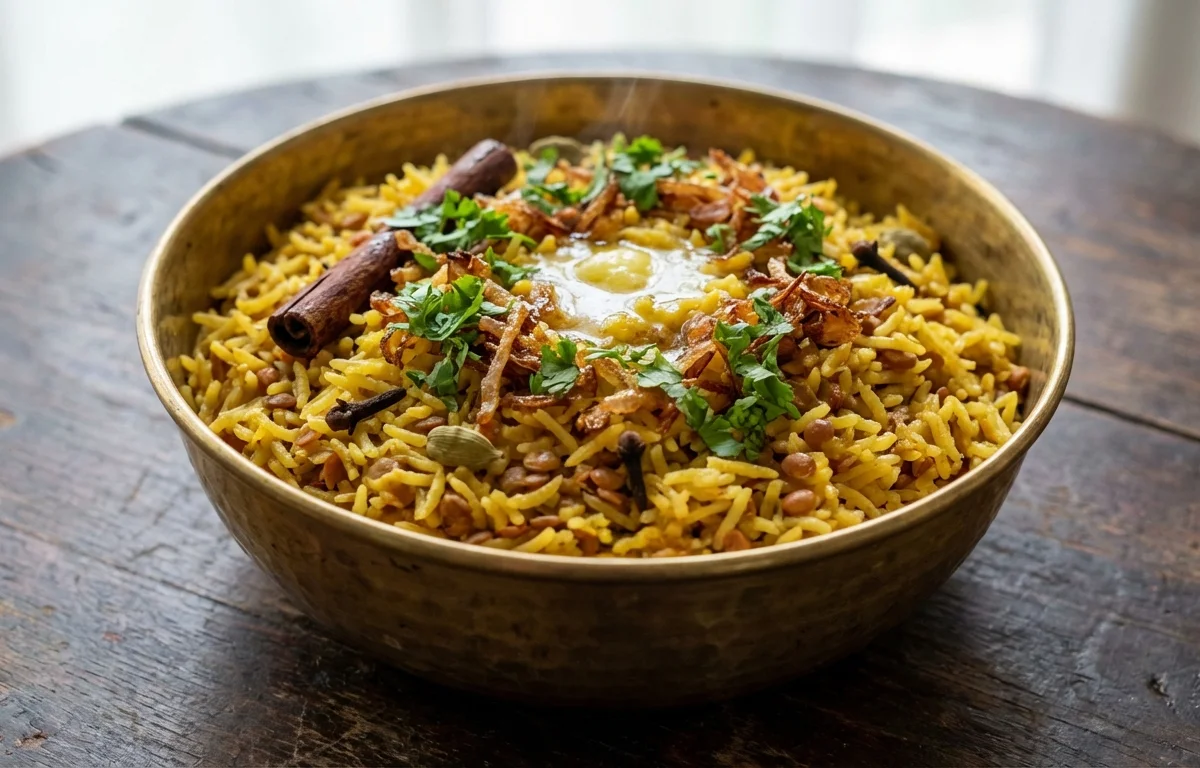
Hyderabadi Khichdi
A comforting and savory rice and lentil porridge from Hyderabad, slow-cooked with fragrant whole spices and ghee. Unlike other versions, this one uses masoor dal for a uniquely soft texture, making it a perfect breakfast or light meal.
For 4 servings
4 steps. 30 minutes total.
- 1
Wash and soak the rice and dal
- a.In a large bowl, combine the basmati rice and masoor dal. Rinse them together under cool running water 3-4 times until the water runs clear. Add fresh water to cover and let them soak for at least 30 minutes. After soaking, drain completely and set aside.
- 2
Sauté aromatics and build the flavor base
- a.Heat ghee in a 3-liter or larger pressure cooker over medium heat. Once hot, add the cinnamon stick, cloves, and green cardamom pods. Sauté for 30-45 seconds until they become fragrant. Add the thinly sliced onions and fry for 8-10 minutes, stirring frequently, until they turn a deep golden brown (birista). This step is crucial for the authentic flavor. Add the ginger-garlic paste and slit green chilies, and sauté for another minute until the raw aroma disappears.
- 3
Pressure cook the khichdi
- a.Add the turmeric powder and stir for 10 seconds. Add the drained rice and dal mixture to the cooker. Gently sauté for 1-2 minutes, being careful not to break the grains. Pour in 4.5 cups of water and add salt. Stir everything well and bring the mixture to a rolling boil. Secure the lid of the pressure cooker, place the weight on, and cook on medium-high heat for 4 whistles (approximately 12-15 minutes).
- 4
Rest, garnish, and serve
- a.Turn off the heat and allow the pressure to release naturally (NPR), which will take about 10-15 minutes. Once the pressure has fully subsided, open the cooker. The khichdi should be soft and well-cooked. Gently fluff with a fork. If you prefer a mushier consistency, use the back of a spoon to mash it slightly. Transfer to serving bowls, garnish with freshly chopped coriander leaves and optional fried onions. Serve hot with yogurt, pickle, or traditional Hyderabadi 'Khatta'.
What to keep in mind.
5 tips from the recipe — small details that make a real difference to the final dish.
- 1The key to the authentic flavor is frying the onions to a deep golden brown (birista). Don't rush this step; it builds a rich, savory foundation.
- 2Soaking the rice and dal is non-negotiable for achieving the classic soft, melt-in-your-mouth texture.
- 3For a vegan version, replace ghee with a neutral vegetable oil or coconut oil.
- 4Adjust water quantity to your preference: use 4 cups for a firmer, pulao-like texture, or up to 5 cups for a more porridge-like consistency.
- 5Traditionally served with 'Khatta' (a tangy tamarind curry) and 'Keema' (minced meat), but it's also excellent with plain yogurt, pickle, and a fried egg on top.
Adapt it for your goals.
Vegetable Khichdi
Add 1 cup of mixed vegetables like diced carrots, peas, and beans along with the rice and dal for a more nutritious meal.
Spicier VersionSpicier Version
Add 1/4 teaspoon of red chili powder along with the turmeric powder for an extra kick of heat.
Protein RichProtein-Rich
Use a mix of dals like toor dal and moong dal along with masoor dal for a different flavor profile and added protein.
Why this is on our healthy list.
Easily Digestible
The soft, mushy texture of this khichdi makes it very easy on the digestive system, making it an ideal comfort food during illness or for a light meal.
Complete Protein Source
Combining rice (a cereal) with masoor dal (a lentil) creates a complete protein profile, providing all the essential amino acids your body needs for muscle repair and growth.
Provides Sustained Energy
The complex carbohydrates from rice and lentils are digested slowly, providing a steady release of energy and keeping you full for longer.
Frequently asked questions
Hyderabadi Khichdi is unique because it primarily uses masoor dal (red lentils), is cooked to a softer, porridge-like consistency, and gets its deep savory flavor from deeply fried onions and whole spices. It's traditionally a breakfast dish, often served with tangy 'khatta' and 'keema'.