
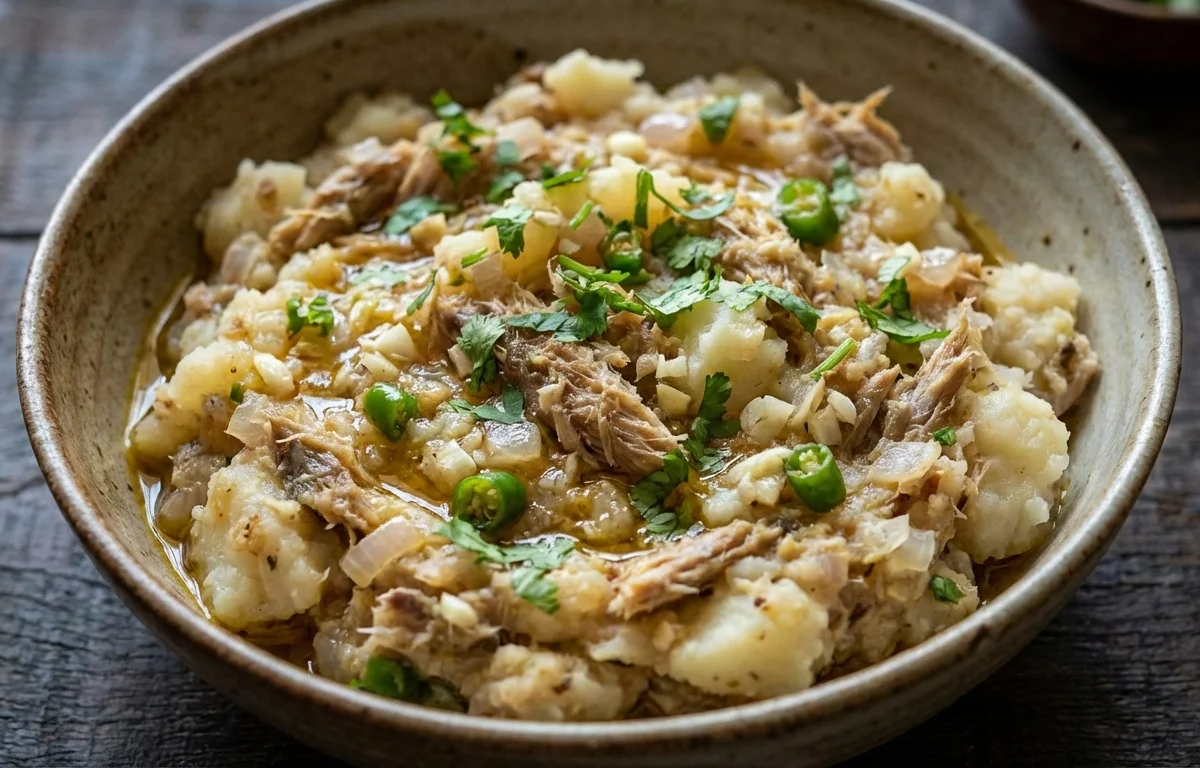
Hukoti Maas Pitika
A traditional Assamese delicacy, this pungent and spicy mash is made from fermented dried fish, roasted garlic, and fiery chilies. A bold and flavorful side dish that pairs perfectly with steamed rice.
For 4 servings
Roast the Ingredients
- Place a dry heavy-bottomed pan or tawa over low-medium heat. Add the hukoti maas (dried fish) and dry roast for 2-3 minutes, stirring constantly. The fish will become aromatic and slightly crisp. Be careful not to burn it. Remove from the pan and set aside.
- In the same pan, add the whole garlic cloves and green chilies. Roast for 4-5 minutes, turning occasionally, until they develop light char marks and the garlic softens. This step tames their raw bite and adds a smoky flavor.
- Remove the roasted garlic and chilies from the pan and let them cool for a minute.
Prepare the Mash
- Traditionally, a mortar and pestle (khil-guti) is used. Add the roasted dried fish, garlic, and green chilies to the mortar.
- Pound the ingredients together into a coarse, rustic paste. The texture should not be perfectly smooth.
- Add the boiled and peeled potato to the mortar. Mash it along with the fish paste until everything is well combined into a uniform mixture.
Final Assembly
- Transfer the mashed mixture from the mortar to a mixing bowl.
- Add the finely chopped raw onion, salt to taste, and the pungent mustard oil.
- Using your hands or a spoon, mix everything thoroughly. The raw onion adds a sharp crunch and the mustard oil brings the classic pungent flavor that defines the dish.
Serve
- Garnish with optional chopped coriander leaves if desired.
- Serve immediately with a plate of hot steamed rice. The pitika is meant to be eaten in small quantities with each mouthful of rice.
What to keep in mind.
5 tips from the recipe — small details that make a real difference to the final dish.
- 1Ensure your kitchen is well-ventilated when roasting the hukoti maas, as it has a very strong and pungent aroma.
- 2For the most authentic texture, use a stone mortar and pestle. If you don't have one, you can use the back of a heavy spoon in a sturdy bowl, but the texture will be different.
- 3Do not substitute mustard oil. Its sharp, pungent flavor is essential to the authenticity of this Assamese dish.
- 4The heat from the chilies is a key characteristic. Use Assamese Bhut Jolokia (Ghost Pepper) for extreme heat, or milder bird's eye chilies for a more manageable spice level.
- 5Add the raw onion just before serving to maintain its crisp texture and sharp bite.
Adapt it for your goals.
Add Tomato
For a slight tang, you can roast a small tomato along with the garlic and chilies and mash it into the pitika.
Include Bamboo ShootInclude Bamboo Shoot
Add a tablespoon of fermented bamboo shoot (khorisa) paste along with the mustard oil for an extra layer of pungent, fermented flavor, common in Northeast Indian cuisine.
Different FishDifferent Fish
While it would no longer be 'Hukoti Pitika', you can use other types of plain dried fish (not fermented) for a milder version of this dish.
Why this is on our healthy list.
Rich in Protein
Dried fish is a concentrated source of protein, which is essential for muscle repair, immune function, and overall body maintenance.
Gut-Friendly Probiotics
The fermentation process used to make hukoti maas introduces beneficial bacteria (probiotics), which can help improve gut health and digestion.
Immunity Boosting
Garlic contains allicin and chilies are rich in Vitamin C and capsaicin, all of which are known to support and strengthen the immune system.
Anti-inflammatory Properties
Capsaicin from chilies and compounds in mustard oil have natural anti-inflammatory effects that can help reduce inflammation in the body.
Frequently asked questions
Hukoti Maas is a traditional Assamese food product made from small river fish that are fermented and then sun-dried. The process gives it a very strong, pungent aroma and a unique, savory flavor.