
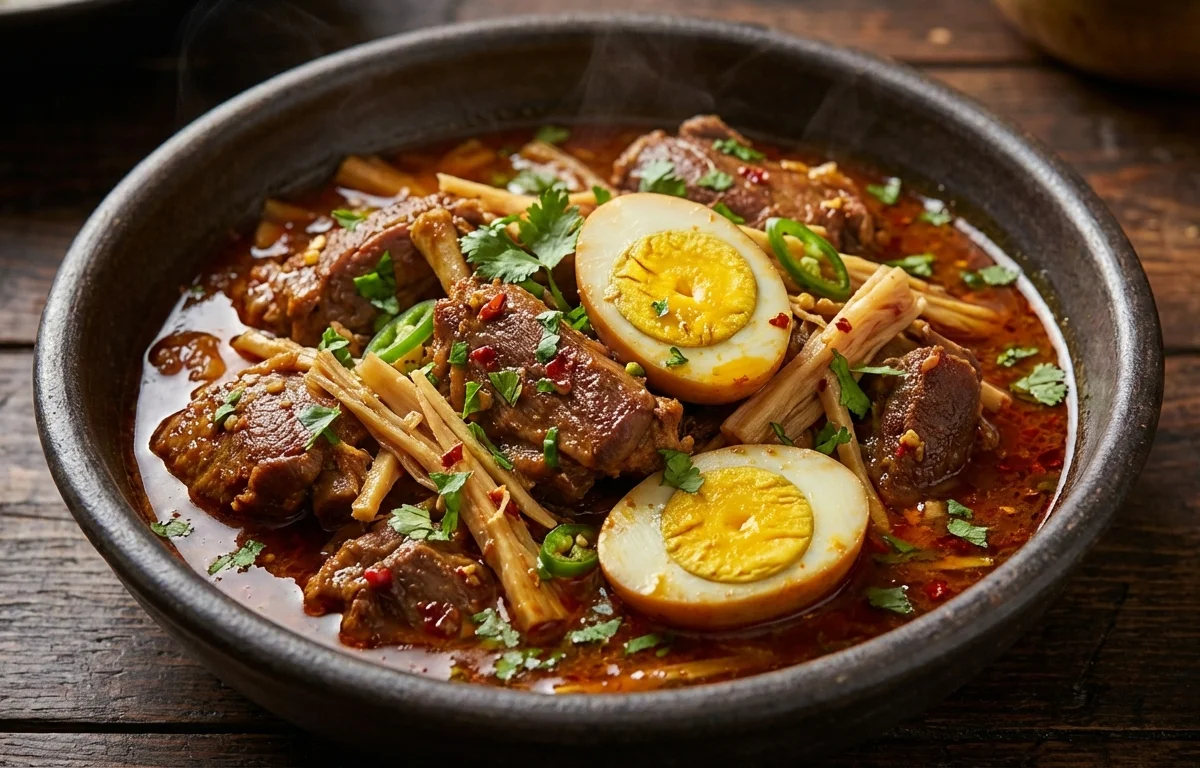
Hihjo Hanh Koni
A traditional Karbi tribal delicacy from Assam, this chicken and egg curry gets its unique pungent and savory flavor from fermented bamboo shoots. A simple yet incredibly flavorful dish that's a true taste of Northeast India.
For 4 servings
In a bowl, marinate the chicken pieces with turmeric powder and 1/2 teaspoon of salt. Mix well and set aside for at least 15 minutes.
Heat the mustard oil in a heavy-bottomed pan or kadai over medium-high heat. Wait until it is shimmering and turns a pale yellow color, which indicates it's properly heated. This should take about 1-2 minutes.
Add the finely chopped onions to the hot oil. Sauté for 6-8 minutes, stirring frequently, until they are soft and golden brown.
Add the ginger paste, garlic paste, and slit green chilies. Sauté for another minute until the raw aroma disappears, being careful not to let the pastes burn.
Add the marinated chicken to the pan. Increase the heat to high and sear the chicken for 5-7 minutes, turning the pieces occasionally, until they are lightly browned on all sides.
Stir in the drained fermented bamboo shoots and the remaining 1/2 teaspoon of salt. Cook for 3-4 minutes, allowing the pungent aroma of the bamboo shoots to meld with the chicken and spices.
Pour in 1.5 cups of warm water and bring the curry to a rolling boil. Once boiling, reduce the heat to low, cover the pan with a lid, and let it simmer for 15-20 minutes, or until the chicken is tender and the gravy has thickened slightly.
Using a knife, make a few shallow slits on the hard-boiled eggs. Gently add them to the simmering curry. This helps them absorb the flavors of the gravy. Cook for another 2-3 minutes.
Turn off the heat. Garnish with freshly chopped coriander leaves. Let the curry rest for 5 minutes before serving to allow the flavors to settle. Serve hot with steamed rice.
What to keep in mind.
5 tips from the recipe — small details that make a real difference to the final dish.
- 1For the most authentic flavor, do not substitute mustard oil. Heating it properly until it's pale and shimmering is crucial to remove its raw pungency.
- 2If you are new to fermented bamboo shoots, you can rinse them under running water for a minute to slightly mellow their strong flavor.
- 3Making shallow slits in the hard-boiled eggs before adding them to the curry allows them to soak up the delicious gravy.
- 4This curry develops more flavor over time. It often tastes even better the next day.
- 5For a truly traditional and fiery experience, add one whole Bhut Jolokia (ghost pepper) along with the green chilies. Be warned, it is extremely hot.
Adapt it for your goals.
Protein Swap
This curry is traditionally made with pork as well. You can substitute the chicken with 500g of bone-in pork pieces, increasing the simmering time until the pork is tender.
Vegetarian VersionVegetarian Version
For a vegetarian alternative, replace the chicken and eggs with 250g of mushrooms and 2 large boiled potatoes (cubed). Add the mushrooms with the onions and the boiled potatoes towards the end of the cooking time.
Milder FlavorMilder Flavor
If you find the flavor of fermented bamboo shoots too strong, start with half the quantity (1/2 cup) and adjust to your preference.
Why this is on our healthy list.
Rich in Protein
The chicken and eggs in this dish provide high-quality protein, which is essential for muscle building, tissue repair, and overall body function.
Promotes Gut Health
Fermented bamboo shoots are a source of probiotics, the beneficial bacteria that support a healthy digestive system, improve nutrient absorption, and boost immunity.
Anti-inflammatory Properties
Key ingredients like turmeric (containing curcumin), ginger, and garlic are well-known for their powerful natural anti-inflammatory and antioxidant effects.
Boosts Immunity
The combination of spices like garlic, ginger, and chilies, along with the nutrients from the main ingredients, helps to strengthen the immune system.
Frequently asked questions
Hihjo Hanh Koni is a traditional chicken and egg curry from the Karbi tribe of Assam, India. Its signature flavor comes from 'Hihjo', the Karbi word for fermented bamboo shoots, which gives the dish a unique pungent and savory taste.