
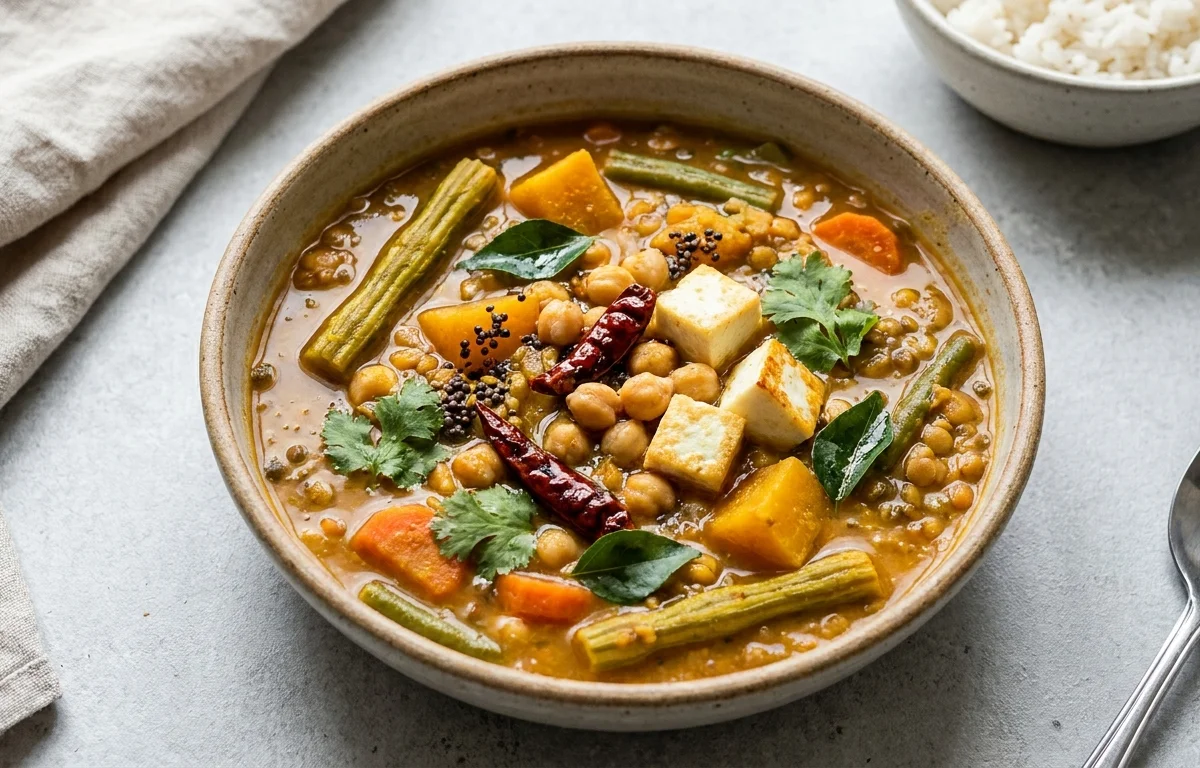
High-Protein Sambar
A hearty, protein-packed version of the classic South Indian lentil stew. Made with extra toor dal, a medley of vegetables, and a tangy tamarind broth, it's the perfect nutritious accompaniment for idli, dosa, or rice.
For 4 servings
Prepare the dal and tamarind.
- Rinse the toor dal thoroughly under running water.
- Soak the tamarind in 1/2 cup of warm water for 15 minutes. Squeeze the pulp and strain the liquid, discarding the solids.
TIPSoaking the tamarind in warm water helps extract the pulp more easily.Cook the dal until soft.
In a pressure cooker, combine the rinsed toor dal, chopped onion, turmeric powder, and 2 cups of water. Cook for 4-5 whistles, or until the dal is completely soft and mushy. Mash it lightly and set aside.
TIPMashing the dal gives the sambar a thicker, more uniform consistency.Cook the vegetables.
In a large pot, add all the chopped vegetables (drumstick, carrot, pumpkin, brinjal, tomato) along with sambar powder, salt, and 2 cups of water. Bring to a boil and cook until the vegetables are tender but still hold their shape, about 8-10 minutes.
Combine and simmer the sambar.
- Pour the cooked dal mixture into the pot with the vegetables.
- Add the tamarind extract and grated jaggery (if using).
- Mix well and let it simmer on low heat for 5-7 minutes, allowing the flavors to meld.
- Adjust salt if needed. If the sambar is too thick, add a little hot water.
Prepare the tempering (tadka).
- Heat sesame oil in a small pan over medium heat.
- Add the mustard seeds and let them splutter.
- Add the dried red chilies, curry leaves, and a pinch of asafoetida. Sauté for 30 seconds until fragrant.
TIPBe careful not to burn the spices; the tempering should be aromatic, not bitter.Finish and serve the sambar.
Pour the hot tempering over the simmering sambar. Stir gently, garnish with freshly chopped coriander leaves, and serve hot with dosa, idli, or rice.
What to keep in mind.
6 tips from the recipe — small details that make a real difference to the final dish.
- 1For a richer flavor, you can use a combination of toor dal and a little moong dal.
- 2Feel free to use other vegetables like bottle gourd, radish, or beans based on availability.
- 3Homemade sambar powder will always give a more authentic and fresh flavor.
- 4Don't overcook the vegetables; they should be tender but not mushy.
- 5Sambar tastes even better the next day as the flavors deepen over time.
- 6A drop of ghee on top while serving enhances the aroma and taste.
Adapt it for your goals.
Jain
Omit the onion. You can add a little more asafoetida (hing) to compensate for the flavor.
veganVegan
This recipe is naturally vegan. Just ensure your asafoetida does not contain wheat flour if you need it to be gluten-free as well.
quickQuick
To save time, use a store-bought sambar powder and chop the vegetables while the dal is pressure cooking.
ckd friendlyCkd friendly
Use a very small portion of moong dal (1/4 cup total), skip tomatoes and tamarind, using lemon juice for tanginess. Blanch all vegetables to reduce potassium. This will significantly alter the taste but make it safer.
Why this is on our healthy list.
Excellent Source of Protein
The high content of toor dal makes this sambar a great source of plant-based protein, essential for muscle repair and growth.
Rich in Dietary Fiber
Loaded with various vegetables, this dish is high in fiber, which aids digestion, promotes gut health, and helps in maintaining a healthy weight.
Packed with Vitamins and Minerals
The medley of vegetables provides essential vitamins like A and C, and minerals like potassium and iron.
Aids in Blood Sugar Control
The combination of protein and fiber helps in slow-releasing energy, which can help in managing blood sugar levels.
Frequently asked questions
Yes, it is very healthy. It's packed with protein from lentils, fiber from vegetables, and is low in fat. The spices used also have various health benefits.