
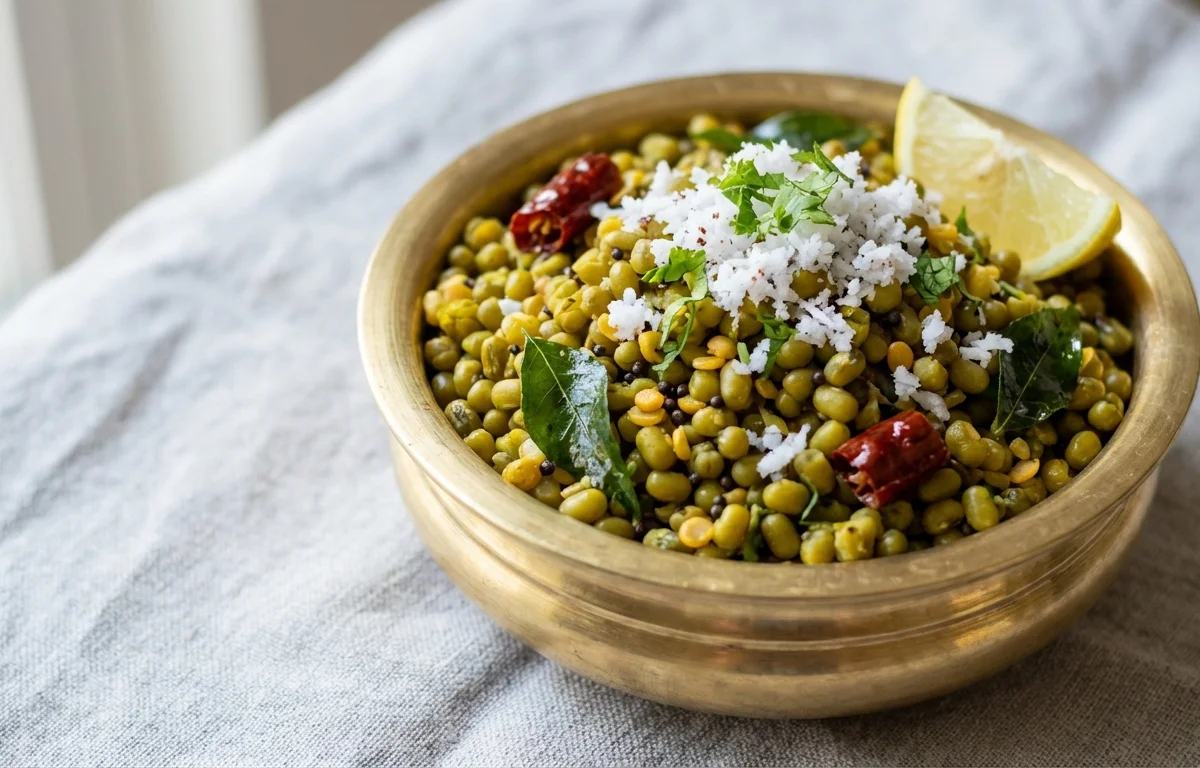
Hesaru Kalu Usli
A wholesome and protein-packed snack or side dish from Karnataka made with whole green moong dal, fresh coconut, and a simple tempering. It's light, nutritious, and comes together quickly.
For 4 servings
5 steps. 25 minutes total.
- 1
Step 1
- a.Soak and Cook the Moong Dal
- b.Rinse the whole green moong dal under running water. Soak it in ample water for at least 4-6 hours or overnight.
- c.Drain the soaking water. In a pot, combine the soaked dal, 3 cups of fresh water, and 1 tsp of salt.
- d.Bring to a boil, then reduce the heat to a simmer. Cook for about 20-25 minutes until the dal is tender but still holds its shape. It should be soft to the bite, not mushy.
- e.Alternatively, pressure cook for 2 whistles on medium heat. Once cooked, drain any excess water and set aside.
- 2
Step 2
- a.Prepare the Tempering (Tadka)
- b.Heat coconut oil in a wide pan (kadai) over medium heat. Once hot, add the mustard seeds and allow them to splutter completely, which takes about 30 seconds.
- c.Add the urad dal and sauté for about 1 minute until it turns a light golden brown.
- d.Add the broken dried red chilies, curry leaves, and asafoetida. Sauté for another 30 seconds until the curry leaves are crisp and fragrant.
- 3
Step 3
- a.Sauté Aromatics
- b.Add the finely chopped onion to the pan and sauté for 3-4 minutes until it becomes soft and translucent.
- c.Add the slit green chilies and turmeric powder. Stir and cook for one more minute to remove the raw smell of the turmeric.
- 4
Step 4
- a.Combine and Finish
- b.Add the cooked and drained moong dal to the pan. Gently mix everything together, ensuring the dal is well-coated with the tempering.
- c.Cook for 2-3 minutes, allowing the dal to absorb all the flavors.
- d.Stir in the fresh grated coconut and mix well to combine.
- e.Turn off the heat. Squeeze in the fresh lemon juice and garnish with finely chopped coriander leaves. Give it a final gentle stir.
- 5
Step 5
- a.Serve
- b.Serve the Hesaru Kalu Usli warm as a nutritious snack or as a side dish with rice and sambar or rasam.
What to keep in mind.
5 tips from the recipe — small details that make a real difference to the final dish.
- 1Do not overcook the moong dal. The grains should be soft but retain their shape for the best texture.
- 2For enhanced nutrition and a different texture, use sprouted moong dal. It also cooks much faster.
- 3Freshly grated coconut is highly recommended for its superior flavor and moisture. If unavailable, you can use frozen grated coconut after thawing.
- 4Adjust the green chilies and lemon juice to your personal preference for spice and tanginess.
- 5This dish is versatile and tastes great both warm and at room temperature, making it an excellent choice for lunchboxes.
Adapt it for your goals.
With Vegetables
Add 1/2 cup of finely chopped carrots or green beans along with the onions for extra crunch and nutrition.
Sprouted VersionSprouted Version
Use 2 cups of sprouted moong dal instead of soaked dal. Reduce the cooking time significantly; sprouted dal usually cooks in 5-7 minutes.
No Onion VersionNo Onion Version
For a sattvic version, simply skip the onions. The dish will still be flavorful from the tempering and coconut.
Sweet & SavorySweet & Savory
Add a teaspoon of powdered jaggery along with the coconut to introduce a subtle sweetness that balances the tang and spice.
Why this is on our healthy list.
Rich in Plant-Based Protein
Whole green moong dal is an excellent source of plant-based protein, which is essential for muscle building, tissue repair, and overall body function.
High in Dietary Fiber
The high fiber content aids in digestion, prevents constipation, promotes a feeling of fullness to help with weight management, and helps regulate blood sugar levels.
Supports Heart Health
This dish is low in saturated fat and rich in fiber and potassium, which can help manage cholesterol levels and maintain healthy blood pressure.
Packed with Essential Nutrients
Moong dal is a good source of essential minerals like iron, magnesium, and potassium, as well as B vitamins, which are vital for energy production and brain health.
Frequently asked questions
Yes, it is very healthy. It's rich in plant-based protein and dietary fiber from the moong dal, contains healthy fats from coconut, and uses minimal oil. It's a nutritious, balanced, and wholesome dish.