
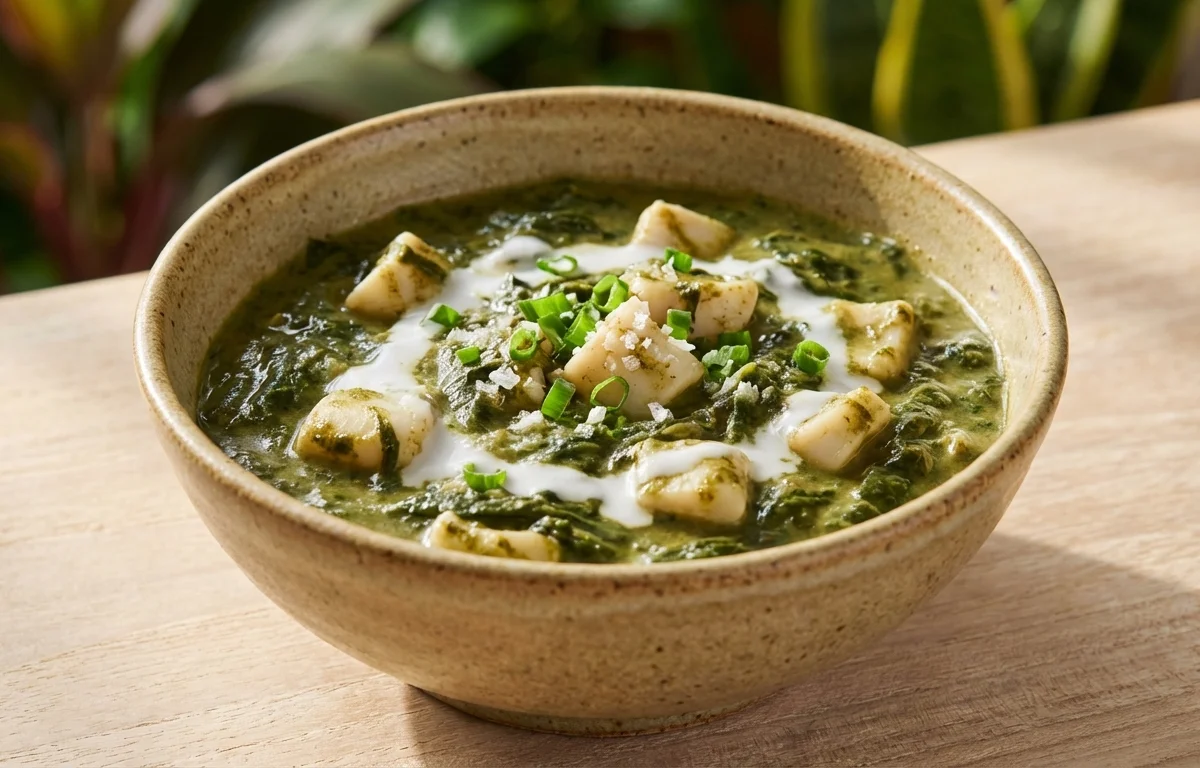
Squid Luau
A classic Hawaiian comfort food featuring tender squid and luau (taro) leaves simmered in rich, creamy coconut milk. This savory stew is a staple at any traditional luau feast.
For 4 servings
5 steps. 90 minutes total.
- 1
Step 1
- a.Prepare the Luau Leaves
- b.If using fresh taro leaves, wash them thoroughly under cool running water.
- c.Using a small knife, carefully remove the tough central stem and any thick veins from each leaf. Discard the stems.
- d.Stack the cleaned leaves and roughly chop them into 1 to 2-inch pieces. If using frozen, they are often pre-chopped.
- 2
Step 2
- a.Cook the Luau Leaves
- b.In a large, heavy-bottomed pot or Dutch oven, combine the chopped taro leaves, finely chopped onion, and 1 cup of water.
- c.Bring the mixture to a boil over medium-high heat, then immediately reduce the heat to low.
- d.Cover the pot and let it simmer for at least 60 minutes, stirring every 15 minutes to prevent sticking. This long cooking time is crucial to break down the calcium oxalate crystals that cause throat irritation.
- e.The leaves will wilt significantly and turn a dark, rich green, resembling cooked spinach.
- 3
Step 3
- a.Combine Ingredients
- b.Once the leaves are fully cooked and tender, pour in the coconut milk and stir until well combined.
- c.Add the cleaned squid pieces to the pot.
- d.Season with Hawaiian sea salt and the optional sugar. Stir gently to incorporate all ingredients.
- 4
Step 4
- a.Final Simmer
- b.Increase the heat slightly to bring the stew to a gentle simmer. Avoid a rolling boil, which can make the squid tough.
- c.Once simmering, reduce the heat back to low, cover the pot, and cook for an additional 20-30 minutes.
- d.The stew is ready when the squid is tender and opaque, and the flavors have melded together into a rich, creamy consistency.
- 5
Step 5
- a.Serve
- b.Taste the Squid Luau and adjust the salt if necessary.
- c.Serve hot, traditionally accompanied by steamed white rice or fresh poi.
What to keep in mind.
6 tips from the recipe — small details that make a real difference to the final dish.
- 1It is crucial to cook luau (taro) leaves for at least one hour to fully break down the calcium oxalate crystals, which cause an itchy sensation in the throat if undercooked.
- 2For the richest, most authentic flavor, use full-fat, unsweetened coconut milk.
- 3Do not overcook the squid. Add it in the last 20-30 minutes of cooking to ensure it remains tender and doesn't become rubbery.
- 4If you cannot find fresh luau leaves, frozen ones are an excellent substitute and are often sold pre-cleaned and chopped.
- 5This dish tastes even better the next day as the flavors meld together. Store in an airtight container in the refrigerator and reheat gently on the stovetop.
- 6A slow cooker is a great modern alternative for this recipe. Cook the leaves, onion, and water on low for 4-5 hours, then add the remaining ingredients and cook for another hour.
Adapt it for your goals.
Protein Swap
Replace squid with 1 lb of cubed chicken thighs or pork shoulder. Adjust the final simmering time accordingly; chicken will cook faster, while pork may need longer to become tender.
Vegetarian VersionVegetarian Version
For a vegetarian option, omit the squid and add 1 lb of firm tofu (cubed) or sweet potatoes (peeled and cubed) during the last 30 minutes of cooking.
Add HeatAdd Heat
For a spicy kick, add one finely minced Hawaiian chili pepper or 1/2 teaspoon of red pepper flakes along with the coconut milk.
Why this is on our healthy list.
Rich in Vitamins and Minerals
Taro leaves are an excellent source of Vitamin A and C, which support immune function and vision, while squid provides essential minerals like selenium, copper, and phosphorus.
Good Source of Lean Protein
Squid is a high-quality, lean source of protein, which is crucial for building and repairing tissues, muscle maintenance, and overall body function.
High in Dietary Fiber
The taro leaves contribute a significant amount of dietary fiber, which aids in digestion, promotes gut health, and helps maintain stable blood sugar levels.
Frequently asked questions
Uncooked or undercooked taro leaves contain calcium oxalate crystals, which can cause a scratchy, itchy sensation in the mouth and throat. It is essential to cook them for at least one hour to completely break down these crystals and make them safe and enjoyable to eat.