
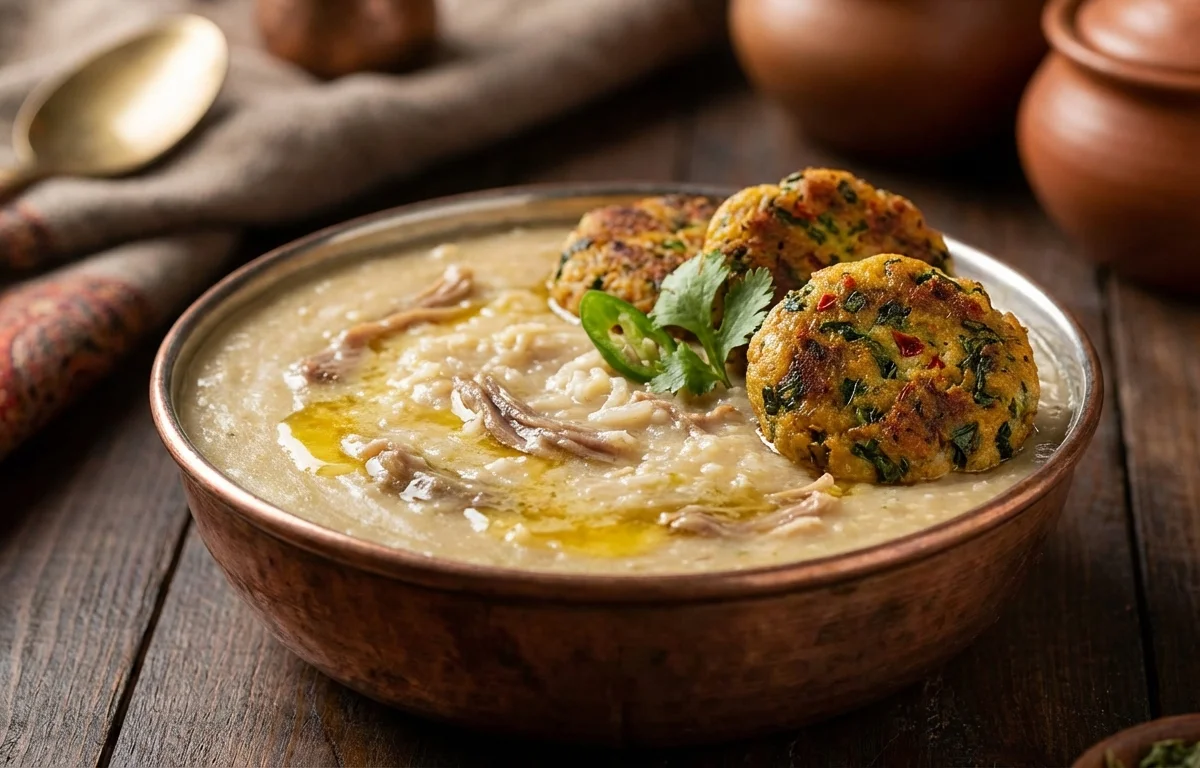
Harisa with Methi Kabab
A traditional Kashmiri winter delicacy. Harisa is a slow-cooked, creamy mutton and rice porridge, spiced with fennel and ginger, and served with flavorful pan-fried methi kababs. It's a rich, warming, and truly special meal.
For 4 servings
6 steps. 150 minutes total.
- 1
Step 1
- a.Sauté Aromatics & Mutton for Harisa
- b.In a large pressure cooker, heat the mustard oil on high until it just begins to smoke. Immediately turn off the heat and let it cool for a minute to remove its pungency.
- c.Reheat the oil on medium flame. Add the whole spices: green cardamoms, black cardamoms, cloves, and cinnamon stick. Sauté for 30-45 seconds until fragrant.
- d.Add the sliced onion and fry, stirring frequently, for 10-12 minutes until deep golden brown.
- e.Add the mutton pieces and sear on all sides for 5-7 minutes until well-browned. Stir in 1 tbsp of garlic paste and cook for another minute until the raw smell disappears.
- 2
Step 2
- a.Pressure Cook the Harisa
- b.Stir in the fennel powder, dry ginger powder, and 1.5 tsp of salt. Mix well to coat the mutton.
- c.Add the washed rice and 7 cups of water. Stir everything together thoroughly.
- d.Secure the lid of the pressure cooker. Bring to high pressure (first whistle), then reduce the heat to the lowest setting and cook for 1.5 to 2 hours. The mutton must be exceptionally tender and falling off the bone.
- 3
Step 3
- a.Prepare the Methi Kabab Mixture
- b.While the harisa is cooking, prepare the kababs. In a mixing bowl, combine the ground mutton, crushed kasuri methi, besan, finely chopped small onion, green chilies, and 1 tsp of ginger-garlic paste.
- c.Add the garam masala, red chili powder, and the remaining 0.75 tsp of salt.
- d.Mix everything thoroughly with your hands for 2-3 minutes until the mixture is well combined and slightly sticky. Cover and let it rest for at least 15 minutes.
- 4
Step 4
- a.Mash the Harisa (Ghotai)
- b.Once the cooking time is up, let the pressure release naturally from the cooker. Carefully open the lid.
- c.Using tongs, remove and discard the large whole spices (cinnamon stick, black cardamoms).
- d.Using a traditional wooden masher (ghotni) or a sturdy potato masher, begin to mash and churn the mixture vigorously inside the cooker. This process, 'ghotai', is crucial and takes 15-20 minutes of continuous effort.
- e.Continue mashing until the mutton and rice break down and emulsify into a smooth, thick, porridge-like consistency. The final texture should be cohesive, not watery or stringy.
- 5
Step 5
- a.Shape and Fry the Methi Kababs
- b.Divide the rested kabab mixture into 12-16 equal portions. Lightly grease your palms and shape each portion into a small, flat patty (tikki).
- c.Heat the vegetable oil in a skillet or frying pan over medium heat.
- d.Carefully place the kababs in the pan, ensuring not to overcrowd it. Fry in batches if necessary.
- e.Cook for 4-5 minutes on each side until they are deep brown, crisp, and fully cooked through. Remove and drain on a plate lined with paper towels.
- 6
Step 6
- a.Temper and Serve
- b.Gently reheat the harisa over low heat, stirring to prevent it from sticking. Adjust consistency with a splash of hot water if it's too thick. Check for seasoning and add more salt if needed.
- c.In a separate small pan, heat the 2 tbsp of ghee until it is very hot.
- d.Ladle the hot harisa into serving bowls. Drizzle the sizzling hot ghee over the top.
- e.Garnish each bowl with 3-4 freshly fried methi kababs and serve immediately with Kashmiri bread like Kander Czot or naan.
What to keep in mind.
5 tips from the recipe — small details that make a real difference to the final dish.
- 1The key to authentic harisa is the 'ghotai' or mashing process. Be patient, as this develops the unique creamy, emulsified texture.
- 2Using mutton with some fat and bones will result in a richer and more flavorful harisa. You can remove the bones after pressure cooking.
- 3Always smoke mustard oil first to mellow its pungent flavor before cooking with it.
- 4For a quicker mashing process, you can use an immersion blender, but pulse it very carefully to avoid a completely pureed, gummy texture. The traditional method yields a far superior result.
- 5Let the kabab mixture rest for at least 15-30 minutes. This allows the flavors to meld and the besan to hydrate, resulting in better binding.
Adapt it for your goals.
Protein Swap
For a lighter version, you can make Chicken Harisa using the same process, but reduce the pressure cooking time to about 45-50 minutes.
Spice LevelSpice Level
Increase the heat by adding more chopped green chilies to the kabab mixture or a pinch of black pepper powder to the harisa during the mashing stage.
Grain VariationGrain Variation
Some traditional recipes use whole wheat berries (dalia) or barley instead of rice. This will give the harisa a nuttier flavor and require adjustments to water and cooking time.
Why this is on our healthy list.
High in Protein
Mutton is an excellent source of high-quality protein, which is essential for building and repairing tissues, muscle maintenance, and overall body function.
Warming Winter Dish
The combination of slow-cooked meat and warming spices like ginger, cloves, and cinnamon makes this a perfect dish for cold weather, providing sustained energy and a sense of comfort.
Rich in Iron
Mutton is a good source of heme iron, a type that is easily absorbed by the body. Iron is crucial for producing red blood cells and preventing anemia.
Frequently asked questions
It is a rich, high-protein dish due to the mutton, traditionally eaten in winter for its warming properties. While nutritious, it's also high in calories and fat, so it's best enjoyed in moderation as part of a balanced diet.