
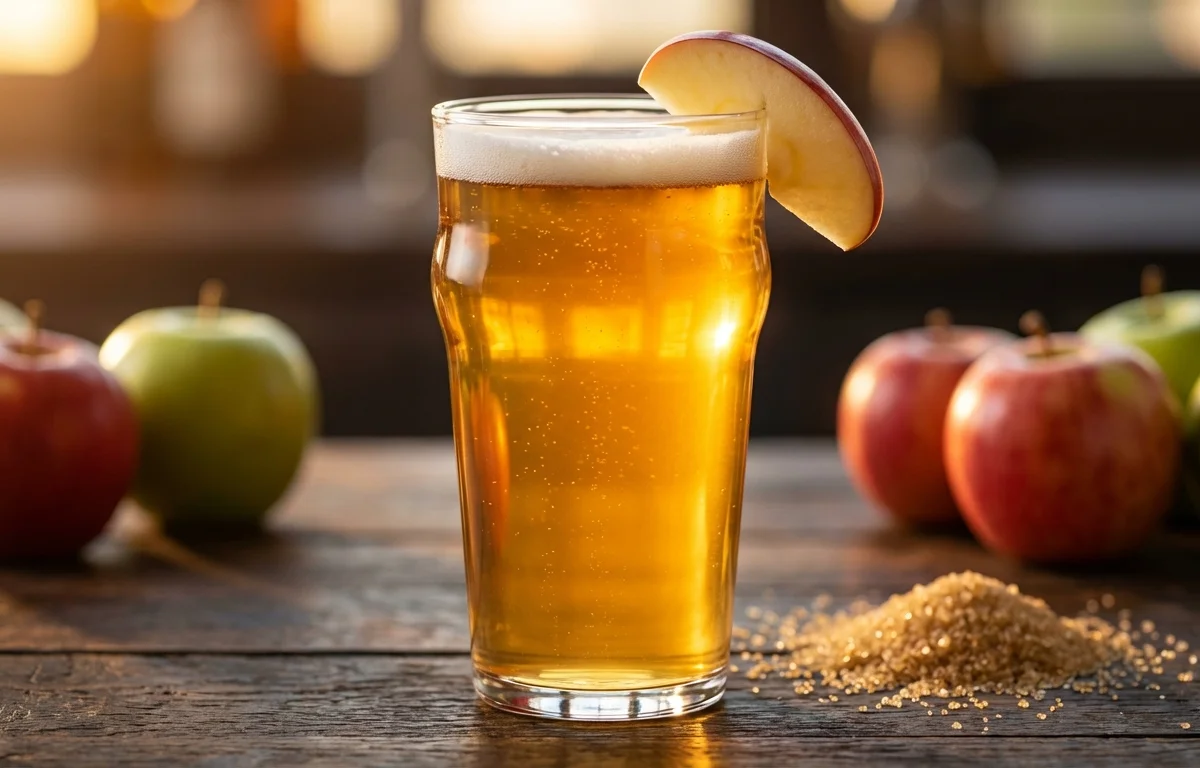
Hard Apple Cider
Craft your own crisp, bubbly hard apple cider at home with this straightforward recipe. This guide transforms simple apple juice into a delightful alcoholic beverage, perfect for any season. By controlling the ingredients, you can create a cider that's perfectly tailored to your taste, from dry to semi-sweet. Note that this recipe requires a fermentation period of 1-2 weeks and a conditioning period of another 1-2 weeks.
For 10 servings
7 steps. 5 minutes total.
- 1
Step 1
- a.Sanitize Equipment
- b.This is the most critical step. Thoroughly clean and sanitize your 1-gallon glass carboy or fermenter, airlock, stopper, funnel, and any spoons or whisks you will use.
- c.Follow the instructions on your chosen no-rinse sanitizer. Proper sanitation prevents unwanted microbes from spoiling your cider.
- 2
Step 2
- a.Prepare the Must
- b.Using the sanitized funnel, pour the apple juice into your fermenter, leaving a few inches of headspace at the top.
- c.Add the packed brown sugar, pectic enzyme, and one crushed Campden tablet.
- d.Seal the fermenter and shake vigorously for 1-2 minutes until the sugar is completely dissolved. The Campden tablet will kill any wild yeast and bacteria present in the juice.
- 3
Step 3
- a.Wait and Pitch Yeast
- b.Loosely cover the fermenter (e.g., with sanitized aluminum foil) and let it sit at room temperature for 24 hours. This allows the sulfur dioxide from the Campden tablet to dissipate.
- c.After 24 hours, rehydrate the cider yeast by sprinkling it over 1/4 cup of warm water. Let it sit for 15 minutes without stirring.
- d.Add the yeast nutrient to the fermenter. Gently stir the rehydrated yeast mixture and pour it into the fermenter. Swirl the fermenter gently to mix.
- 4
Step 4
- a.Primary Fermentation (1-2 Weeks)
- b.Securely attach the stopper and airlock to your fermenter. Fill the airlock with sanitizer solution or vodka up to the fill line.
- c.Place the fermenter in a cool, dark place (ideally 60-75°F or 15-24°C).
- d.Within 24-48 hours, you should see bubbles in the airlock, indicating fermentation has begun. Let it ferment undisturbed until the bubbling stops completely, typically 1 to 2 weeks.
- 5
Step 5
- a.Prime and Bottle
- b.Once fermentation is finished (no bubbles for 2-3 consecutive days), sanitize your bottles, caps, and siphoning equipment.
- c.In a small saucepan, combine the 3 tbsp of corn sugar with 1/2 cup of water. Bring to a boil for 2-3 minutes to dissolve the sugar and sanitize the solution. Let it cool completely to room temperature.
- d.Carefully pour the cooled sugar syrup into a sanitized bottling bucket. Gently siphon the cider from the fermenter into the bucket, leaving the sediment (lees) behind. Avoid splashing to prevent oxidation.
- e.Fill the sanitized bottles, leaving about one inch of headspace at the top. Securely cap each bottle.
- 6
Step 6
- a.Bottle Condition (1-2 Weeks)
- b.Store the capped bottles at room temperature, away from direct sunlight, for another 1 to 2 weeks.
- c.During this time, the remaining yeast will consume the priming sugar, creating natural carbonation inside the bottles.
- 7
Step 7
- a.Chill and Serve
- b.After conditioning, move the bottles to the refrigerator and chill for at least 48 hours. This helps the carbonation dissolve into the cider and settles any remaining yeast.
- c.Open a bottle carefully, as it will be under pressure. Pour gently into a glass, leaving the last bit of sediment in the bottle. Enjoy your homemade hard cider!
What to keep in mind.
5 tips from the recipe — small details that make a real difference to the final dish.
- 1Sanitization is not optional! It is the single most important factor for a successful batch.
- 2Use a hydrometer to get an accurate reading of your cider's alcohol by volume (ABV). Take a reading before fermentation (Original Gravity) and after (Final Gravity).
- 3For a clearer cider, you can 'cold crash' it by placing the entire fermenter in a refrigerator for 2-3 days before bottling. This causes yeast and sediment to drop to the bottom.
- 4Patience is a virtue in brewing. Allowing the cider to age in the bottles for a month or more after carbonation will significantly improve and mellow its flavor.
- 5Keep your fermenting cider out of direct sunlight, as UV light can harm the yeast and create undesirable 'skunky' flavors.
Adapt it for your goals.
Spiced Winter Cider
Add one cinnamon stick, 4-5 whole cloves, and 1/4 tsp of allspice berries to the fermenter along with the juice for a warm, spiced flavor.
Extra Dry CiderExtra-Dry Cider
For a very dry, crisp cider similar to brut champagne, use a Champagne yeast (like Lalvin EC-1118) instead of a standard cider yeast.
Hopped CiderHopped Cider
Add 0.5 oz of citrus-forward hops (like Citra or Cascade) to the fermenter for the last 3-5 days of fermentation for a 'graff' style cider with a hoppy aroma.
Back Sweetened CiderBack-Sweetened Cider
To make a sweet cider, you must first stabilize it after fermentation with potassium sorbate and potassium metabisulfite to prevent re-fermentation. Then, you can mix in apple juice concentrate or sugar to your desired sweetness before bottling. Note: This cider will be still (not carbonated) unless you force-carbonate with a kegging system.
Why this is on our healthy list.
Source of Antioxidants
Made from apple juice, hard cider contains polyphenols, which are natural compounds that act as antioxidants and can help protect the body against oxidative stress.
Naturally Gluten-Free
This hard cider is made entirely from apples, sugar, and yeast, making it a naturally gluten-free beverage suitable for individuals with celiac disease or gluten sensitivity.
Frequently asked questions
A 12 oz serving of this homemade hard cider contains approximately 160-190 calories. The final calorie count depends on how much sugar the yeast consumes, with drier ciders having fewer calories than sweeter ones.