
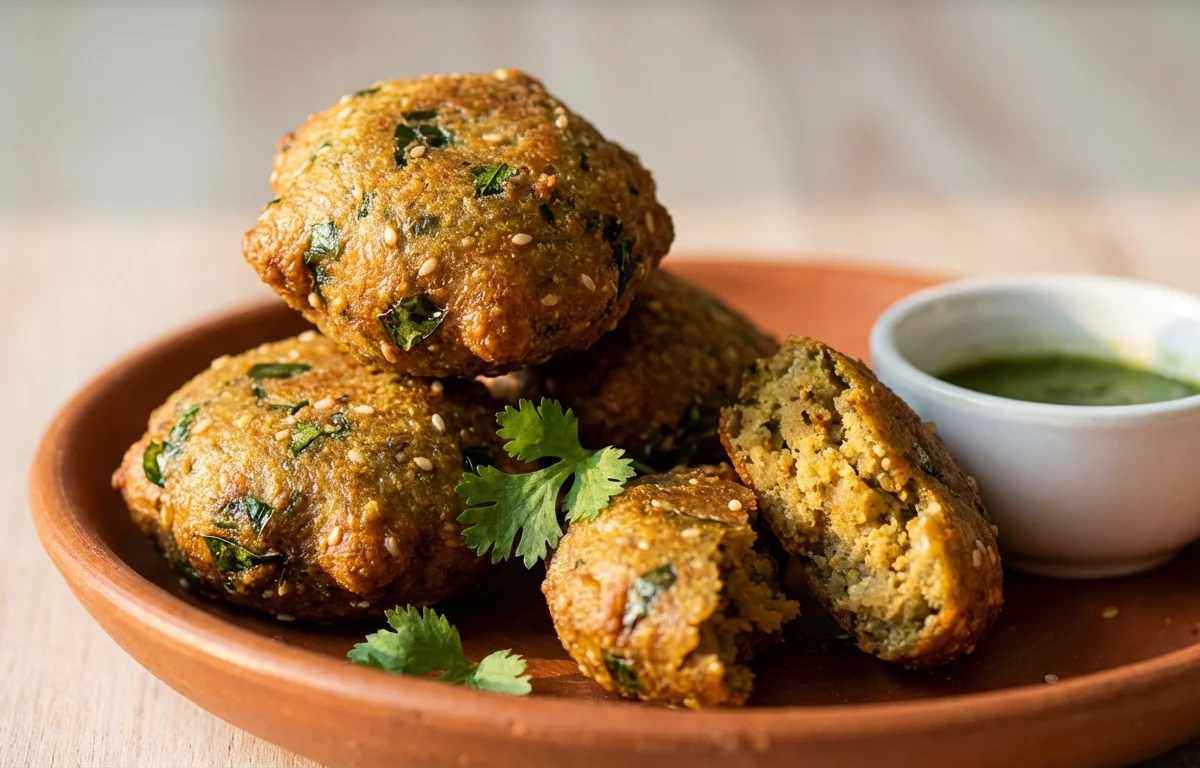
Bajra Vada
Crispy on the outside, soft on the inside, these savory pearl millet fritters are a beloved Gujarati winter snack. Spiced with ginger, chili, and fenugreek, they are perfect with a cup of hot tea.
For 4 servings
Prepare the Flour Mixture
- In a large mixing bowl, combine the bajra flour, atta, sesame seeds, carom seeds, turmeric powder, red chili powder, asafoetida, sugar, and salt.
- Whisk the dry ingredients together for 30 seconds to ensure they are evenly distributed.
Add Wet Ingredients and Greens
- To the dry mixture, add the finely chopped fenugreek leaves, grated ginger, chopped green chilies, sour curd, and 2 tablespoons of oil.
- Using your fingertips, rub the oil and curd into the flour mixture until it resembles coarse breadcrumbs. This process, known as 'moyan', is key to a crispy vada.
Knead and Rest the Dough
- Gradually add a tablespoon of warm water at a time and knead to form a stiff, yet pliable dough. Be careful not to add too much water; the dough should not be sticky.
- Knead for 2-3 minutes until the dough is smooth.
- Cover the bowl with a damp cloth and let the dough rest for 15 minutes. This allows the flours to hydrate and flavors to meld.
Shape the Vadas
- After resting, knead the dough again for a minute. Grease your palms with a little oil.
- Divide the dough into 20 equal-sized portions and roll them into smooth balls.
- Gently flatten each ball between your palms to form a disc about 2 inches in diameter and 1/4 inch thick.
- Using your index finger, make a small hole in the center of each vada. This helps it cook evenly from the inside.
Deep Fry the Vadas
- Heat the oil for deep frying in a kadai or deep pan over medium heat. To check if the oil is ready, drop a tiny piece of dough; it should sizzle and rise to the surface steadily.
- Carefully slide 4-5 vadas into the hot oil, ensuring not to overcrowd the pan.
- Fry on a medium-low flame for about 6-8 minutes, flipping them occasionally, until they are deep golden brown and crisp on both sides.
- The vadas will float to the top when they are nearly done.
Drain and Serve
- Once fried, use a slotted spoon to remove the vadas from the oil.
- Let them drain on a wire rack or a plate lined with paper towels to remove excess oil.
- Serve the Bajra Vadas hot with plain yogurt, green chutney, or a hot cup of masala chai.
What to keep in mind.
5 tips from the recipe — small details that make a real difference to the final dish.
- 1Ensure the dough is stiff. A soft dough will cause the vadas to absorb excess oil and become greasy.
- 2Using sour curd is traditional and adds a delicious tangy flavor. If your curd isn't sour, add 1 teaspoon of lemon juice to the dough.
- 3Fry the vadas on a consistent medium-low heat. Frying on high heat will brown them quickly on the outside while leaving the inside raw.
- 4The hole in the center is not just for looks; it ensures the vada cooks through evenly and becomes crispy.
- 5These vadas have a good shelf life. They can be stored in an airtight container at room temperature for up to 4-5 days, making them a great travel snack.
Adapt it for your goals.
Healthier Version
To reduce oil, you can cook these vadas in an appe (paniyaram) pan with a few drops of oil in each cavity, or bake them in a preheated oven at 180°C (350°F) for 20-25 minutes, flipping halfway through.
Gluten FreeGluten-Free
For a completely gluten-free version, replace the 1/2 cup of atta (whole wheat flour) with 1/4 cup of besan (chickpea flour) and 1/4 cup of rice flour. This will help with binding while keeping it gluten-free.
Vegetable AdditionVegetable Addition
You can add 1/4 cup of finely grated bottle gourd (dudhi/lauki) or carrots to the dough for extra moisture and nutrients. Squeeze out the excess water from the vegetables before adding.
Why this is on our healthy list.
Rich in Fiber
Pearl millet (bajra) is an excellent source of dietary fiber, which aids in digestion, promotes a feeling of fullness, and helps maintain stable blood sugar levels.
Good Source of Iron
Bajra is naturally rich in iron, an essential mineral for forming hemoglobin and preventing anemia. Fenugreek leaves also contribute to the iron content.
Warming Properties
In Ayurvedic tradition, ingredients like bajra, ginger, and carom seeds (ajwain) are considered to have warming properties, making this snack ideal for consumption during colder months.
Energy Boosting
The complex carbohydrates in pearl millet provide a slow and steady release of energy, keeping you energized for longer periods compared to refined grains.
Frequently asked questions
A serving of 5 Bajra Vadas contains approximately 300-350 calories, primarily from the bajra flour and the oil used for deep frying. The exact count can vary based on the amount of oil absorbed.