
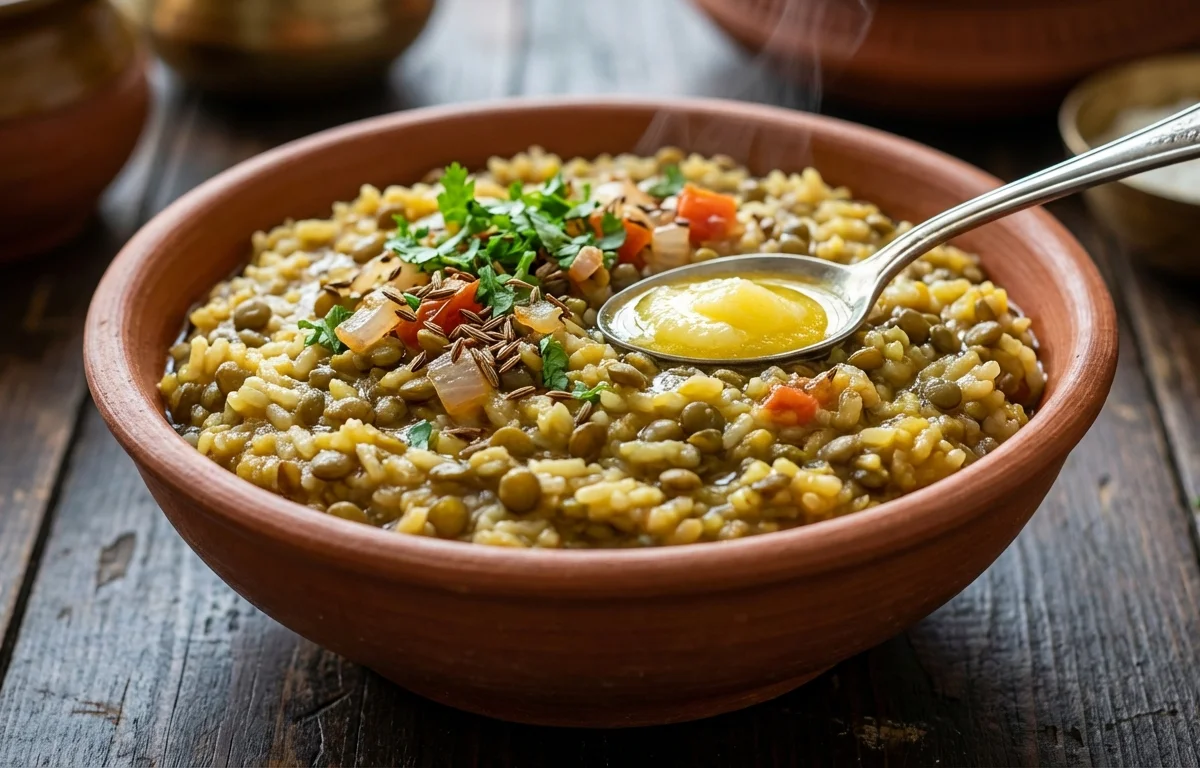
Green Moong Dal Khichdi
A wholesome one-pot meal made with whole green moong dal and rice. This comforting and nutritious khichdi is lightly spiced and perfect for a light lunch or dinner, often served with a dollop of ghee.
For 4 servings
Rinse the basmati rice and whole green moong dal together under cool running water until the water runs clear. Soak them in ample water for at least 30 minutes. After soaking, drain all the water completely and set aside.
Heat 1 tablespoon of ghee in a 3-liter or larger pressure cooker over medium heat. Add the drained rice and dal mixture, turmeric powder, and 1 teaspoon of salt. Sauté for 1 minute, then pour in 4 cups of water and stir well.
Secure the lid of the pressure cooker. Cook on medium-high heat for 4 to 5 whistles. Once done, turn off the heat and allow the pressure to release naturally, which will take about 10-15 minutes.
While the khichdi is cooking, prepare the tempering (tadka). Heat the remaining 1 tablespoon of ghee in a small pan over medium heat. Add the cumin seeds and let them sizzle and become fragrant, about 30 seconds.
Add the asafoetida, grated ginger, and slit green chilies to the pan. Sauté for another 30 seconds. Then, add the finely chopped onion and cook until it becomes soft and translucent, about 3-4 minutes.
Add the chopped tomato and the remaining 0.5 teaspoon of salt. Cook, stirring occasionally, until the tomatoes break down and become soft and mushy, about 4-5 minutes. The tempering is now ready.
Once the pressure has fully released, carefully open the cooker. The khichdi should be soft and well-cooked. Gently mash it with the back of a ladle for a creamier texture, if desired.
Pour the prepared tempering over the cooked khichdi. Mix everything thoroughly until well combined. Check for salt and adjust if necessary.
Garnish with freshly chopped coriander leaves. Serve the Green Moong Dal Khichdi hot, with a side of plain yogurt (curd), pickle (achar), or roasted papad.
What to keep in mind.
6 tips from the recipe — small details that make a real difference to the final dish.
- 1Soaking the dal and rice is essential for even cooking and a softer texture.
- 2For a more porridge-like consistency (common when feeling unwell), increase the water to 5 cups.
- 3Do not skip the final tempering (tadka) as it adds a significant layer of flavor to the dish.
- 4For added nutrition, you can add vegetables like carrots, peas, and potatoes along with the onions in the tempering.
- 5A pinch of garam masala can be added at the end for extra warmth and aroma.
- 6Leftover khichdi can be refrigerated for up to 2 days. Reheat with a splash of water to loosen its consistency.
Adapt it for your goals.
Vegetable Masala Khichdi
Add 1 cup of mixed vegetables like diced carrots, peas, potatoes, and cauliflower to the tempering. Also, add 1/4 teaspoon of red chili powder and 1/2 teaspoon of garam masala for a spicier version.
Millet KhichdiMillet Khichdi
Replace the rice with an equal amount of foxtail millet or little millet for a gluten-free and higher-fiber alternative. The cooking time may need slight adjustment.
Different DalDifferent Dal
You can make this recipe with split green moong dal (chilka moong dal) or yellow moong dal (dhuli moong dal). Reduce the soaking time to 15 minutes and pressure cook for 3 whistles.
Why this is on our healthy list.
Complete Protein Source
The combination of rice (a cereal) and moong dal (a legume) provides all the essential amino acids, making it a complete protein source, which is vital for muscle repair and overall body function.
Easy to Digest
Khichdi is known for being light on the stomach and easy to digest. The simple ingredients and soft texture make it an ideal food for gut health, especially during illness or for babies and the elderly.
Rich in Dietary Fiber
Whole green moong dal is an excellent source of dietary fiber, which aids in digestion, promotes regular bowel movements, and helps in maintaining stable blood sugar levels.
Detoxifying Properties
In Ayurveda, moong dal khichdi is considered a detoxifying food that helps cleanse the body by flushing out toxins and balancing all three doshas (Vata, Pitta, Kapha).
Frequently asked questions
Yes, it is exceptionally healthy. It's a balanced meal containing carbohydrates from rice and protein from dal, making it a complete protein source for vegetarians. It is also rich in dietary fiber, easy to digest, and low in fat, making it an ideal comfort food, especially during recovery from illness.