
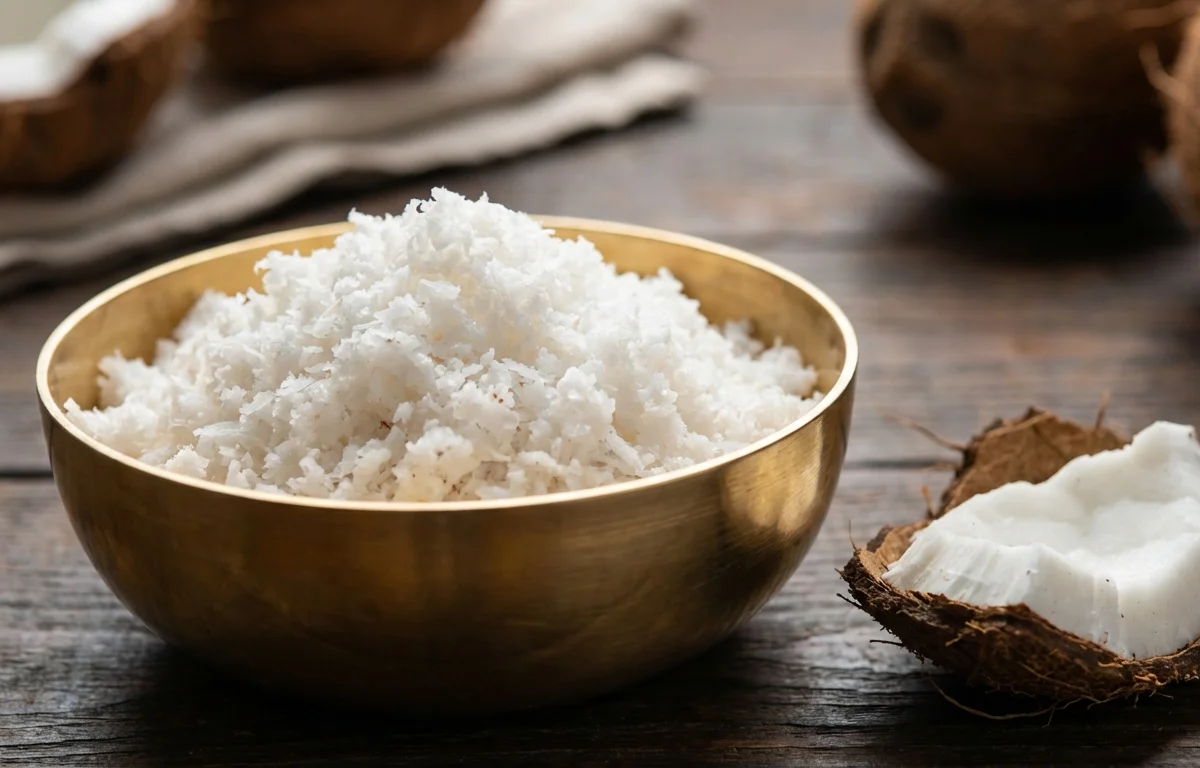
Grated Coconut
A fundamental ingredient in South Indian and many tropical cuisines, freshly grated coconut imparts a subtly sweet, nutty flavor and moist texture. This guide provides simple, step-by-step methods to crack, extract, and grate a whole coconut at home, unlocking authentic flavors for your curries, chutneys, and desserts.
For 4 servings
4 steps.
- 1
Prepare and Crack the Coconut (5 minutes)
- a.First, locate the three 'eyes' at the top of the coconut. Pierce the softest eye with a screwdriver or a sharp knife and drain all the coconut water into a glass. This water is delicious and hydrating. To crack it, hold the coconut firmly in one hand over a bowl and tap it sharply around its 'equator' with the back of a heavy cleaver or a small hammer. Rotate the coconut as you tap until a crack forms and it splits into two halves.
- 2
Loosen the Coconut Meat (5 minutes)
- a.To make the meat easier to remove from the shell, use one of these methods. Method A (Heat): Place the coconut halves directly on a low gas flame, shell-side down, for 2-3 minutes. You may hear a crackling sound. Method B (Freeze): Place the coconut halves in the freezer for 30-60 minutes. The cold temperature will cause the meat to contract and pull away from the shell.
- 3
Remove the Meat from the Shell (5 minutes)
- a.Once cooled enough to handle (if using the heat method), insert a sturdy, blunt knife or a spoon between the white meat and the hard shell. Gently pry the meat out. It should come out in large pieces or as a whole half-cup.
- 4
Grate the Coconut Meat (5 minutes)
- a.Rinse the coconut pieces to remove any shell debris. If desired, you can peel off the thin brown skin with a vegetable peeler for a pure white result. Choose your grating method. Method A (Food Processor): Cut the meat into 1-inch cubes and pulse in a food processor with the shredding disc until finely grated. Method B (Box Grater): Use the medium-sized holes of a box grater to shred the coconut pieces.
What to keep in mind.
5 tips from the recipe — small details that make a real difference to the final dish.
- 1To select a good coconut, shake it. You should hear plenty of water sloshing inside. It should feel heavy for its size and be free of cracks or mold.
- 2For the most authentic texture, especially for South Indian dishes, use a traditional coconut scraper if you have one. It produces fine, fluffy shreds.
- 3Store fresh grated coconut in an airtight container in the refrigerator for up to 3 days.
- 4For longer storage, freeze the grated coconut in portioned zip-top bags for up to 6 months. It thaws quickly at room temperature.
- 5There's no need to thaw frozen coconut before adding it to hot dishes like curries or sambar; it will thaw instantly in the heat.
Adapt it for your goals.
Toasted Coconut
For a deeper, nuttier flavor, dry roast the grated coconut in a pan over low heat until it turns golden brown. This is excellent for garnishing curries, rice dishes, and desserts.
Sweetened CoconutSweetened Coconut
Mix the fresh grated coconut with a little powdered jaggery or sugar. This can be used as a filling for sweets like modak, kozhukattai, or sweet parathas.
Why this is on our healthy list.
Rich in Dietary Fiber
Fresh coconut is an excellent source of dietary fiber, which promotes gut health, aids in digestion, and helps maintain stable blood sugar levels.
Provides Healthy Fats
Coconut is high in medium-chain triglycerides (MCTs), a type of saturated fat that is metabolized differently than other fats. The body can use MCTs for a quick energy boost.
Packed with Essential Minerals
It is a great source of manganese, which is vital for bone health and metabolism. It also contains significant amounts of copper, selenium, and iron.
Frequently asked questions
A 0.5 cup serving of fresh grated coconut (approximately 40 grams) contains about 140-150 calories, primarily from healthy fats.