
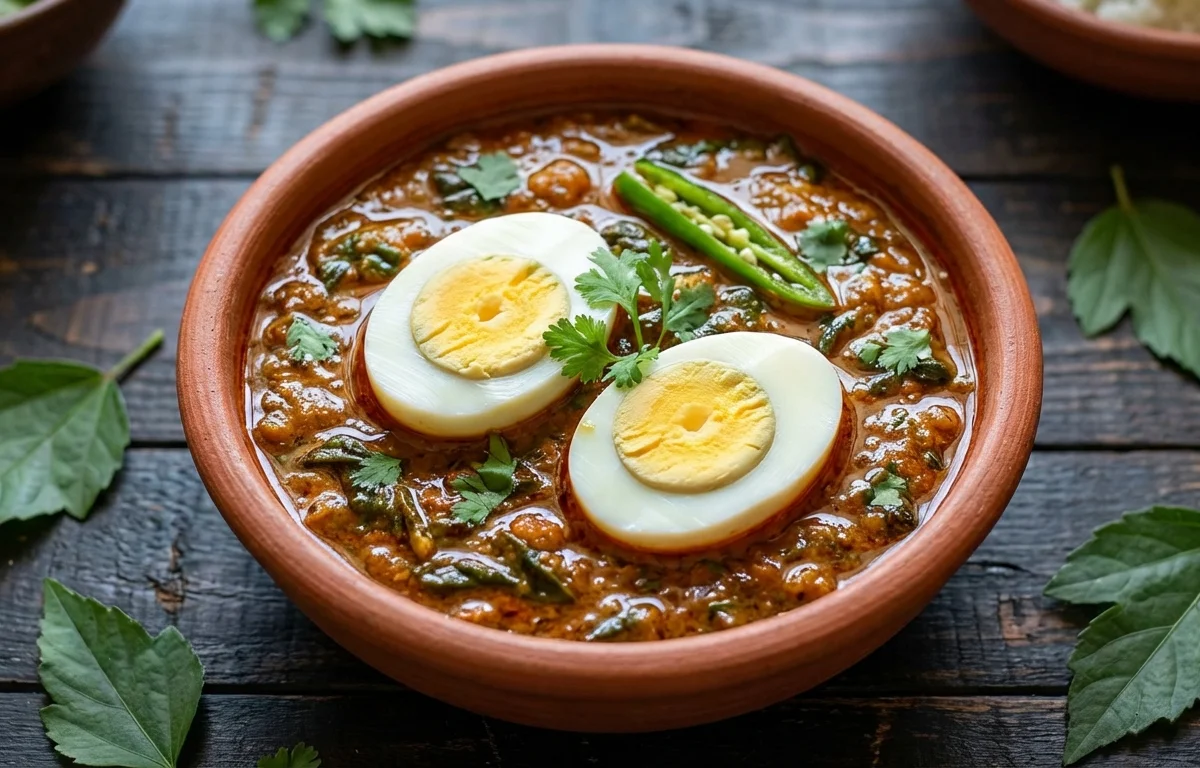
Gongura Egg Curry
A classic Andhra curry featuring the unique tangy flavor of sorrel leaves (gongura) simmered with aromatic spices and hearty boiled eggs. This vibrant green curry is a delightful explosion of sour and spicy notes, perfect with hot rice.
For 4 servings
Prepare Eggs and Gongura Paste
- Place eggs in a saucepan, cover with cold water, and bring to a boil. Cook for 10 minutes to hard-boil.
- Drain the hot water, run cold water over the eggs, then peel them. Make a few shallow slits on each egg with a knife and set aside.
- In a separate pan, add the cleaned gongura leaves with 2-3 tablespoons of water. Cook on medium heat for 5-7 minutes until the leaves wilt and become mushy.
- Allow the cooked gongura to cool slightly, then mash it into a coarse paste with the back of a spoon or give it a quick pulse in a blender.
Sauté Aromatics and Onions
- Heat sesame oil in a wide pan or kadai over medium-high heat. Add mustard seeds, cumin seeds, and fenugreek seeds. Allow them to splutter for about 30 seconds.
- Add the finely chopped onions and slit green chilies. Sauté for 8-10 minutes until the onions are soft and golden brown.
- Add the ginger-garlic paste and cook for another minute until its raw aroma disappears.
Cook the Masala
- Reduce the heat to low. Add the turmeric powder, red chili powder, and coriander powder. Stir continuously for 30-40 seconds until fragrant, being careful not to burn the spices.
- Add the prepared gongura paste to the pan. Mix well with the onion masala and cook for 5-7 minutes, stirring occasionally, until the mixture thickens and you see oil separating from the sides.
Simmer the Curry
- Pour in 1 cup of water and add salt. Stir everything together to form a cohesive gravy. Bring it to a gentle boil.
- Carefully place the slit hard-boiled eggs into the simmering gravy.
- Cover the pan and let the curry simmer on low heat for 5-6 minutes. This allows the eggs to absorb the tangy and spicy flavors.
Garnish and Serve
- Turn off the heat. Garnish with freshly chopped coriander leaves.
- Serve the Gongura Egg Curry hot with steamed rice, roti, or jowar bhakri.
What to keep in mind.
5 tips from the recipe — small details that make a real difference to the final dish.
- 1For a richer flavor, shallow fry the boiled eggs in 1 tsp of oil with a pinch of turmeric and red chili powder before adding them to the curry.
- 2The red-stemmed variety of gongura is more sour than the green-stemmed one. Adjust chili and salt accordingly.
- 3If the curry is too sour for your taste, balance it by adding a small piece of jaggery or a pinch of sugar.
- 4This curry tastes even better the next day as the flavors meld together. Store leftovers in an airtight container in the refrigerator.
- 5Using sesame (gingelly) oil provides a nutty aroma and authentic taste characteristic of Andhra cuisine.
Adapt it for your goals.
Protein
Replace eggs with paneer cubes, chickpeas, or fried tofu for a delicious vegetarian version. Adjust simmering time accordingly.
ConsistencyConsistency
For a creamier texture, add 2-3 tablespoons of coconut milk or cashew paste in the final 2 minutes of simmering.
FlavorFlavor
Add 1/4 teaspoon of garam masala along with the other powdered spices for a warmer, more complex aroma.
Why this is on our healthy list.
Rich in Iron
Gongura (sorrel leaves) is a powerhouse of iron, which is essential for producing hemoglobin, carrying oxygen in the blood, and preventing anemia.
Excellent Source of Protein
Eggs are a complete protein source, providing all the essential amino acids needed for muscle repair, immune function, and overall body maintenance.
Boosts Immunity
The high content of Vitamin C in gongura leaves acts as a powerful antioxidant, helping to strengthen the immune system and protect the body against infections.
Good for Vision
Gongura is also a good source of Vitamin A, a crucial nutrient for maintaining healthy vision, supporting eye function, and preventing night blindness.
Frequently asked questions
One serving of Gongura Egg Curry contains approximately 280-320 calories, primarily from the eggs and oil. This estimate assumes two eggs per serving.