
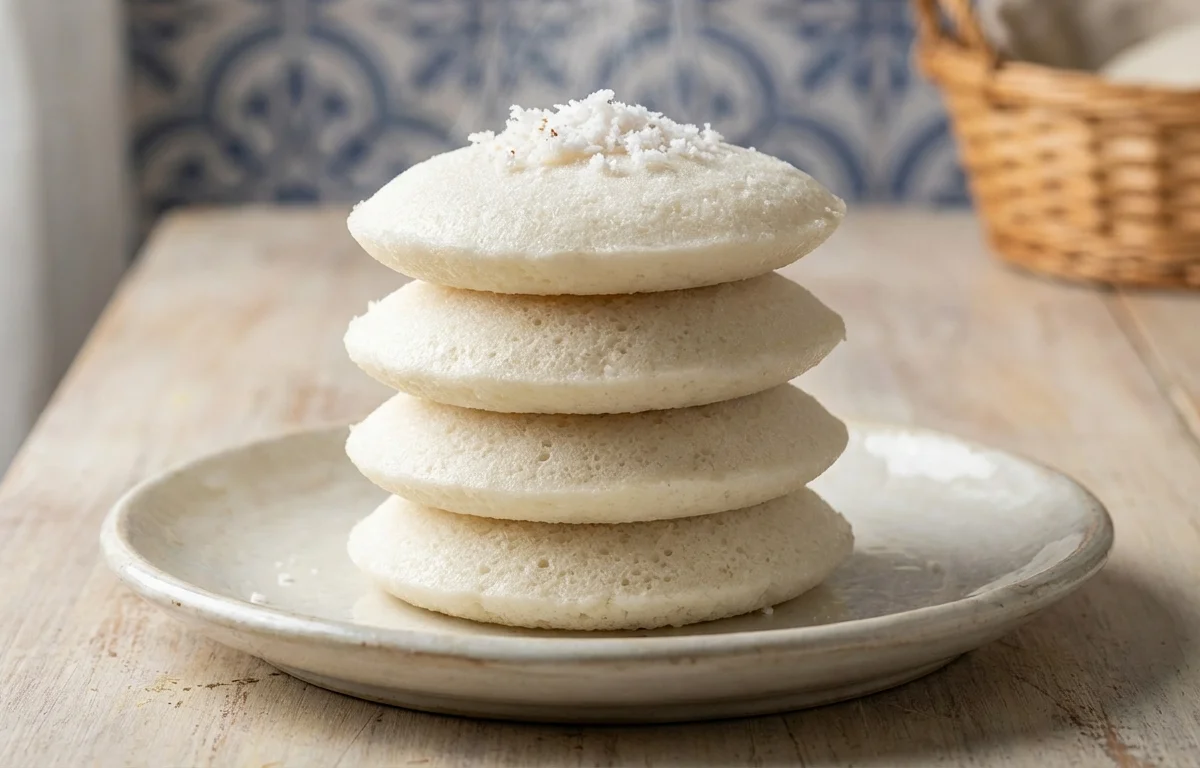
Goan Sanna
Fluffy, slightly sweet steamed rice cakes from Goa, made with a fermented batter of rice and coconut. Sannas are a perfect, cloud-like accompaniment to spicy Goan curries like sorpotel or vindaloo, expertly soaking up every drop of delicious gravy.
For 4 servings
Soak Rice and Poha (4-6 hours)
- Rinse the idli rice and thick poha separately under cool running water until the water runs clear.
- Combine the rinsed rice and poha in a large bowl.
- Add enough water to cover the mixture by at least 2 inches. Cover the bowl and let it soak for a minimum of 4 hours, or up to 6 hours.
Grind the Batter (10 minutes)
- Thoroughly drain all the water from the soaked rice and poha mixture.
- Transfer the mixture to a high-speed blender or a wet grinder.
- Add the fresh grated coconut. Start grinding, adding the 150ml of water for grinding gradually until you achieve a smooth, thick, and slightly grainy batter, similar to the consistency of idli batter.
Activate Yeast and Ferment Batter (1-2 hours)
- In a small bowl, combine the warm water, sugar, and active dry yeast. Stir gently and set aside for 5-10 minutes until the mixture becomes frothy and bubbly, indicating the yeast is active.
- Pour the activated yeast mixture into the ground batter. Add the salt.
- Using a whisk or your clean hands, mix everything together thoroughly for about a minute to incorporate air.
- Cover the bowl with a lid or plastic wrap and place it in a warm, draft-free spot to ferment for 1 to 2 hours. The batter should rise, become bubbly, and almost double in volume.
Steam the Sannas (15 minutes per batch)
- Prepare your steamer by adding 2-3 inches of water to the bottom pot and bringing it to a rolling boil.
- While the water heats, lightly grease your sanna molds, idli plates, or small steel bowls (katoris) with oil.
- Gently stir the fermented batter once or twice. Do not overmix, as this will deflate the air pockets.
- Pour the batter into the greased molds, filling them about 3/4 full to allow space for them to rise.
- Carefully place the molds in the steamer. Wrap the steamer lid with a clean kitchen towel to prevent condensation from dripping onto the sannas. Cover and steam on medium-high heat for 12-15 minutes.
Cool and Serve (5 minutes)
- Turn off the heat. Let the steamer stand for 2 minutes before opening the lid to prevent the sannas from deflating.
- To check for doneness, insert a toothpick or skewer into the center of a sanna; it should come out clean.
- Carefully remove the molds from the steamer and let them cool for another 2-3 minutes.
- Run a knife or spoon around the edges of the sannas to loosen them and gently demold.
- Serve the hot, fluffy sannas immediately with Goan pork sorpotel, chicken xacuti, or coconut chutney.
What to keep in mind.
5 tips from the recipe — small details that make a real difference to the final dish.
- 1For the best texture, use fresh, not frozen or desiccated, grated coconut.
- 2The water for activating the yeast must be lukewarm (around 40°C/105°F). Too hot, and it will kill the yeast; too cold, and it won't activate.
- 3Do not over-mix the batter after fermentation. A gentle stir is enough to even it out before pouring.
- 4If you live in a cold climate, place the batter in a preheated (and turned off) oven with the light on to create a warm environment for fermentation.
- 5Don't overfill the molds. Leaving space at the top is crucial for the sannas to rise and become fluffy.
Adapt it for your goals.
Sweet Sanna (Godachi Sanna)
Add 100g of grated jaggery and 1/2 tsp of cardamom powder to the batter for a sweet version, often enjoyed as a dessert or tea-time snack.
Authentic Toddy SannaAuthentic Toddy Sanna
For a more traditional flavor, replace the yeast, sugar, and warm water with 80-100 ml of fresh palm toddy (sur). This is the original fermenting agent and imparts a unique, slightly sour taste.
Savory SannaSavory Sanna
Reduce the sugar to 1 teaspoon and add 2 tablespoons of finely chopped coriander leaves and a pinch of turmeric to the batter for a savory twist.
Why this is on our healthy list.
Gut-Friendly Fermentation
The use of yeast ferments the batter, which can introduce beneficial microorganisms that aid digestion and promote a healthy gut microbiome.
Source of Sustained Energy
Made from rice, Sannas provide a good source of complex carbohydrates, which are the body's primary fuel source for sustained energy throughout the day.
Low-Fat Cooking Method
Sannas are steamed, not fried, making them a naturally low-fat food. This cooking method helps retain nutrients without adding unhealthy fats or oils.
Frequently asked questions
A single serving of three Sannas contains approximately 440-460 calories. The calories primarily come from the rice and coconut used in the batter.