
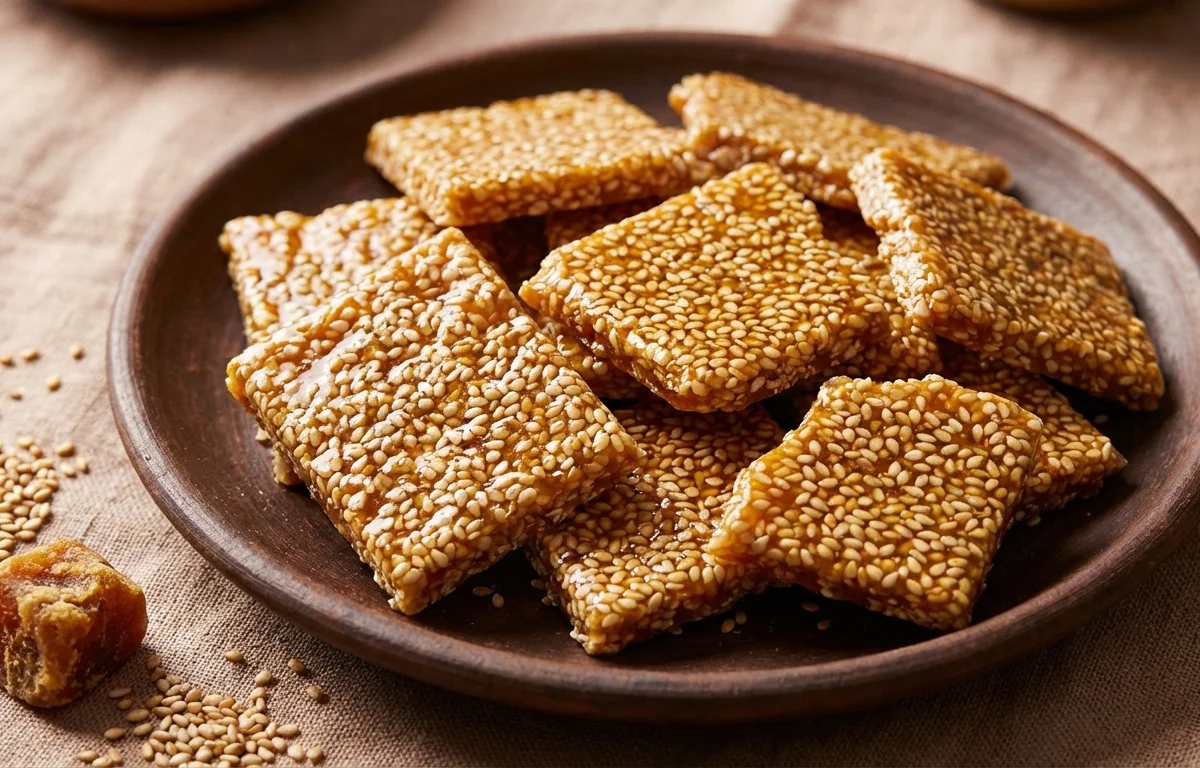
Gingelly Oil
Discover the authentic taste of South India with this homemade Gingelly Oil recipe. Made from lightly roasted sesame seeds, this unrefined oil, also known as 'nallennai', boasts a rich, nutty flavor and a golden hue, distinct from toasted sesame oil. Perfect for tempering spices, making pickles, or for the Ayurvedic practice of oil pulling, this pure, preservative-free oil will elevate your cooking.
For 16 servings
Clean and Dry the Seeds (15 mins active + 1-2 hours drying)
- Place the 500g of sesame seeds in a large bowl and cover with water. Rub the seeds between your palms to dislodge any dirt or debris.
- Carefully drain the water. Repeat this washing process 2-3 times until the water runs clear.
- Drain the seeds completely using a fine-mesh sieve, shaking off as much excess water as possible.
- Spread the damp seeds in a single, thin layer on a clean kitchen towel or a large tray. Allow them to air dry for 1-2 hours, or until they feel dry to the touch.
Lightly Roast the Seeds (5-7 minutes)
- Heat a heavy-bottomed pan or kadai over low to medium heat.
- Once the pan is warm, add the dried sesame seeds. Stir continuously with a spatula to ensure they roast evenly.
- Roast for 5-7 minutes. You will notice a rich, nutty aroma, and the seeds will start to make a faint, consistent popping sound. Do not let them brown or change color, as this will result in a bitter oil.
Grind into a Paste (15-20 minutes)
- Immediately transfer the roasted seeds from the hot pan to a plate or tray to cool down completely. This will take about 15 minutes.
- Once cooled, transfer the seeds to a high-powered blender or a mixie jar.
- First, pulse the seeds a few times to break them down into a coarse powder.
- Add the 1 tbsp of grated jaggery and 4 tbsp of room temperature water.
- Blend continuously for 5-10 minutes. The mixture will transform from a powder to a thick, oily paste. Scrape down the sides of the jar every minute or two to ensure everything is well-blended. If the blender feels too hot, pause for a few minutes to let it cool down.
Extract the Oil (45-60 minutes)
- Transfer the thick sesame paste into a large, heat-proof bowl.
- Carefully pour the 2 cups of very hot (not boiling) water over the paste.
- Use a sturdy spoon or spatula to mix thoroughly until the paste is fully dispersed in the water.
- Let the mixture sit undisturbed for 45-60 minutes. During this time, the oil will naturally separate from the solids and float to the surface, forming a distinct layer.
Collect and Store the Oil (10 minutes)
- Carefully skim the layer of oil from the surface using a ladle or a large, shallow spoon. For easier separation, you can refrigerate the bowl for 30-60 minutes; the oil will solidify slightly, making it easier to scoop off.
- Place a fine-mesh sieve lined with a clean cheesecloth or muslin cloth over a clean, dry glass bottle or jar.
- Gently pour the collected oil through the lined sieve to filter out any fine particles or impurities.
- Seal the bottle tightly. Store your fresh, homemade gingelly oil in a cool, dark place away from direct sunlight to maintain its freshness and prevent rancidity.
What to keep in mind.
5 tips from the recipe — small details that make a real difference to the final dish.
- 1Use high-quality, fresh, unhulled sesame seeds for the best flavor and oil yield.
- 2The key to authentic gingelly oil is light roasting. Over-roasting will result in a bitter, dark oil similar to East Asian toasted sesame oil.
- 3A powerful blender is essential to break down the seeds properly and release the maximum amount of oil.
- 4Ensure all utensils, bowls, and the final storage bottle are perfectly clean and dry to prevent the oil from spoiling.
- 5Don't discard the leftover sesame seed paste! It's nutritious and can be used in chutneys, gravies, or as a base for sweets like ladoos.
Adapt it for your goals.
Traditional Method
For a more authentic approach, use a stone grinder (wet grinder or 'chekku'/'ghani'). This cold-press method generates less heat, preserving more nutrients and resulting in a superior flavor.
Flavor InfusionFlavor Infusion
After extracting the oil, you can gently warm it (do not overheat) and add a sprig of curry leaves or a few dried red chilies. Let it infuse for a few hours, then strain before storing for an aromatic finishing oil.
Why this is on our healthy list.
Rich in Healthy Fats
Gingelly oil is packed with polyunsaturated and monounsaturated fats, particularly omega-6 fatty acids. These fats are beneficial for heart health and can help reduce bad cholesterol (LDL) levels.
Powerful Antioxidant Properties
It contains unique antioxidants like sesamol and sesaminol, which combat oxidative stress and cellular damage caused by free radicals, contributing to overall wellness.
Supports Bone Health
Sesame seeds are a good source of zinc and copper, minerals crucial for maintaining bone density. Some of these nutrients are retained in the cold-pressed style oil.
Anti-inflammatory Effects
The compounds in gingelly oil have been shown to possess anti-inflammatory properties, which can help in managing chronic inflammation and promoting skin health.
Frequently asked questions
Gingelly oil (nallennai) is made from raw or very lightly roasted sesame seeds, giving it a mild, nutty flavor and a golden color. Toasted sesame oil, common in East Asian cuisine, is made from deeply roasted seeds, resulting in a much darker color and a strong, intense flavor.