
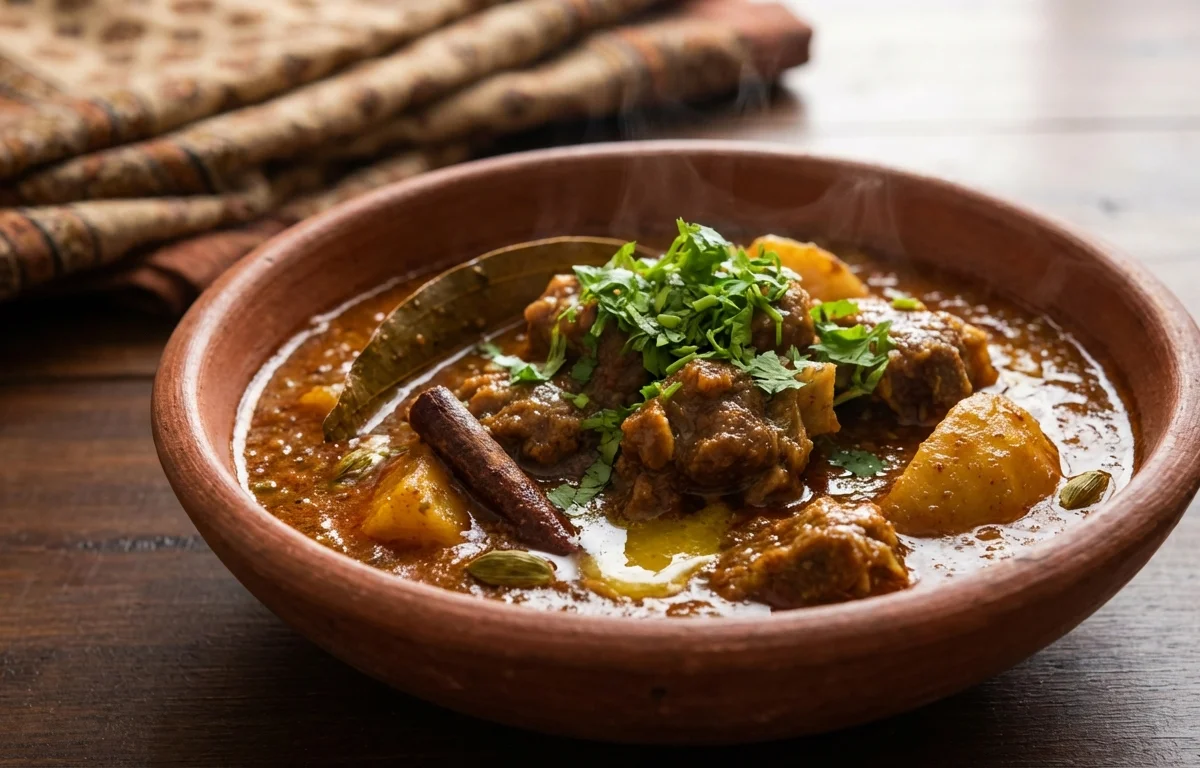
Ghosht nu Shaak
A delightful Gujarati mutton curry with a unique balance of sweet, sour, and spicy flavors. Tender mutton is slow-cooked in a tomato-onion gravy, creating a comforting and aromatic dish perfect with rotis or rice.
For 4 servings
Sauté Aromatics and Onions
- Heat oil in a pressure cooker over medium heat. Once hot, add the bay leaf, cinnamon stick, cloves, and black peppercorns. Sauté for 30-40 seconds until they become fragrant.
- Add the finely chopped onions and a pinch of salt. Cook for 10-12 minutes, stirring frequently, until the onions are deeply golden brown. This step is crucial for the flavor of the gravy.
Build the Masala Base
- Add the ginger-garlic paste and slit green chilies. Sauté for 1 minute until the raw aroma disappears.
- Add the tomato puree and cook for 5-7 minutes, stirring occasionally, until the mixture thickens and oil starts to separate at the edges.
- Lower the heat and add the turmeric powder, red chili powder, and coriander-cumin powder. Mix well and cook for another 2 minutes, stirring continuously to prevent burning.
Sear and Pressure Cook Mutton
- Add the mutton pieces and the remaining salt to the cooker. Increase the heat to medium-high and sear the mutton for 5-7 minutes, until it's browned on all sides.
- Pour in 2 cups of hot water and stir well, scraping the bottom of the cooker to deglaze any flavorful bits.
- Secure the lid of the pressure cooker. Bring to high pressure (first whistle), then reduce the heat to medium-low.
- Cook for 25-30 minutes (or about 6-7 whistles). Turn off the heat and allow the pressure to release naturally.
Finish the Curry
- Carefully open the cooker. Check if the mutton is tender; it should easily pull apart with a fork. If not, pressure cook for another 5-10 minutes.
- Stir in the grated jaggery and lemon juice. Simmer the curry without the lid for 3-5 minutes to allow the flavors to meld and the gravy to thicken slightly.
- Turn off the heat and sprinkle the garam masala over the curry. Give it a final gentle stir.
Garnish and Serve
- Garnish with freshly chopped coriander leaves.
- Let the curry rest for 10 minutes before serving. Serve hot with Gujarati rotli, bhakri, or steamed rice.
What to keep in mind.
5 tips from the recipe — small details that make a real difference to the final dish.
- 1For a richer flavor, use mutton with some fat and bones.
- 2Marinating the mutton for 30-60 minutes with ginger-garlic paste, salt, and turmeric will result in more tender and flavorful meat.
- 3Don't rush the browning of the onions. A deep, even brown color forms the foundation of a delicious curry.
- 4If you don't have a pressure cooker, you can cook this in a heavy-bottomed pot. It will take about 1.5 to 2 hours of simmering on low heat for the mutton to become tender.
- 5Adjust the jaggery and lemon juice at the end to achieve your preferred balance of sweet and sour ('khattu-mithu') flavor.
Adapt it for your goals.
Protein Swap
Replace mutton with bone-in chicken for a quicker version called 'Kukda nu Shaak'. Reduce the pressure cooking time to about 15 minutes (2-3 whistles).
Add VegetablesAdd Vegetables
Add cubed potatoes or drumsticks along with the mutton before pressure cooking for a more wholesome curry.
Spice LevelSpice Level
For a spicier curry, increase the amount of green chilies or add a teaspoon of black pepper powder along with the other spices.
Why this is on our healthy list.
Protein Powerhouse
Mutton is an excellent source of high-quality protein, which is essential for building and repairing tissues, muscle growth, and overall body function.
Rich in Iron
This dish provides a significant amount of heme iron from mutton, which is easily absorbed by the body and helps in preventing anemia and boosting energy levels.
Anti-inflammatory Spices
The use of spices like turmeric, ginger, and garlic provides anti-inflammatory benefits, which can help reduce inflammation and support a healthy immune system.
Frequently asked questions
Ghosht nu Shaak can be part of a balanced diet. It's an excellent source of protein and iron from the mutton. However, it is also high in saturated fat. To make it healthier, use lean cuts of mutton, trim excess fat, and use oil moderately. Enjoy it in moderation.