
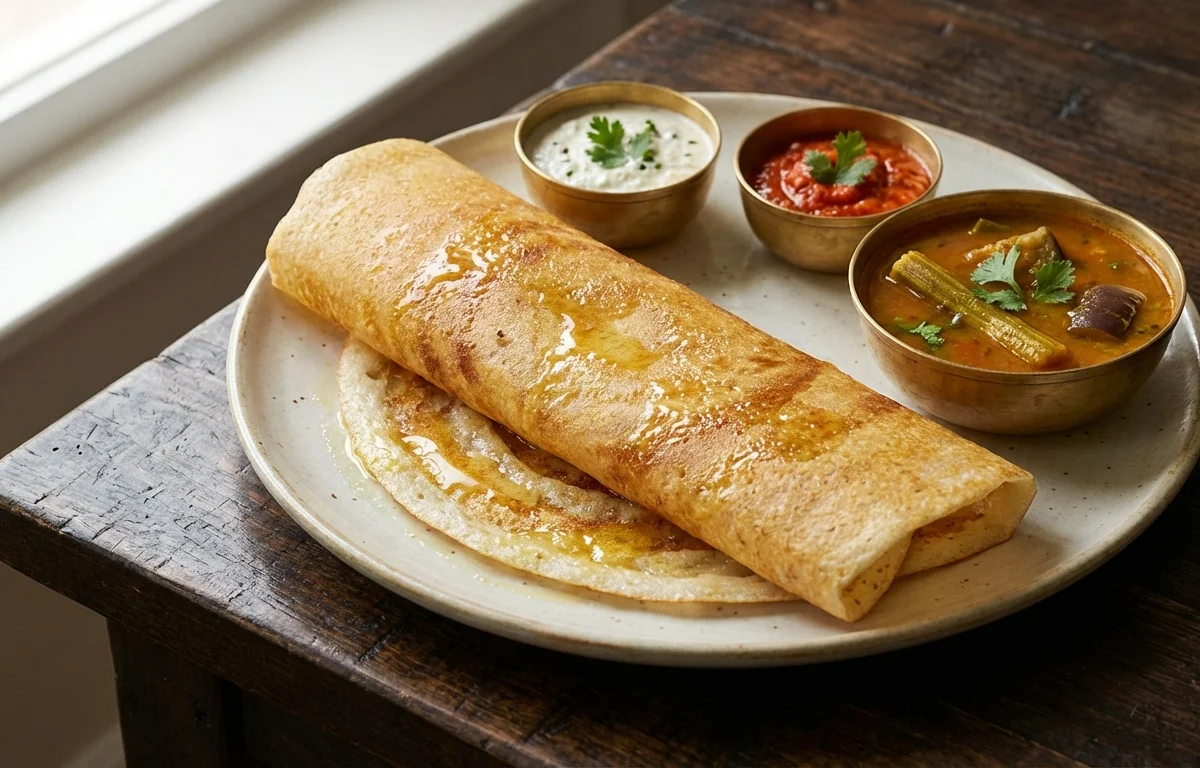
Ghee Dosa
A quintessential South Indian classic, this Ghee Dosa is a thin, crispy crepe made from a fermented rice and lentil batter. Cooked to a perfect golden-brown with generous amounts of aromatic ghee, its rich, buttery flavor and delightful crunch make it an all-time favorite for any meal of the day. Note: This recipe requires 12-18 hours of soaking and fermentation time.
For 4 servings
Soak the Rice and Lentils (4-6 hours)
- In a large bowl, rinse the idli rice and fenugreek seeds together 3-4 times until the water runs clear. Add fresh water to cover them by at least 2 inches and set aside to soak for 4 to 6 hours.
- In a separate medium bowl, rinse the urad dal thoroughly until the water is clear. Add fresh water and let it soak for 4 to 6 hours.
- About 30 minutes before you plan to grind, rinse the poha and soak it in just enough water to cover it completely.
Grind the Batter (25-30 minutes)
- Drain the soaked urad dal. Transfer it to a wet grinder or a high-speed blender. Grind to a very smooth, light, and fluffy batter, adding about 1 cup of cold water gradually. The batter should be airy and voluminous. Transfer this to a large, deep pot.
- Next, drain the soaked rice, fenugreek seeds, and poha. Add them to the same grinder. Grind to a smooth, yet slightly fine granular texture (like fine rava/semolina). Add about 1 to 1.5 cups of water as needed to facilitate grinding.
- Pour the ground rice mixture into the pot with the urad dal batter. Add the non-iodized salt. Using your clean hands, mix both batters together in a circular motion for 2-3 minutes. This aerates the batter and helps kick-start fermentation.
Ferment the Batter (8-12 hours)
- Cover the pot with a lid, leaving a small gap for air to escape. Place it in a warm, draft-free place to ferment for 8 to 12 hours, or overnight. A turned-off oven with the light on is an ideal spot.
- The batter is perfectly fermented when it has risen significantly, looks bubbly and porous, and has a pleasant, tangy aroma. Do not over-ferment, as it will become too sour.
- After fermentation, gently stir the batter just once or twice. Do not whisk vigorously, as this will deflate the air pockets. The consistency should be smooth and pourable. If it's too thick, add a few tablespoons of water to adjust.
Cook the Ghee Dosas (2-3 minutes per dosa)
- Heat a cast-iron or non-stick tawa (griddle) on medium-high heat. To test the temperature, sprinkle a few drops of water; they should sizzle and evaporate instantly.
- Lightly grease the tawa with sesame oil using a paper towel or half an onion. This seasons the pan and prevents sticking.
- Pour a ladleful of batter (about ¼ cup) onto the center of the hot tawa. Immediately, using the back of the ladle, spread the batter in a continuous spiral motion from the center outwards to form a thin, even circle of about 8-10 inches in diameter.
- Drizzle 1 tablespoon of ghee evenly over the surface of the dosa and around its edges.
- Cook for about 2 minutes, or until the bottom turns a crisp golden-brown and the edges begin to lift off the tawa. The top surface will appear cooked and set.
- Fold the dosa in half or roll it into a cylinder. Serve immediately with sambar and your favorite chutneys.
What to keep in mind.
5 tips from the recipe — small details that make a real difference to the final dish.
- 1For the crispiest dosas, ensure your tawa is properly heated before pouring the batter. It should be hot but not smoking.
- 2Wipe the tawa with a damp cloth or an oiled onion half between each dosa to regulate the temperature and ensure easy spreading.
- 3Using cold water while grinding prevents the grinder from overheating, which preserves the beneficial bacteria essential for good fermentation.
- 4The consistency of the batter is key. It should be like a thick pancake batter – not too thick to spread, and not too runny to hold its shape.
- 5Store leftover batter in an airtight container in the refrigerator for up to 3 days. Bring it to room temperature for 30 minutes before making dosas.
Adapt it for your goals.
Masala Dosa
Prepare a spiced potato filling (aloo masala) and spread a layer in the center of the dosa before folding. This turns it into a complete meal.
Onion DosaOnion Dosa
Sprinkle finely chopped onions over the dosa immediately after spreading the batter on the tawa. Gently press them in with the spatula.
Podi DosaPodi Dosa
Sprinkle a generous amount of idli podi (spiced lentil powder) over the dosa along with the ghee for a spicy and flavorful kick.
Cheese DosaCheese Dosa
A favorite with kids, sprinkle grated mozzarella or cheddar cheese over the dosa as it cooks and let it melt before folding.
Why this is on our healthy list.
Promotes Gut Health
The fermentation process breaks down complex nutrients and introduces beneficial probiotics, making the dosa easy to digest and supporting a healthy gut microbiome.
Good Source of Protein
Urad dal (black gram lentils) is a key ingredient in the batter, providing a good amount of plant-based protein essential for muscle repair and growth.
Provides Sustained Energy
The combination of rice and lentils offers a balanced source of complex carbohydrates, which provide a steady release of energy to keep you active throughout the day.
Rich in Healthy Fats
Ghee is a source of healthy saturated fats, including butyric acid, which is beneficial for intestinal health. It also contains fat-soluble vitamins like A, E, and D.
Frequently asked questions
A single Ghee Dosa made with this recipe contains approximately 320-340 calories, primarily from carbohydrates in the batter and fats from the ghee used for cooking.