
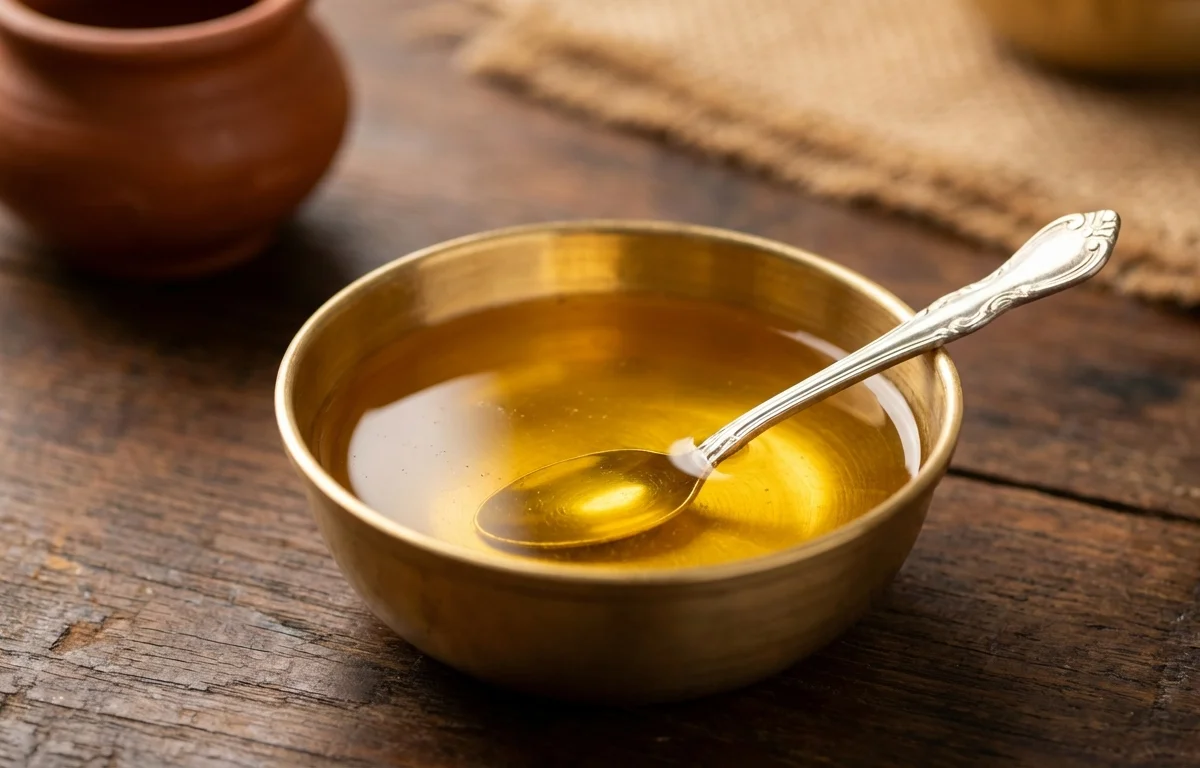
Ghee
Aromatic and nutty clarified butter, a staple in Indian cooking. Making ghee at home is simple, rewarding, and results in a pure, flavorful cooking fat perfect for sautéing, frying, and tempering.
For 24 servings
Melt the Butter
- Cut the unsalted butter into 1-inch cubes to ensure even melting.
- Place the butter cubes in a heavy-bottomed, medium-sized saucepan or pot.
- Heat the pot over medium-low heat. Allow the butter to melt completely without stirring, which should take about 5-7 minutes.
Simmer and Clarify
- Once melted, increase the heat slightly to a medium-low simmer. The butter will go through several stages.
- First, it will come to a boil and a layer of white foam (milk solids) will form on top. Let it simmer gently.
- After 10-15 minutes, the foam will start to thin, the bubbling will become finer, and the liquid will turn more transparent.
- Continue simmering. The milk solids will begin to sink to the bottom and turn a golden-brown color. The bubbling will become very quiet, and the liquid will be clear and golden. This process takes about 10 more minutes.
- The key indicator that the ghee is ready is a distinct nutty, popcorn-like aroma. Be very watchful at this stage to prevent the solids from burning.
Strain the Ghee
- Immediately remove the pot from the heat once the milk solids are golden brown and the aroma is nutty.
- Let the ghee cool in the pot for about 5-10 minutes to reduce the risk of burns.
- Line a fine-mesh sieve with 2-3 layers of cheesecloth and place it over a clean, completely dry, heatproof glass jar.
- Carefully and slowly pour the hot ghee through the cheesecloth-lined sieve, leaving the browned milk solids behind in the pot.
Cool and Store
- Allow the strained ghee to cool completely to room temperature in the jar, uncovered. As it cools, it will solidify and become opaque.
- Once fully cooled and solidified, seal the jar with an airtight lid.
- Store the ghee in a cool, dark pantry for up to 3 months, or in the refrigerator for up to a year.
What to keep in mind.
5 tips from the recipe — small details that make a real difference to the final dish.
- 1Use a heavy-bottomed pot to distribute heat evenly and prevent the milk solids from scorching.
- 2Patience is key. Do not rush the process by increasing the heat, as this can easily burn the milk solids and ruin the ghee's flavor.
- 3Rely on your senses: look for the clear golden liquid, listen for the bubbling to quiet down, and smell for the nutty aroma.
- 4Ensure your storage jar and all utensils are perfectly clean and dry. Any moisture can introduce bacteria and cause the ghee to spoil.
- 5The browned milk solids (khurchan) are a delicacy. You can eat them plain, mix with a little sugar, or sprinkle over flatbreads.
Adapt it for your goals.
Spiced Ghee
Add a few green cardamom pods, a small cinnamon stick, or a couple of cloves to the butter during the last 5 minutes of simmering to infuse it with a warm, aromatic flavor. Strain out the spices with the milk solids.
Herbed GheeHerbed Ghee
After straining the hot ghee into the jar, add a fresh sprig of rosemary or thyme. Let it infuse as the ghee cools, then remove the sprig before sealing the jar.
Why this is on our healthy list.
High Smoke Point for Safe Cooking
With a smoke point of around 485°F (250°C), ghee is highly stable for high-heat cooking like frying and sautéing. It resists breaking down into harmful free radicals, making it a safer choice than many other fats.
Supports Gut Health
Ghee is a natural source of butyrate (butyric acid), a short-chain fatty acid that nourishes colon cells, helps maintain the integrity of the intestinal wall, and can reduce inflammation in the digestive system.
Rich in Fat-Soluble Vitamins
Ghee contains essential fat-soluble vitamins, including Vitamin A (important for vision and immune function), Vitamin E (a powerful antioxidant), and Vitamin K (crucial for blood clotting and bone health).
Frequently asked questions
One tablespoon of ghee contains approximately 125 calories, almost entirely from fat.