
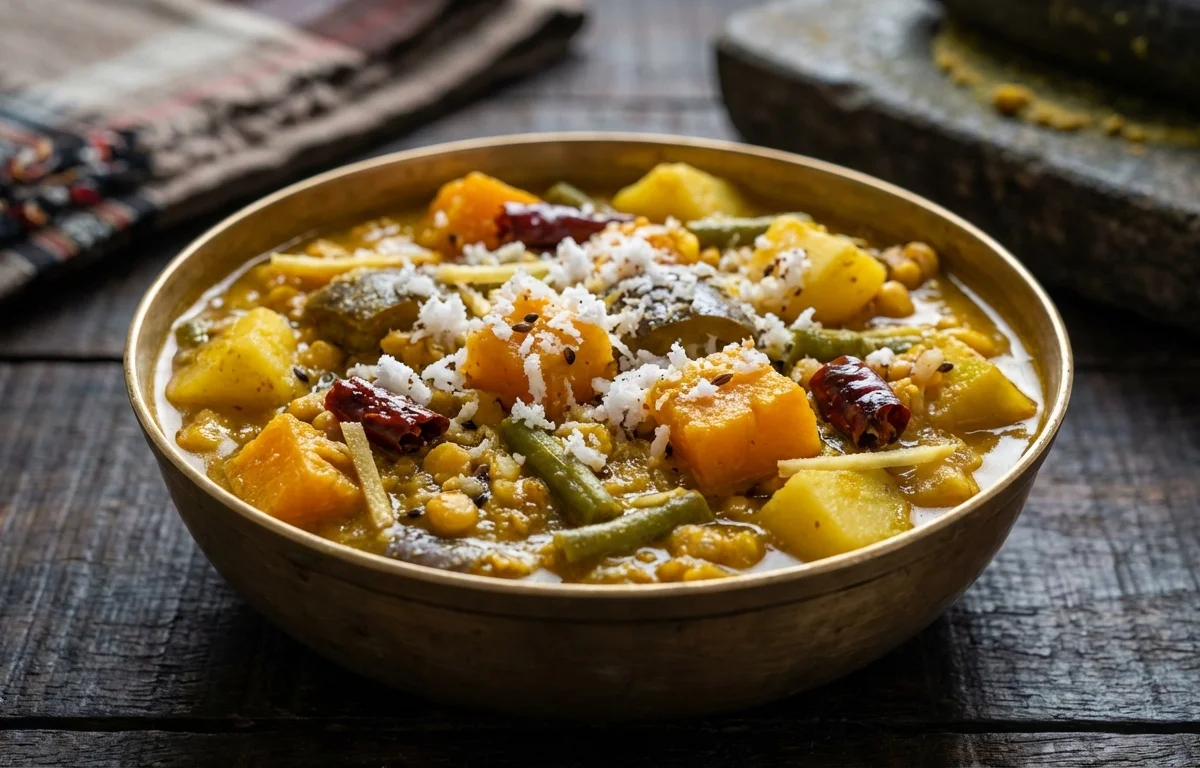
Ghanta Tarkari
A hearty and traditional mixed vegetable curry from Odisha, packed with a medley of seasonal vegetables and lentils. Its unique spice blend and a hint of coconut make it a festive favorite, often enjoyed during Durga Puja.
For 4 servings
7 steps. 35 minutes total.
- 1
Step 1
- a.Preparation: Wash and soak the chana dal in water for at least 30 minutes, then drain. Wash and chop all vegetables into uniform 1-inch cubes. Keep the brinjal and raw banana cubes in a bowl of water to prevent browning.
- 2
Step 2
- a.Pressure Cook Dal & Hard Vegetables: In a pressure cooker, combine the soaked chana dal, potato, pumpkin, and yam. Add 1.5 cups of water, 1 tsp of salt, and half of the turmeric powder. Pressure cook for 2 whistles on medium heat (about 10-12 minutes). Allow the pressure to release naturally.
- 3
Step 3
- a.Make the Masala Paste: While the dal cooks, add the chopped onion, ginger, garlic, cumin seeds, coriander seeds, and 2 dried red chilies to a grinder. Add 2-3 tablespoons of water and blend into a smooth paste.
- 4
Step 4
- a.Sauté the Masala: Heat mustard oil in a large kadai or pan over medium heat until it's slightly smoking. Reduce the heat and add the pancha phutana, bay leaf, and the remaining 1 dried red chili. Let them splutter for 30 seconds. Add the ground masala paste and the remaining turmeric powder. Sauté for 7-8 minutes, stirring frequently, until the paste darkens and oil starts to separate from the sides.
- 5
Step 5
- a.Cook Softer Vegetables: Drain the brinjal and raw banana cubes and add them to the kadai. Sauté for 4-5 minutes, coating them well with the masala until they are slightly tender.
- 6
Step 6
- a.Combine and Simmer: Gently add the cooked dal and vegetable mixture from the pressure cooker into the kadai. Stir in the grated coconut, jaggery (if using), and the remaining salt. Add up to 1 cup of water, or as needed, to achieve a thick gravy. Mix gently, ensuring the vegetables don't break. Bring to a boil, then reduce the heat, cover, and simmer for 10-12 minutes until all flavors have melded and the curry has thickened.
- 7
Finishing Touches: Turn off the heat and stir in the ghee
- a.Let the Ghanta Tarkari rest for 5-10 minutes before serving. This allows the flavors to deepen. Serve hot with steamed rice or rotis.
What to keep in mind.
5 tips from the recipe — small details that make a real difference to the final dish.
- 1Do not overcook the vegetables in the pressure cooker; they should be just tender, as they will cook further in the gravy.
- 2The key to authentic flavor is the mustard oil and pancha phutana tempering. Don't skip it.
- 3For a richer aroma, you can dry roast the cumin and coriander seeds before grinding them for the masala paste.
- 4Adjust the jaggery to your liking. It's meant to balance the flavors, not make the curry sweet.
- 5Ensure the vegetables are not mashed while stirring. Ghanta is known for its distinct vegetable chunks in a thick gravy.
Adapt it for your goals.
No Onion No Garlic
For a satvik version often made during festivals, omit the onion and garlic from the masala paste. You can add a pinch of asafoetida (hing) to the tempering for flavor.
Add SproutsAdd Sprouts
For a protein boost, add 1/2 cup of sprouted moong beans along with the chana dal in the pressure cooker.
Creamier TextureCreamier Texture
For a slightly creamier and richer gravy, add 1/4 cup of coconut milk during the last 5 minutes of simmering.
Why this is on our healthy list.
High in Dietary Fiber
The combination of various vegetables and chana dal makes this dish rich in dietary fiber, which aids in digestion, promotes gut health, and helps maintain stable blood sugar levels.
Rich in Plant-Based Protein
Chana dal is an excellent source of plant-based protein, essential for muscle building, tissue repair, and providing sustained energy.
Packed with Vitamins and Minerals
The medley of vegetables like pumpkin, yam, and brinjal provides a wide spectrum of essential nutrients, including Vitamin A, Vitamin C, potassium, and iron, boosting overall immunity and health.
Contains Anti-inflammatory Spices
Spices like turmeric (curcumin), ginger, and garlic are known for their powerful anti-inflammatory and antioxidant properties, which can help reduce inflammation in the body.
Frequently asked questions
Pancha Phutana is a traditional five-spice blend from Eastern India, especially Odisha and Bengal. It typically consists of whole cumin seeds, mustard seeds, fenugreek seeds, nigella seeds, and fennel seeds in equal parts.