
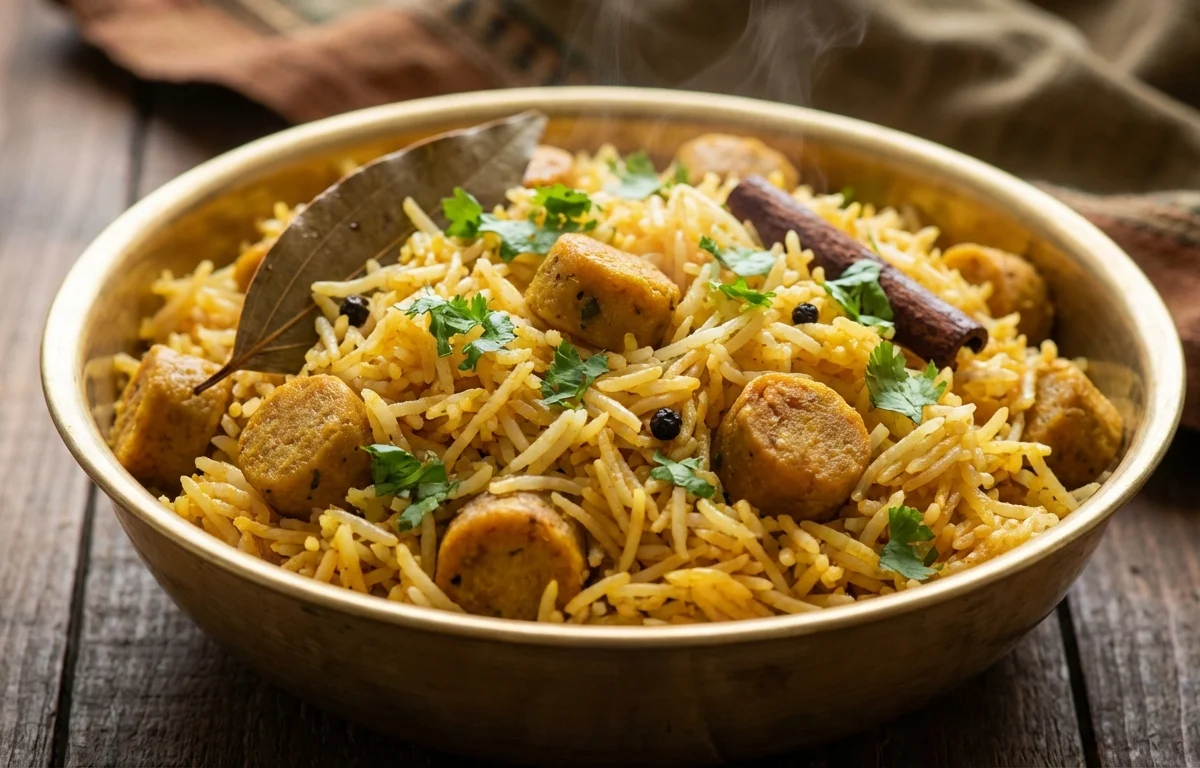
Gatta Pulao
A fragrant Rajasthani rice pilaf featuring savory, steamed chickpea flour dumplings. This one-pot meal is spiced with whole aromatics and yogurt, creating a hearty and flavorful dish that's a true taste of Rajasthan.
For 4 servings
Prepare Rice and Gatta Dough
- Rinse the basmati rice under cool water until the water runs clear. Soak it in ample water for 30 minutes, then drain completely.
- In a mixing bowl, combine besan, 2 tbsp curd, 1 tbsp oil, ajwain, hing, 1/4 tsp turmeric powder, 1/2 tsp red chili powder, and 1/2 tsp salt.
- Mix well to form a crumbly texture. Add water, 1 tablespoon at a time, and knead into a firm, non-sticky dough. Do not over-knead.
- Divide the dough into 4 equal portions and roll each into a log about 1/2-inch thick.
Cook the Gatta
- Bring 5 cups of water to a rolling boil in a wide pot. Gently place the dough logs into the boiling water.
- Cook for 12-15 minutes. The gattas are ready when they float to the top and develop small bubbles on their surface.
- Using a slotted spoon, remove the cooked gattas and set them aside to cool. IMPORTANT: Reserve the nutrient-rich cooking water for the pulao.
- Once cooled, slice the gatta logs into 1/2-inch thick rounds.
Prepare the Pulao Masala
- Heat ghee in a heavy-bottomed pot or pressure cooker over medium heat.
- Add cumin seeds, bay leaf, cinnamon stick, cloves, and black peppercorns. Sauté for 30-40 seconds until they become fragrant.
- Add the sliced onions and cook for 6-8 minutes, stirring occasionally, until they are soft and golden brown.
- Stir in the ginger-garlic paste and slit green chilies. Sauté for another minute until the raw smell disappears.
- Add the chopped tomatoes, 1/2 tsp turmeric powder, 1 tsp red chili powder, and coriander powder. Cook for 4-5 minutes until the tomatoes are mushy and oil begins to separate from the masala.
Combine and Cook the Pulao
- Reduce the heat to low. Add the 1/4 cup of whisked curd and stir continuously for 1-2 minutes to prevent it from splitting.
- Add the sliced gattas to the pot and gently mix to coat them with the masala. Sauté for 2 minutes.
- Add the drained, soaked rice and 1.5 tsp of salt. Gently stir for a minute, being careful not to break the rice grains.
- Pour in 3 cups of the reserved gatta cooking water. Stir once and bring the mixture to a boil.
- Once boiling, reduce the heat to the lowest setting, cover the pot with a tight-fitting lid, and let it cook for 15-18 minutes, or until all the water is absorbed and the rice is cooked through.
Rest, Garnish, and Serve
- Turn off the heat and let the pulao rest, covered and undisturbed, for at least 10 minutes. This step is crucial for fluffy, separate grains.
- Open the lid, sprinkle garam masala and freshly chopped coriander leaves over the top.
- Gently fluff the pulao with a fork. Serve hot with a side of boondi raita or plain yogurt.
What to keep in mind.
5 tips from the recipe — small details that make a real difference to the final dish.
- 1For softer gattas, you can add a pinch of baking soda to the dough.
- 2Ensure the gatta dough is firm. A soft dough will disintegrate while boiling.
- 3Always add whisked yogurt on low heat and stir constantly to prevent it from curdling.
- 4For a richer flavor, you can lightly pan-fry the boiled gatta slices in a teaspoon of ghee before adding them to the masala.
- 5Letting the pulao rest after cooking is essential. It allows the grains to absorb any remaining steam and firm up, preventing them from breaking when you fluff them.
Adapt it for your goals.
Add Vegetables
Incorporate 1 cup of mixed vegetables like green peas, carrots, and beans along with the onions for a more nutritious meal.
Make it RicherMake it Richer
Garnish with fried cashews and raisins for a festive touch and a delightful sweet and savory contrast.
Vegan VersionVegan Version
Replace the curd in the gatta dough with water, use a plant-based yogurt for the masala, and substitute ghee with a neutral vegetable oil.
Why this is on our healthy list.
Rich in Protein
The primary ingredient for the gattas is besan (chickpea flour), which is an excellent source of plant-based protein, essential for muscle repair and growth.
Good for Digestion
Spices like ajwain (carom seeds) and hing (asafoetida) are traditionally used in Rajasthani cooking to aid digestion and prevent bloating, making this dish flavorful and easy on the stomach.
Provides Sustained Energy
The combination of complex carbohydrates from basmati rice and protein and fiber from besan provides a steady release of energy, keeping you full and energized for longer.
Source of Fiber
Besan is a good source of dietary fiber, which supports digestive health, helps regulate blood sugar levels, and contributes to a feeling of fullness.
Frequently asked questions
To ensure soft gattas, make sure your dough is firm but pliable, not overly dry. Adding a pinch of baking soda or ensuring the curd is slightly sour can also help. Do not over-boil them; remove them from the water as soon as they float and develop bubbles.