
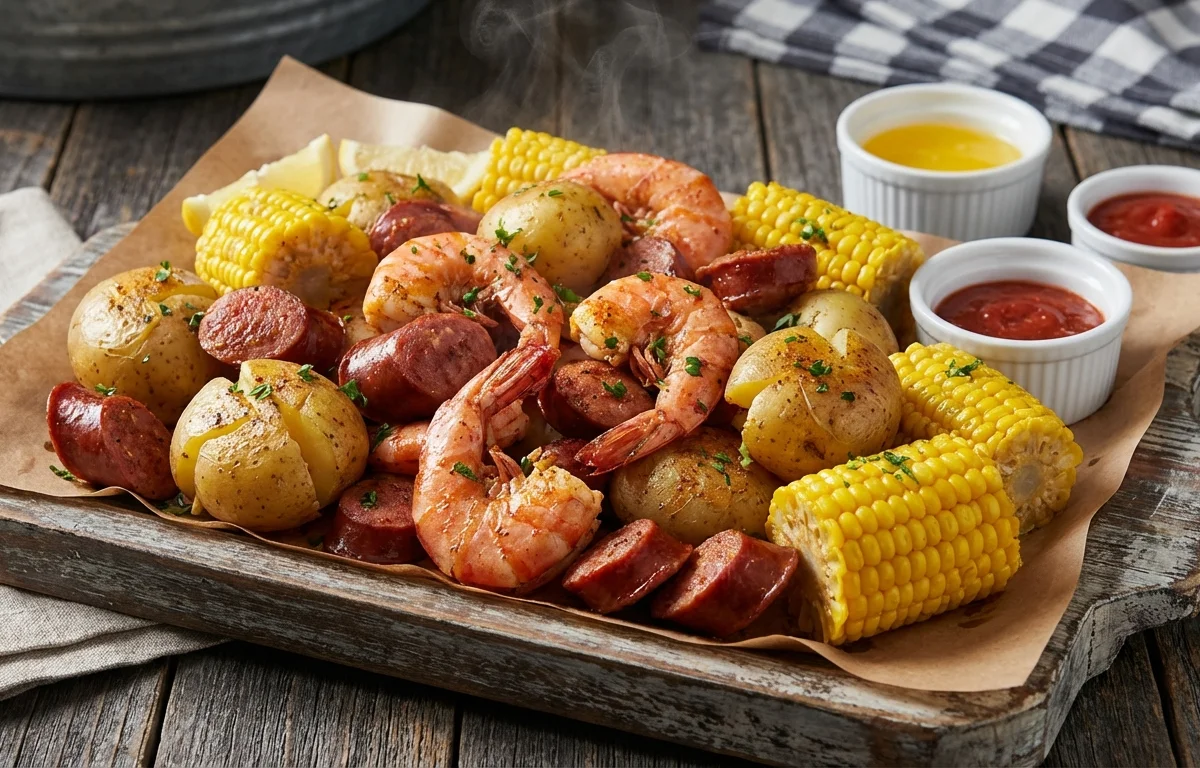
Frogmore Stew
A classic one-pot meal from the South Carolina Lowcountry. This boil features tender shrimp, smoky sausage, sweet corn, and creamy potatoes, all simmered in a zesty, seasoned broth. Perfect for a casual outdoor gathering!
For 6 servings
5 steps. 35 minutes total.
- 1
Step 1
- a.Create the Aromatic Broth
- b.In a very large stockpot (at least 16-20 quarts), combine the water, beer (if using), Old Bay Seasoning, and kosher salt.
- c.Add the quartered onions, halved garlic head, and bay leaves.
- d.Squeeze the juice from the lemon halves into the pot, then add the squeezed rinds.
- e.Cover the pot and bring the mixture to a strong, rolling boil over high heat. This should take about 10-15 minutes.
- 2
Step 2
- a.Cook the Potatoes
- b.Once the broth is boiling, carefully add the new potatoes.
- c.Allow the water to return to a boil and cook for 12-15 minutes. The potatoes should be tender but still offer slight resistance when pierced with a paring knife.
- 3
Step 3
- a.Add Sausage and Corn
- b.Add the sausage pieces and corn halves to the pot.
- c.Let the water return to a boil and cook for another 5-7 minutes. The corn should be bright yellow and tender-crisp.
- 4
Step 4
- a.Cook the Shrimp
- b.Turn off the heat and add the shrimp to the pot. Stir gently to ensure they are submerged in the hot liquid.
- c.Cover the pot and let the shrimp steep in the residual heat for 3-4 minutes, or until they are pink, opaque, and curled into a 'C' shape. This prevents them from becoming tough.
- 5
Step 5
- a.Drain and Serve
- b.Immediately drain the entire contents of the pot through a large colander. Discard the cooking liquid, lemon rinds, onion pieces, garlic, and bay leaves.
- c.For a traditional presentation, pour the stew directly onto a newspaper-lined picnic table or a very large platter.
- d.Garnish generously with fresh parsley. Serve immediately with small bowls of melted butter, cocktail sauce, and plenty of napkins.
What to keep in mind.
5 tips from the recipe — small details that make a real difference to the final dish.
- 1A large enough pot is crucial. You need ample space for the ingredients and to prevent the water from boiling over when items are added.
- 2Use shell-on shrimp. The shells protect the delicate meat from the intense heat and add a tremendous amount of flavor to the broth.
- 3Don't overcook the shrimp! They cook in minutes. Adding them last and letting them steep off the heat is the best way to ensure they are tender and juicy.
- 4Choose waxy potatoes like red bliss or small Yukon Golds. They hold their shape well during boiling and won't turn to mush.
- 5This dish is an event! Embrace the communal, hands-on experience. Provide bowls for shells and cobs for easy cleanup.
Adapt it for your goals.
Add More Seafood
In the last 5-7 minutes of cooking (with the corn), add 1-2 dozen littleneck clams or mussels. Add crab legs along with the shrimp.
Different SausageDifferent Sausage
If you can't find Andouille, smoked kielbasa or any other firm, smoked sausage will work well.
Extra VegetablesExtra Vegetables
Add quartered artichokes with the potatoes, or pearl onions and whole mushrooms with the sausage and corn.
Adjust the HeatAdjust the Heat
For a spicier boil, add a tablespoon of cayenne pepper or a few dashes of your favorite hot sauce to the broth. For a milder version, slightly reduce the Old Bay Seasoning.
Why this is on our healthy list.
Excellent Source of Protein
Both shrimp and sausage provide high-quality protein, which is essential for muscle repair, immune function, and maintaining a feeling of fullness.
Rich in Selenium
Shrimp is one of the best dietary sources of selenium, a powerful antioxidant that helps protect cells from damage and supports thyroid health.
Provides B-Vitamins
This dish contains significant amounts of B-vitamins, particularly B12 from shrimp and B6 from potatoes, which are crucial for energy metabolism and nervous system function.
Source of Complex Carbohydrates
The potatoes and corn provide complex carbohydrates, which offer sustained energy for the body.
Frequently asked questions
The dish is named after the Frogmore community on St. Helena Island, South Carolina, where it is believed to have originated. It's also commonly known as a Lowcountry Boil or Beaufort Boil.