
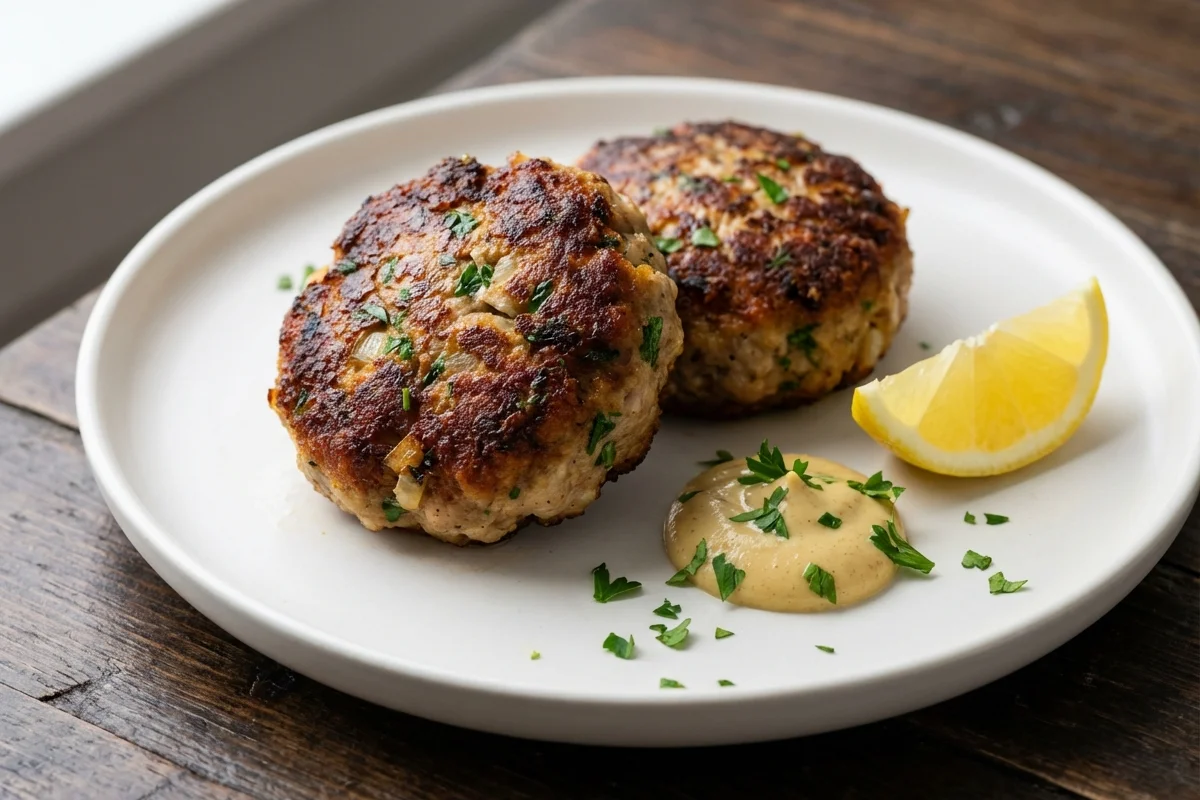
Frikadellen
Authentic German meat patties, pan-fried to a perfect golden brown. Juicy on the inside with a satisfying crust, these Frikadellen are seasoned with onion, parsley, and marjoram. A beloved comfort food staple, perfect for a hearty meal.
For 4 servings
5 steps. 20 minutes total.
- 1
Step 1
- a.Prepare the Panade and Onions
- b.Break the stale bread roll into small pieces and place in a shallow bowl. Pour the milk over it and let it soak for 5-10 minutes until completely soft.
- c.While the bread soaks, melt 1 teaspoon of the clarified butter in a small pan over medium heat. Add the finely chopped onion and sauté for 3-4 minutes until softened and translucent. Set aside to cool slightly.
- 2
Step 2
- a.Combine the Meat Mixture
- b.In a large mixing bowl, gently squeeze the excess milk from the soaked bread, then crumble it into the bowl.
- c.Add the ground beef, ground pork, cooled sautéed onions, beaten egg, chopped parsley, mustard, marjoram, salt, and pepper.
- d.Using your hands, mix the ingredients until just combined. Be careful not to overwork the mixture, as this can make the patties tough.
- 3
Step 3
- a.Form the Frikadellen
- b.Moisten your hands with a little water to prevent sticking.
- c.Divide the meat mixture into 8 equal portions. Roll each portion into a ball, then flatten into an oval or round patty about 2 cm (3/4 inch) thick.
- 4
Step 4
- a.Pan-Fry the Patties
- b.Heat the remaining clarified butter in a large skillet over medium heat.
- c.Carefully place the patties in the hot pan, leaving some space between them. You may need to cook in two batches.
- d.Fry for 6-8 minutes on the first side, until a deep golden-brown crust forms. Flip carefully and cook for another 6-8 minutes on the other side.
- e.The Frikadellen are done when they are cooked through and the internal temperature reaches 71°C (160°F).
- 5
Step 5
- a.Rest and Serve
- b.Transfer the cooked Frikadellen to a plate lined with paper towels to absorb any excess fat.
- c.Let them rest for a couple of minutes before serving.
- d.Serve warm with traditional German sides like potato salad, mashed potatoes, or simply with mustard on a bread roll.
What to keep in mind.
5 tips from the recipe — small details that make a real difference to the final dish.
- 1For the juiciest Frikadellen, use a combination of beef and pork. The pork adds necessary fat and flavor.
- 2Sautéing the onions before adding them to the mix mellows their flavor and adds a subtle sweetness.
- 3Using a stale bread roll (panade) is the traditional secret to incredibly moist and tender patties. Don't skip this step!
- 4Do not press down on the patties with a spatula while they are cooking, as this will squeeze out the flavorful juices.
- 5Frikadellen are delicious served cold the next day, often sliced and placed in a sandwich with mustard.
Adapt it for your goals.
Herb Variation
Add 1/2 teaspoon of caraway seeds or a pinch of nutmeg to the meat mixture for a different aromatic profile.
Bacon InfusedBacon-Infused
Finely dice 2 slices of bacon and cook until crisp. Crumble the bacon and mix it into the meat mixture for a smoky flavor boost.
Baked VersionBaked Version
For a lighter option, bake the Frikadellen on a baking sheet at 200°C (400°F) for 20-25 minutes, flipping halfway through, until cooked.
Why this is on our healthy list.
Excellent Source of Protein
The combination of beef and pork provides a high amount of complete protein, which is essential for building and repairing muscle tissue, and for overall body function.
Rich in Vitamin B12
Red meat is a primary source of Vitamin B12, crucial for nerve function, the formation of red blood cells, and DNA synthesis.
Provides Heme Iron
The ground beef is a good source of heme iron, a form of iron that is more easily absorbed by the body than non-heme iron from plant sources. Iron is vital for preventing anemia and transporting oxygen in the blood.
Frequently asked questions
One serving, which consists of two Frikadellen patties, contains approximately 390-420 calories, depending on the fat content of the meat and the amount of oil absorbed during frying.