
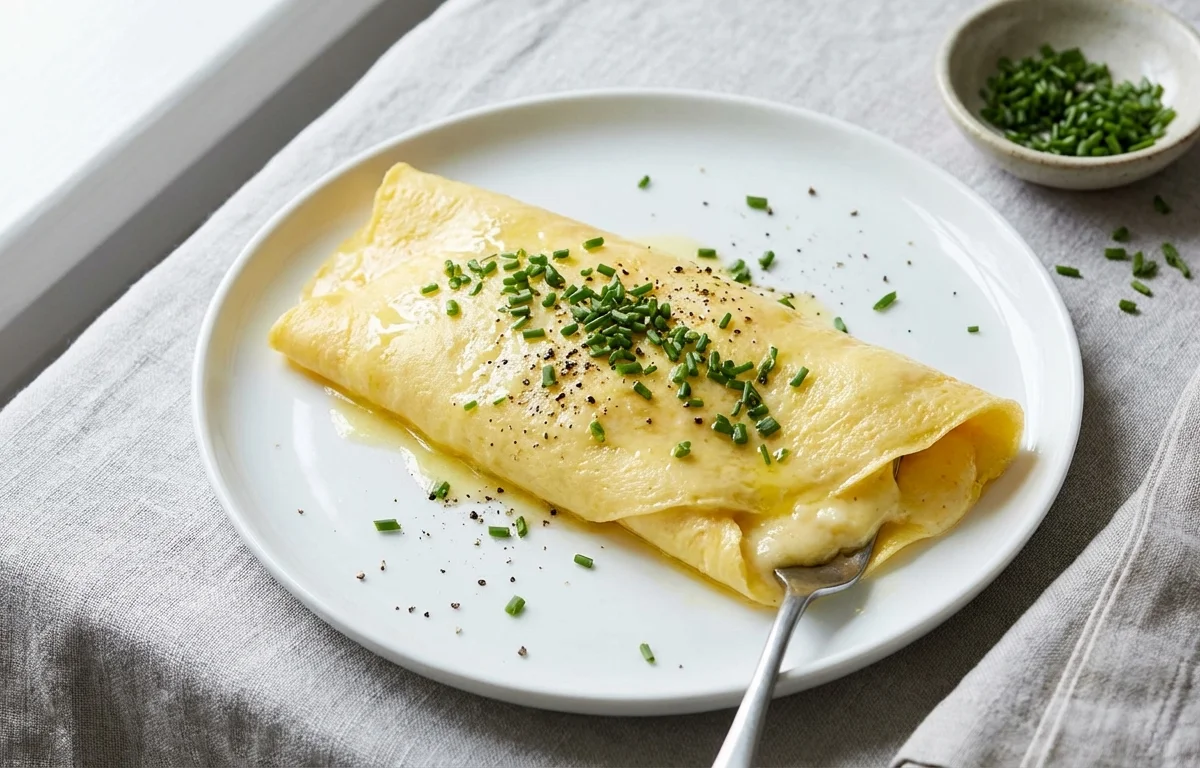
French Omelette
A classic of French cuisine, this omelette is all about technique. With a smooth, pale exterior and a soft, custardy center, it's a simple yet elegant dish perfect for breakfast or a light lunch.
For 2 servings
6 steps. 5 minutes total.
- 1
Prepare the eggs for the first omelette
- a.In a medium bowl, crack 3 eggs. Add 1/4 tsp salt and 1/8 tsp black pepper. Whisk vigorously with a fork or whisk for about 30-45 seconds until the mixture is completely homogenous, slightly frothy, and no streaks of white remain. Do not over-beat.
- 2
Heat the pan
- a.Place an 8-inch non-stick or well-seasoned carbon steel skillet over medium-low heat. Add 1 tbsp of butter and swirl until it's melted and foaming gently. The butter should not brown; if it does, the pan is too hot. Remove from heat briefly to cool if necessary.
- 3
Cook the omelette
- a.Pour the egg mixture into the hot pan. Let it sit for 10 seconds to form a thin layer at the bottom. Then, using a rubber spatula, continuously stir the eggs in small, rapid circular or figure-eight motions while vigorously shaking the pan back and forth. This motion cooks the eggs gently and creates small curds. Continue for about 45-60 seconds.
- 4
Shape and fold the omelette
- a.Stop stirring when the eggs are mostly set but still have a creamy, wet sheen on top (like soft scrambled eggs). Smooth the surface with the spatula. Tilt the pan handle up at a 45-degree angle and, using the spatula, gently roll the top third of the omelette down towards the center. Tap the handle of the pan to nudge the omelette to fold over itself towards the lip of the pan.
- 5
Plate and serve
- a.Hold a warm plate next to the pan. Invert the pan to roll the omelette out onto the plate, seam-side down. It should have a smooth, tight, oval shape. Garnish with half of the fresh chives. Serve immediately.
- 6
Make the second omelette
- a.Wipe the skillet clean with a paper towel and repeat steps 1-5 with the remaining 3 eggs, 1 tbsp butter, salt, pepper, and chives.
What to keep in mind.
6 tips from the recipe — small details that make a real difference to the final dish.
- 1Use a dedicated 8-inch non-stick pan for the best results. A well-seasoned carbon steel pan also works.
- 2Control your heat. The key to a pale, tender omelette is medium-low heat. If the butter browns, the pan is too hot.
- 3Don't overcook the eggs. The beauty of a French omelette is its creamy, custardy center ('baveuse'). Pull it from the heat when it still looks slightly underdone on top.
- 4Work quickly. Once the eggs hit the pan, the entire cooking process takes less than two minutes.
- 5For a richer flavor, you can brush the finished omelette with a little melted butter before serving.
- 6Using room temperature eggs helps them cook more evenly and quickly.
Adapt it for your goals.
Filling
Just before folding, sprinkle 2 tablespoons of grated Gruyère cheese, Boursin cheese, or finely chopped fresh herbs like tarragon and parsley onto the center of the omelette.
RichnessRichness
For an even more decadent and custardy texture, replace the water with 1 teaspoon of heavy cream or crème fraîche per 3 eggs.
FlavorFlavor
Sauté 1/4 cup of finely diced mushrooms or shallots in the butter before adding the eggs for a deeper, savory flavor.
Why this is on our healthy list.
Excellent Source of Protein
Eggs are a complete protein source, providing all nine essential amino acids necessary for muscle repair, immune function, and overall body maintenance.
Rich in Choline
Choline is a vital nutrient found in egg yolks that is crucial for brain health, memory, and nervous system function.
Supports Eye Health
Eggs contain lutein and zeaxanthin, antioxidants that accumulate in the retina and help protect the eyes from harmful blue light and reduce the risk of age-related macular degeneration.
Frequently asked questions
One serving of this French omelette (made with 3 eggs) contains approximately 320-350 calories, depending on the exact size of the eggs and the amount of butter absorbed.