
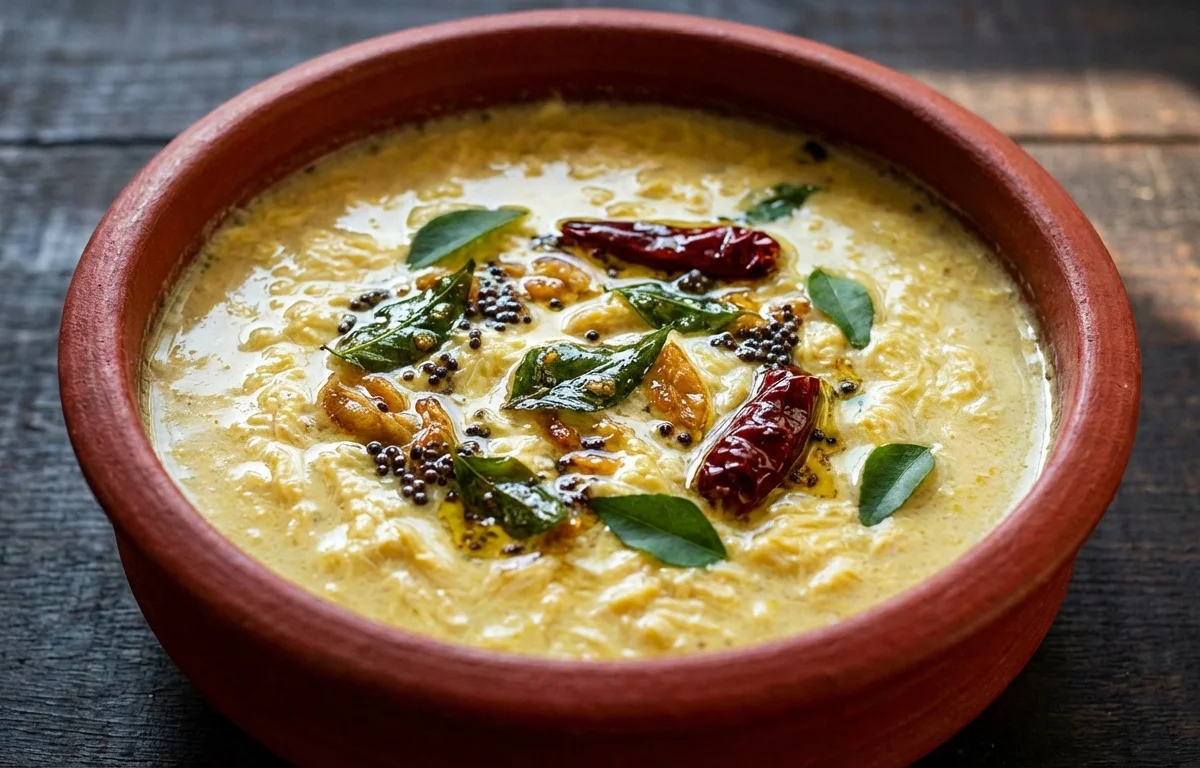
Egg Drop Coconut Curry
A comforting Kerala-style curry where eggs are gently poached in a spiced coconut milk gravy. This creamy and tangy dish, known as Mutta Ozhichu Curry, is perfect with steamed rice or appam.
For 4 servings
Prepare the Coconut Paste
- In a blender, combine the grated coconut, shallots, garlic, ginger, turmeric powder, Kashmiri red chili powder, and coriander powder.
- Add 1/2 cup of water and grind to a very smooth, fine paste. Set aside.
Temper Spices and Sauté Aromatics
- Heat coconut oil in a wide, heavy-bottomed pan or kadai over medium heat.
- Add mustard seeds and allow them to splutter completely. Then, add fenugreek seeds, broken dried red chilies, and curry leaves. Sauté for 30 seconds until fragrant.
- Add the sliced onion and slit green chilies. Sauté for 5-6 minutes until the onions are soft and translucent.
- Add the chopped tomato and cook for 3-4 minutes until it becomes soft and mushy.
Build and Simmer the Curry
- Lower the heat and add the ground coconut paste to the pan. Stir continuously and cook for 2-3 minutes until the raw aroma disappears.
- Pour in the remaining 1.5 cups of water, add the tamarind paste and salt. Mix well to combine.
- Bring the curry to a gentle simmer over medium-low heat. Do not let it come to a rolling boil. Let it simmer for 5-7 minutes for the flavors to meld together.
Poach the Eggs
- Reduce the heat to its lowest setting, ensuring the curry is barely simmering.
- Crack one egg into a small bowl, then gently slide it into the curry. Repeat for all eggs, spacing them apart.
- Do not stir the curry after adding the eggs, as this will break them.
- Cover the pan with a lid and let the eggs poach for 5-7 minutes. The whites should be fully set, and the yolks can be as runny or firm as you prefer.
Finish and Serve
- Turn off the heat. Gently sprinkle the garam masala over the curry.
- Let the curry rest, covered, for 5 minutes before serving. This allows the flavors to settle.
- Serve hot with steamed rice, appam (rice hoppers), or idiyappam (string hoppers).
What to keep in mind.
6 tips from the recipe — small details that make a real difference to the final dish.
- 1For the creamiest curry, use freshly grated coconut and grind the paste until it's completely smooth.
- 2Always crack eggs into a small bowl first. This prevents shell pieces from getting into the curry and allows for gentle placement.
- 3Keep the heat on low when poaching the eggs. A rolling boil will break them apart.
- 4Avoid stirring the curry after adding the eggs until they are fully set to keep them whole.
- 5For a deeper, more authentic flavor, you can use kokum (kudampuli) instead of tamarind paste.
- 6Adjust the tanginess by adding more or less tamarind paste. You can also add a squeeze of lime juice at the end for fresh tartness.
Adapt it for your goals.
Spicier Version
Increase the number of green chilies or add 1/2 teaspoon of regular red chili powder along with the Kashmiri chili powder for extra heat.
With VegetablesWith Vegetables
Add vegetables like drumsticks or potatoes along with the onions and cook until they are partially done before adding the coconut paste.
Creamier CurryCreamier Curry
For a quicker version, you can use 1.5 cups of canned thin coconut milk for the gravy and 1/2 cup of thick coconut milk stirred in at the end (do not boil after adding thick milk).
Vegan AlternativeVegan Alternative
Replace the eggs with cubes of firm tofu or boiled chickpeas. Add them to the curry during the last 5 minutes of simmering.
Why this is on our healthy list.
Excellent Source of Protein
Eggs are a complete protein source, providing all the essential amino acids necessary for muscle repair, immune function, and overall body maintenance.
Rich in Healthy Fats
Coconut provides medium-chain triglycerides (MCTs), a type of saturated fat that is more easily digested and used for energy compared to other fats.
Anti-Inflammatory Properties
The presence of turmeric, ginger, and garlic provides powerful anti-inflammatory compounds like curcumin and allicin, which help combat chronic inflammation.
Frequently asked questions
One serving (approximately 1 cup with 2 eggs) contains around 350-400 calories, depending on the fat content of the coconut used. This makes it a substantial and satisfying main course.