
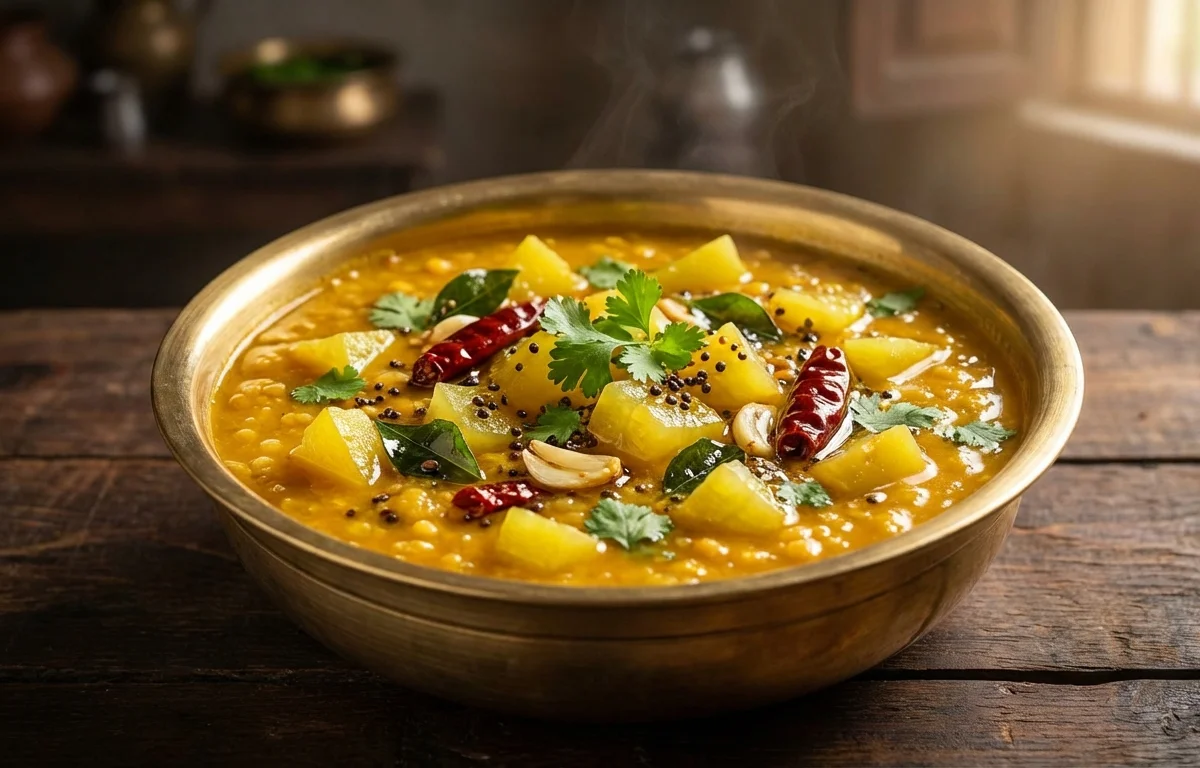
Dosakaya Pappu
A tangy and comforting Andhra-style lentil curry made with yellow cucumber and pigeon peas. This simple, everyday dal is packed with flavor from a classic tempering of mustard seeds, garlic, and curry leaves. Perfect with hot rice and a dollop of ghee.
For 4 servings
Pressure Cook the Dal
- Rinse the toor dal under cold water until the water runs clear.
- Place the rinsed dal in a 3-liter pressure cooker. Add 3 cups of water and the turmeric powder.
- Secure the lid and cook on medium-high heat for 4-5 whistles, approximately 15 minutes.
- Allow the pressure to release naturally. Once safe, open the cooker and gently mash the dal with a ladle to achieve a creamy consistency.
Cook the Vegetables
- To the mashed dal in the cooker, add the chopped dosakaya, onion, tomato, slit green chilies, tamarind paste, and salt.
- Pour in up to 1 cup of additional water to reach your desired consistency. Stir everything together well.
- Place the cooker back on the stove (without the lid) and bring to a boil. Reduce the heat and simmer for 8-10 minutes, or until the dosakaya pieces are tender but still retain a slight bite.
Prepare the Tempering (Tadka)
- In a small pan (tadka pan), heat the ghee over medium heat.
- Once the ghee is hot, add the mustard seeds and let them splutter completely, which takes about 30 seconds.
- Add the cumin seeds, broken dry red chilies, and crushed garlic. Sauté for 30-45 seconds until the garlic is fragrant and turns light golden.
- Turn off the heat and immediately add the curry leaves and hing. Be cautious as they will splutter.
Combine and Serve
- Immediately pour the hot tempering over the simmering dal. You should hear a satisfying sizzle.
- Stir gently to incorporate the tempering. Let the dal rest for 5 minutes to allow the flavors to meld.
- Garnish with freshly chopped coriander leaves. Serve hot with steamed rice, roti, or a dollop of extra ghee.
What to keep in mind.
6 tips from the recipe — small details that make a real difference to the final dish.
- 1Before chopping, taste a small piece of the dosakaya to ensure it's not bitter. If it is, peel it more thickly or discard it.
- 2For a deeper flavor, you can add the chopped onion and tomato to the tempering and sauté them until soft before adding to the dal.
- 3Don't overcook the dosakaya. It should be cooked through but still have a slight crunch for the best texture.
- 4If you don't have tamarind paste, you can soak a small, marble-sized ball of tamarind in 1/4 cup of hot water for 15 minutes, squeeze out the pulp, and use the juice.
- 5Mashing the dal while it's hot is crucial for a creamy, homogenous texture.
- 6The consistency of the pappu thickens as it cools. Adjust with a little hot water when reheating.
Adapt it for your goals.
Lentil Variation
Replace toor dal with masoor dal (red lentils) for a quicker cooking time or moong dal for a lighter version.
Vegetable AdditionVegetable Addition
Add other vegetables like drumsticks (murungakkai) or bottle gourd (lauki) along with the dosakaya.
Spicier VersionSpicier Version
Increase the number of green chilies or add 1/2 teaspoon of red chili powder along with the turmeric for extra heat.
No Onion/GarlicNo Onion/Garlic
For a satvic version, you can omit the onion and garlic. The dish will still be flavorful from the other spices.
Why this is on our healthy list.
Excellent Source of Plant-Based Protein
Toor dal is a protein powerhouse, essential for muscle repair, growth, and overall body function, making this dish a great option for vegetarians and vegans.
High in Dietary Fiber
The combination of lentils and dosakaya provides a significant amount of dietary fiber, which aids digestion, promotes gut health, and helps in maintaining stable blood sugar levels.
Rich in Vitamins and Minerals
Dosakaya is a good source of Vitamin C and potassium, while tomatoes provide lycopene. Spices like turmeric offer anti-inflammatory benefits.
Hydrating Properties
Yellow cucumber (dosakaya) has high water content, which helps in keeping the body hydrated, especially during warmer months.
Frequently asked questions
Dosakaya is a type of yellow cucumber native to Andhra Pradesh and other parts of South India. It has a round or oval shape, yellow skin, and a tangy, slightly sweet taste. It's a key ingredient in many Andhra dishes like pappu, pachadi (chutney), and curries.