
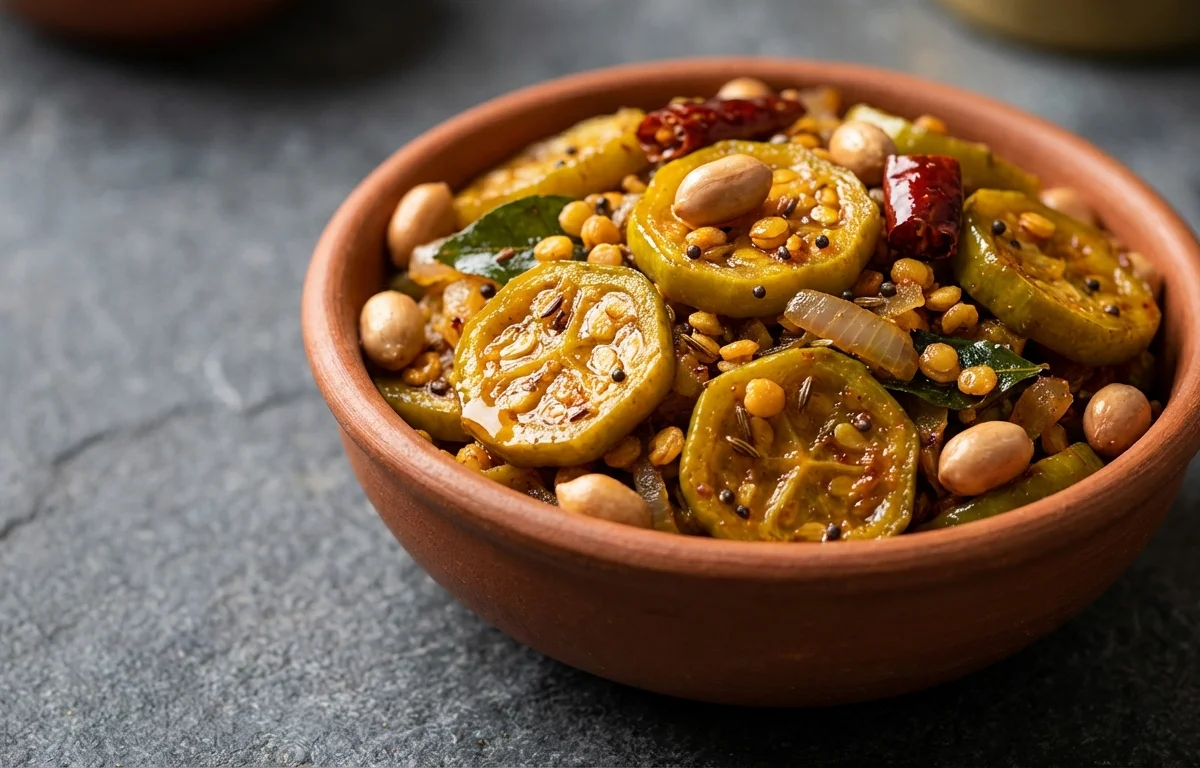
Dondakaya Vepudu
A simple, crispy, and flavorful South Indian stir-fry made with ivy gourd. This popular Andhra side dish gets its delightful crunch and nutty aroma from a special roasted peanut and garlic powder, making it a perfect partner for rice and sambar.
For 4 servings
Prepare the Spice Powder
- In a small, dry pan over low heat, roast the peanuts for 4-5 minutes until they are aromatic and lightly browned. Remove and set aside to cool.
- In the same hot pan, add the dried red chilies and cumin seeds. Roast for about 1 minute until fragrant, being careful not to burn them.
- If using, lightly toast the desiccated coconut for 30 seconds until it turns a pale golden color.
- Once all roasted ingredients have cooled completely, transfer them to a blender or spice grinder along with the garlic cloves.
- Pulse a few times to create a coarse powder. A coarse texture is key for the final dish. Set this powder aside.
Temper and Sauté the Ivy Gourd
- Heat oil in a wide, heavy-bottomed pan or kadai over medium heat.
- Once the oil is hot, add the mustard seeds and allow them to splutter.
- Add the urad dal and chana dal. Sauté for about a minute until they turn a light golden brown.
- Add the curry leaves and asafoetida (hing). Sauté for another 30 seconds until the leaves are crisp.
- Add the sliced ivy gourd (dondakaya) to the pan. Sprinkle with turmeric powder and salt. Mix thoroughly to ensure the slices are evenly coated with the oil and spices.
Slow-Fry to Perfection
- Reduce the heat to medium-low and cook the ivy gourd for 15-20 minutes, stirring every 3-4 minutes to prevent sticking and ensure even cooking.
- Do not cover the pan. This is crucial for allowing moisture to escape, which makes the ivy gourd crispy rather than steamed and soggy.
- Continue cooking until the pieces are tender, have shrunk in size, and have developed crispy, golden-brown edges.
Add Spice Powder and Serve
- Once the ivy gourd is well-cooked and crispy, sprinkle the prepared peanut-garlic powder over it.
- Gently mix to coat all the pieces evenly.
- Cook on low heat for another 2-3 minutes, allowing the flavors of the powder to meld with the vegetable.
- Turn off the heat and serve hot as a side dish with rice and sambar, rasam, or dal.
What to keep in mind.
6 tips from the recipe — small details that make a real difference to the final dish.
- 1For the crispiest result, slice the ivy gourd as thinly and uniformly as possible.
- 2Patience is key. Cook on a steady medium-low flame without covering the pan to draw out moisture and allow the vegetable to fry rather than steam.
- 3Ensure the spice powder is coarse, not fine. This adds a wonderful texture to the dish.
- 4Always add the spice powder at the very end of cooking to prevent the garlic and peanuts from burning and turning bitter.
- 5Make sure the ivy gourd is completely dry before you start cooking to avoid splattering and to help it crisp up nicely.
- 6Choose tender, bright green ivy gourds. Avoid any that are reddish or overly ripe, as they can be sour.
Adapt it for your goals.
Onion Variation
For a sweeter base, sauté one thinly sliced onion until golden brown after the tempering, just before adding the ivy gourd.
Nut Free VersionNut-Free Version
For a nut-free alternative, replace the peanuts in the spice powder with an equal amount of roasted chana dal (pottukadalai) or sesame seeds.
Quick VersionQuick Version
To save time, you can pressure cook the sliced ivy gourd with a pinch of salt for 1 whistle. Drain well and then proceed with the stir-frying. Note that this may result in a slightly less crispy texture.
Why this is on our healthy list.
Rich in Fiber
Ivy gourd is a good source of dietary fiber, which aids in digestion, promotes gut health, and helps maintain a feeling of fullness, contributing to weight management.
Supports Blood Sugar Regulation
Traditionally used in Ayurvedic medicine, ivy gourd contains compounds that are believed to have anti-diabetic properties, potentially helping to manage blood sugar levels when included in a balanced diet.
Source of Plant-Based Protein
The addition of peanuts and lentils (urad and chana dal) provides a good amount of plant-based protein, which is essential for muscle repair, growth, and overall body function.
Frequently asked questions
A single serving of Dondakaya Vepudu (approximately 1 cup or 125g) contains around 215-230 calories, primarily from the oil and peanuts used in the recipe.