
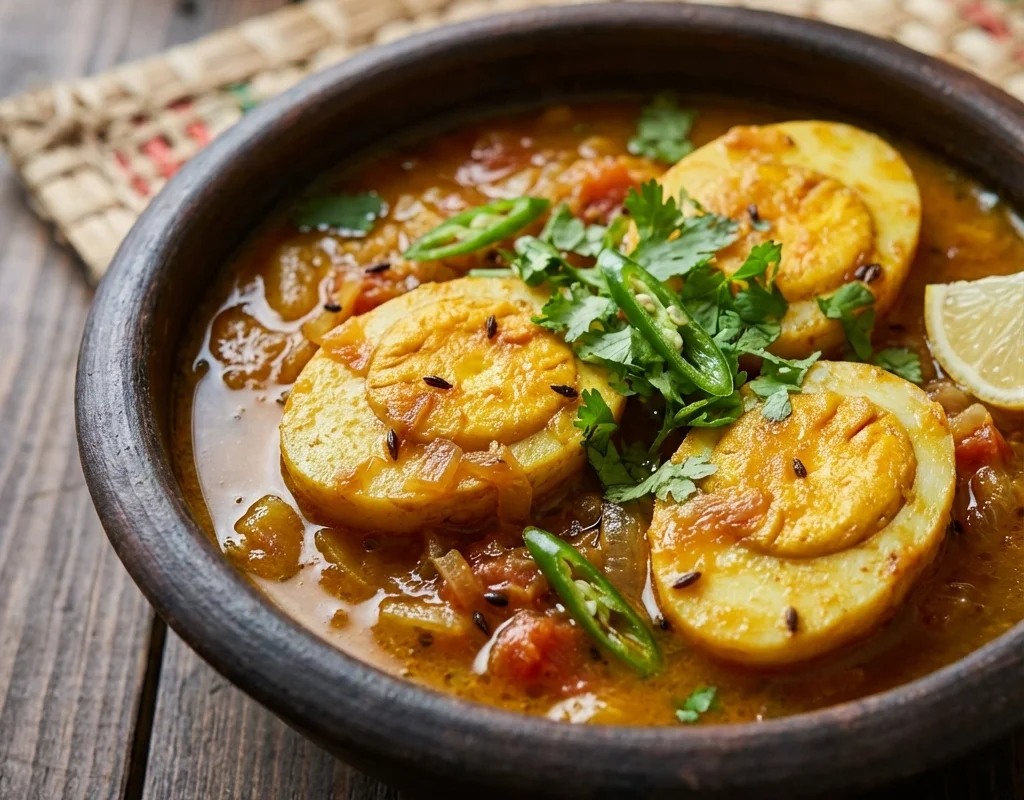
Dimor Tenga
A classic Assamese sour egg curry made with boiled eggs simmered in a tangy tomato-based gravy. This light and flavorful dish, tempered with panch phoron, is a comforting staple best enjoyed with steamed rice.
For 4 servings
Prepare the Eggs
- Place the eggs in a saucepan and cover with cold water. Bring to a rolling boil over high heat.
- Once boiling, reduce heat to a simmer and cook for 10 minutes for hard-boiled eggs.
- Drain the hot water and immediately transfer the eggs to an ice bath or run under cold water to stop the cooking process.
- Once cool enough to handle, peel the eggs and make 2-3 shallow vertical slits on each one. This helps them absorb the gravy.
Sauté the Eggs
- Heat 2 tablespoons of mustard oil in a kadai or pan over medium heat until it's slightly smoking.
- Reduce the heat, add a pinch of turmeric powder to the oil, and immediately add the slit boiled eggs.
- Sauté for 2-3 minutes, turning gently, until the eggs are evenly coated and have a light golden-brown, slightly blistered skin.
- Carefully remove the eggs from the pan and set them aside.
Prepare the Curry Base
- In the same pan, add the remaining 1 tablespoon of mustard oil.
- Once the oil is hot, add the panch phoron and let the seeds crackle for about 30 seconds.
- Add the finely chopped onion and sauté for 3-4 minutes until it becomes soft and translucent.
- Add the ginger paste, garlic paste, and slit green chillies. Cook for another minute until the raw aroma disappears.
Cook the Gravy
- Add the tomato puree, the remaining turmeric powder, and salt. Mix everything well.
- Cook this masala mixture on medium-low heat for 5-7 minutes, stirring occasionally, until the oil starts to separate from the sides of the pan.
- Pour in 2.5 cups of warm water, stir to combine, and bring the gravy to a gentle boil.
Simmer and Finish
- Once the gravy is boiling, gently slide the fried eggs back into the pan.
- Reduce the heat to low, cover the pan, and let the curry simmer for 5-7 minutes. This allows the eggs to soak up the tangy flavors of the gravy.
- Turn off the heat. If you prefer a more sour taste, stir in the lemon juice now.
- Garnish with freshly chopped coriander leaves and serve hot with steamed rice.
What to keep in mind.
4 tips from the recipe — small details that make a real difference to the final dish.
- 1For the most authentic Assamese flavor, use mustard oil and heat it until it just begins to smoke to mellow its pungency.
- 2Making shallow slits in the boiled eggs is crucial; it allows the tangy gravy to penetrate and flavor the eggs from the inside.
- 3The consistency of Dimor Tenga is traditionally thin and soupy, not thick. Adjust the water quantity if needed.
- 4Do not over-fry the eggs, as they can become tough and rubbery. A light golden-brown color is perfect.
Adapt it for your goals.
Authentic Sour Agent
For a more traditional taste, replace tomatoes and lemon juice with 2-3 pieces of soaked 'thekera' (Garcinia pedunculata) or 1 tablespoon of tamarind pulp.
With PotatoesWith Potatoes
Add 2 medium-sized potatoes, boiled, peeled, and lightly fried along with the eggs, to make the curry more substantial.
Spicier VersionSpicier Version
Add 1/4 to 1/2 teaspoon of red chilli powder along with the turmeric powder for extra heat.
Creamier GravyCreamier Gravy
For a slightly thicker gravy, you can add 1 tablespoon of tomato paste along with the tomato puree.
Why this is on our healthy list.
Excellent Source of Protein
Eggs are a complete protein source, providing all the essential amino acids necessary for muscle building, tissue repair, and overall body function.
Rich in Healthy Fats
Mustard oil is rich in monounsaturated and polyunsaturated fats (MUFAs and PUFAs), as well as omega-3 and omega-6 fatty acids, which are beneficial for heart health.
Immunity Boosting Properties
The use of spices like turmeric, ginger, and garlic provides anti-inflammatory and antioxidant benefits that can help strengthen the immune system.
Frequently asked questions
Yes, Dimor Tenga is a relatively healthy dish. It's rich in protein from the eggs and uses minimal spices. Using mustard oil provides beneficial monounsaturated fats. It's a light curry that is not heavy on cream or fat.