
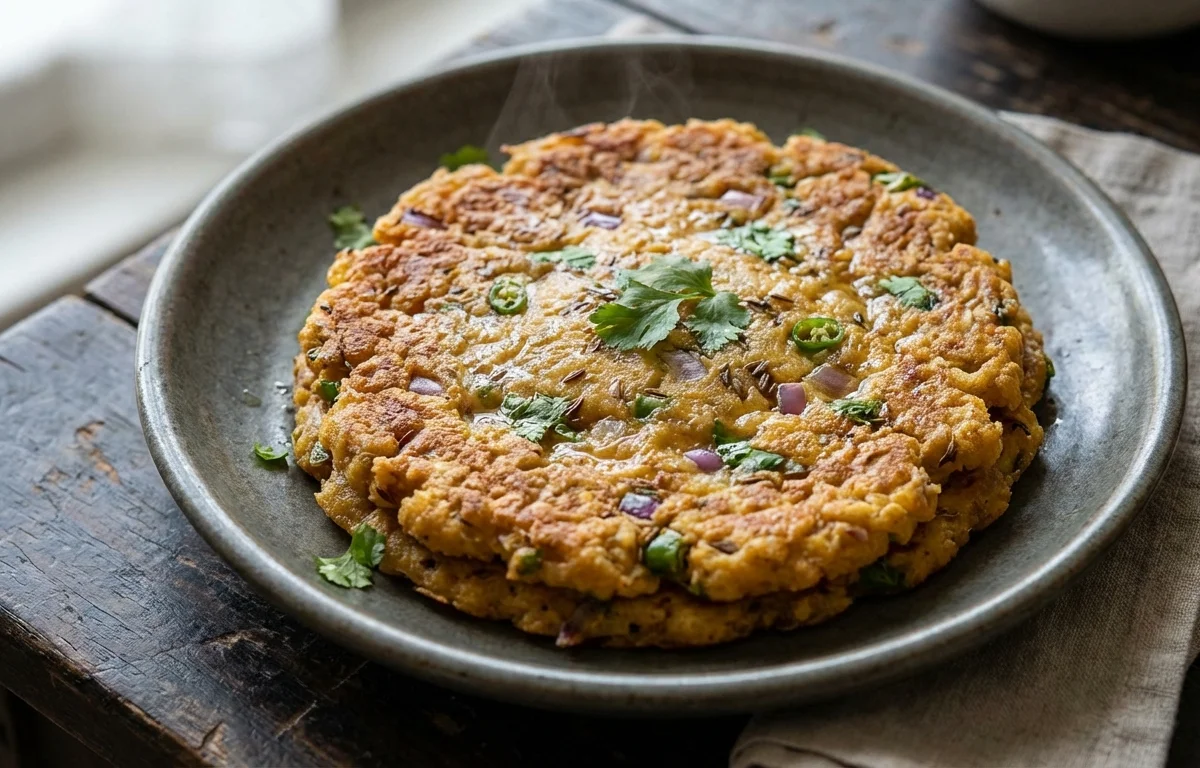
Dibba Rotti
A beloved Andhra breakfast classic, Dibba Rotti is a thick, savory pancake with a delightfully crispy, golden-brown crust and a soft, spongy interior. Made from a fermented batter of lentils and rice, it's slow-cooked to perfection and best enjoyed with a spicy chutney.
For 4 servings
4 steps. 35 minutes total.
- 1
Step 1
- a.Prepare the Batter (Soaking & Grinding)
- b.Rinse urad dal and methi seeds until the water runs clear. Soak them together in 2 cups of water for at least 4-6 hours.
- c.In a separate large bowl, rinse the idli rava once. Add enough water to cover it and let it soak for the same duration (4-6 hours).
- d.After soaking, drain the water from the urad dal. Transfer the dal and methi seeds to a high-speed blender or wet grinder.
- e.Grind to a very smooth, light, and fluffy paste, adding about 1/2 to 3/4 cup of fresh water incrementally. The batter should be airy. Transfer this paste to a large mixing bowl.
- f.Squeeze out all the excess water from the soaked idli rava completely. Add the squeezed rava to the ground urad dal paste.
- g.Add salt. Mix everything thoroughly with your clean hands for 2-3 minutes. This helps in initiating the fermentation process. The final batter should be thick, similar to idli batter.
- 2
Step 2
- a.Ferment the Batter
- b.Cover the bowl with a lid (not airtight) and place it in a warm, draft-free spot to ferment for 8 to 12 hours, or overnight.
- c.The batter is perfectly fermented when it has nearly doubled in volume, looks bubbly, and has a pleasant sour aroma.
- 3
Step 3
- a.Cook the Dibba Rotti
- b.Once fermented, gently stir the batter once or twice. Do not overmix, as this will deflate the air pockets.
- c.Gently fold in the finely chopped onion, green chilies, grated ginger, cumin seeds, and chopped coriander leaves.
- d.Heat a small, deep, heavy-bottomed pan or kadai (about 6-7 inches in diameter) on a low flame.
- e.Add 2 tablespoons of oil to the pan. Once the oil is moderately hot, pour in about 2 ladles of batter, filling the pan to a thickness of about 1.5 inches. Do not spread it.
- f.Cover the pan with a lid and cook on the lowest possible flame for 15-18 minutes. The low heat is crucial for the inside to cook through without burning the outside.
- g.After 15-18 minutes, the top should look set and the edges will start to pull away from the pan. The bottom should be a deep golden brown and very crispy.
- h.Drizzle the remaining 2 tablespoons of oil around the edges and on top. Using two spatulas, carefully and quickly flip the rotti.
- i.Cook the other side, uncovered, for another 10-12 minutes on low flame until it is also golden brown and crisp. Check for doneness by inserting a skewer into the center; it should come out clean.
- 4
Step 4
- a.Serve Hot
- b.Carefully slide the cooked Dibba Rotti onto a plate or cutting board.
- c.Let it rest for 2-3 minutes before cutting it into wedges, like a cake.
- d.Serve immediately with traditional Andhra accompaniments like Avakaya (mango pickle) or Allam Pachadi (ginger chutney).
What to keep in mind.
6 tips from the recipe — small details that make a real difference to the final dish.
- 1The key to a perfect Dibba Rotti is cooking it on a very low flame. Patience is essential to ensure it cooks through to the center.
- 2Use a heavy-bottomed, well-seasoned cast iron or non-stick kadai for the best crispy crust and to prevent sticking.
- 3The batter consistency is crucial. It must be thick, like idli batter, not runny. If it's too thin, the rotti won't be spongy.
- 4Do not skip the fermentation. It is vital for the soft texture and characteristic tangy flavor.
- 5When mixing the batter with your hands before fermentation, the warmth and natural yeasts from your hands help kickstart the process.
- 6For an extra crispy crust, you can add a tablespoon of rice flour to the batter just before cooking.
Adapt it for your goals.
Add Vegetables
Finely chop and add vegetables like carrots, bell peppers, or cabbage to the batter along with the onions for added nutrition and flavor.
Spice it UpSpice it Up
Add 1/2 teaspoon of black pepper powder or a pinch of asafoetida (hing) to the batter for a different flavor profile.
Use Raw RiceUse Raw Rice
Instead of Idli Rava, you can use 2 cups of raw short-grain rice (like Sona Masoori). Soak it separately and grind it to a coarse, grainy texture before mixing with the urad dal paste.
Why this is on our healthy list.
Promotes Gut Health
The fermentation process involved in making the batter creates beneficial probiotics, which help improve digestion and promote a healthy gut microbiome.
Rich in Plant-Based Protein
Urad dal is an excellent source of vegetarian protein, which is essential for muscle repair, growth, and overall body function.
Provides Sustained Energy
The combination of rice and lentils offers a good balance of complex carbohydrates and fiber, providing a slow and steady release of energy that keeps you full and energized for longer.
Frequently asked questions
This usually happens if the cooking flame is too high. Dibba Rotti must be cooked 'low and slow'. A high flame will brown the outside quickly while leaving the dense interior uncooked. Always use the lowest possible heat setting and cover the pan.