
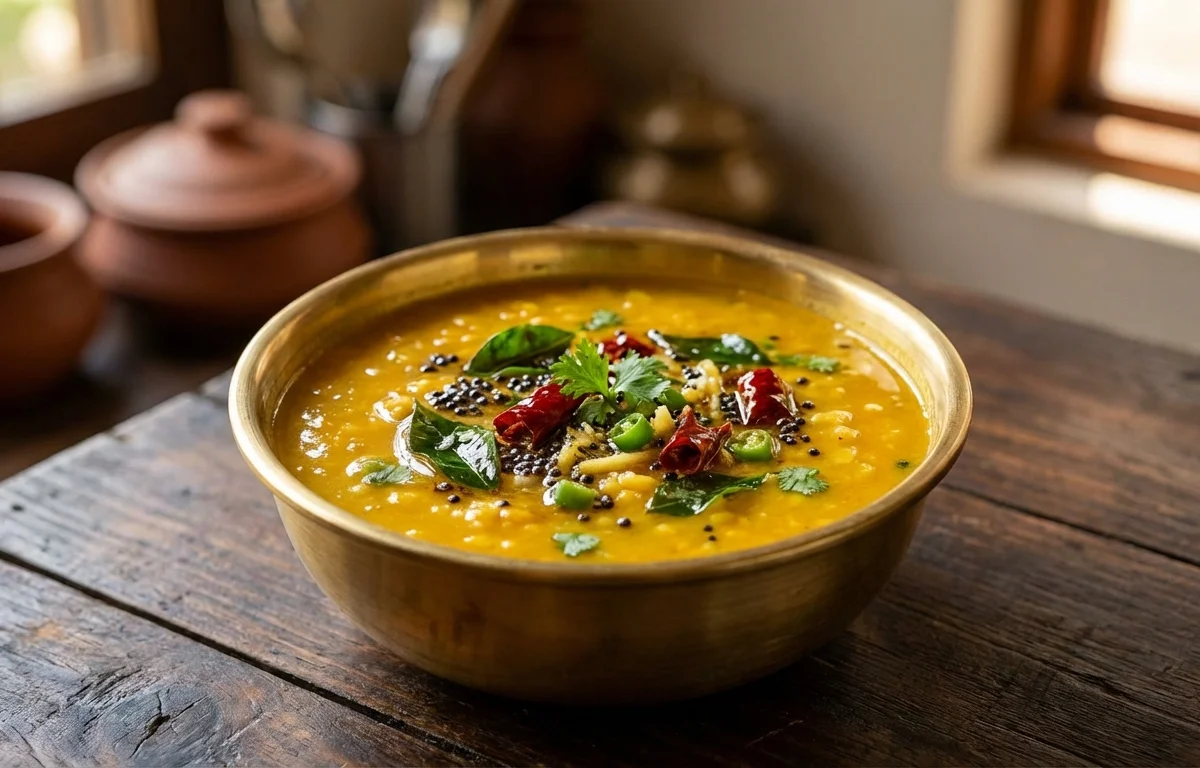
Dalithoy
A classic Konkani dal that's light, soupy, and incredibly comforting. Made with soft-cooked toor dal and a simple tempering of coconut oil, mustard seeds, and curry leaves, it's the perfect companion to steamed rice.
For 4 servings
5 steps. 20 minutes total.
- 1
Step 1
- a.Pressure Cook the Dal
- b.Wash the toor dal thoroughly under running water until the water runs clear. Soaking for 30 minutes is optional but helps in faster cooking.
- c.In a pressure cooker, combine the rinsed dal, 3 cups of water, and the turmeric powder.
- d.Secure the lid and pressure cook on medium heat for 4-5 whistles, or for about 15 minutes, until the dal is completely soft and mushy.
- e.Allow the pressure to release naturally before opening the cooker.
- 2
Step 2
- a.Prepare the Dal Base
- b.Once the pressure has released, open the cooker. Using a whisk or the back of a ladle, mash the cooked dal vigorously until it forms a smooth, creamy paste.
- c.Place the cooker pot back on the stove over medium heat. Pour in the remaining 1 cup of water (or more) to achieve a thin, soupy consistency characteristic of Dalithoy.
- d.Add the slit green chilies, grated ginger, and salt. Stir everything together well.
- 3
Step 3
- a.Simmer and Infuse Flavors
- b.Bring the dal to a gentle boil. Once it starts boiling, reduce the heat to low and let it simmer for 4-5 minutes. This step is crucial for the flavors of ginger and chili to meld into the dal.
- 4
Step 4
- a.Prepare the Tempering (Tadka)
- b.While the dal is simmering, heat the coconut oil in a small tadka pan over medium heat.
- c.Once the oil is hot, add the mustard seeds. Wait for them to splutter completely, which should take about 30-40 seconds.
- d.Immediately add the broken dried red chilies, fresh curry leaves, and hing. Be careful as the curry leaves will splutter. Sauté for 20-30 seconds until the leaves are crisp and aromatic.
- 5
Step 5
- a.Combine and Serve
- b.Carefully pour the hot, sizzling tempering directly into the simmering dal. Stir gently to incorporate.
- c.Turn off the heat. Garnish with freshly chopped coriander leaves.
- d.Let the dal rest for a minute to absorb the tempering flavors. Serve hot with steamed rice and a side of pickle or papad.
What to keep in mind.
6 tips from the recipe — small details that make a real difference to the final dish.
- 1For the most authentic flavor, do not substitute coconut oil. It is the hallmark of Konkani cuisine.
- 2Mash the dal while it is still hot for the smoothest, creamiest texture without any lumps.
- 3The consistency should be thin and soupy, like a broth. Adjust the water quantity as needed to reach your desired consistency.
- 4Don't let the spices in the tempering burn. The process is quick, so have all your tempering ingredients ready before you start.
- 5For a milder dal, you can deseed the green chilies before slitting them.
- 6Dalithoy thickens as it cools. When reheating, add a splash of hot water to bring it back to its original consistency.
Adapt it for your goals.
Garlic Tadka
For a different flavor profile, add 2-3 cloves of finely chopped garlic to the tempering along with the mustard seeds.
Tangy VersionTangy Version
Squeeze the juice of half a lime or a small piece of tamarind extract into the dal just before serving for a tangy kick.
With VegetablesWith Vegetables
Add finely chopped vegetables like carrots, drumsticks, or spinach to the dal while it simmers to make it more nutritious.
Different DalDifferent Dal
You can make a similar version using masoor dal (red lentils), which cooks faster and doesn't always require a pressure cooker.
Why this is on our healthy list.
Excellent Source of Plant-Based Protein
Toor dal is rich in protein, which is essential for muscle repair, building tissues, and overall body function, making this a great dish for vegetarians and vegans.
Aids in Digestion
The inclusion of hing (asafoetida) and ginger helps prevent bloating and improves digestion. The high fiber content from the dal also promotes a healthy gut.
Rich in Essential Minerals
Lentils are a good source of important minerals like iron, which prevents anemia; potassium, which helps regulate blood pressure; and magnesium, which is vital for bone health.
Anti-inflammatory Properties
Turmeric contains curcumin, a powerful compound with anti-inflammatory and antioxidant benefits. Ginger also contributes to reducing inflammation in the body.
Frequently asked questions
One serving of Dalithoy (approximately 1 cup or 270g) contains around 220-250 calories, primarily from the protein in the dal and the healthy fats in the coconut oil.